
Last updated September 24, 2026
DIY vs Professional Insulation: The Torrance Homeowner’s Decision Guide
Most insulation guides treat DIY versus professional installation as a matter of budget and elbow grease. In Torrance, it’s often a legal question first. California’s Title 24 energy code, HERS verification requirements, and SCE rebate protocols create compliance thresholds that remove the DIY option entirely from many projects before cost ever enters the conversation. We’ve walked into attics in Old Torrance where a homeowner’s weekend blow-in job saved $600 upfront and cost $2,400 in missed rebates, re-work, and a failed HERS inspection that delayed their home sale. This guide - alongside our How to Hire a Insulation Contractor in Torrance: A Step-by-Step Guide - maps the actual decision tree: what you can legally do yourself, what requires a licensed contractor, where DIY produces genuine savings, and where it reliably produces worse thermal performance than doing nothing at all.
Quick Answer
DIY attic insulation in Torrance is legally permissible for simple blow-in jobs under 1,000 square feet where no Title 24 compliance certificate or utility rebate is needed. For most projects involving SCE rebates, Title 24 alterations, or spray foam application, California law requires a CSLB-licensed contractor and third-party HERS verification, making professional installation the only viable path. The true cost gap between DIY and professional installation in a typical 1,500-square-foot Torrance attic is $400-$900, not the $2,000+ many homeowners assume once permits, equipment rental, and mandatory HERS fees are included.
Table of Contents
- The Legal Threshold: When DIY Becomes Illegal in California
- Skill and Equipment Audit: Can You Actually Do This?
- Where DIY Attic Insulation Reliably Underperforms
- True Cost Comparison: DIY vs. Professional in Torrance
- Three Scopes Where DIY Makes Sense - and Three Where It Doesn’t
- Title 24, HERS, and SCE Rebates: The Compliance Layer
- Common Mistakes to Avoid
- When to Call a Professional
- Frequently Asked Questions
- The Bottom Line
The Legal Threshold: When DIY Becomes Illegal in California
You can legally install blown fiberglass or cellulose in your own Torrance attic. What you cannot do is sign your own CF2R certificate, perform your own HERS verification, or conduct the blower-door test that qualifies your work for an SCE rebate. Most DIY insulation guides skip this branch of the decision tree entirely.
Under California Contractors State License Board (CSLB) guidelines, insulation work falls under the C-2 Warm-Air Heating, Ventilating, and Air-Conditioning classification or the B General Building classification when performed as part of an alteration. The critical term is “alteration.” Adding insulation to an unfinished attic in a home built before 1978 without disturbing existing finishes? That’s generally maintenance, not alteration, and the owner-builder exemption applies. But in Torrance’s post-war housing stock - particularly the 1,200-square-foot ranch homes common in Southwood and the 1950s tracts near Torrance Airport - any project that involves removing existing insulation, modifying HVAC ducting in the attic, or adding insulation as part of a larger energy upgrade triggers alteration status.
Here’s where the owner-builder exemption narrows sharply. California allows homeowners to act as their own contractor on their primary residence, but with specific forfeitures:
- You cannot hire employees; all work must be performed by you, your family, or licensed subcontractors
- You assume full liability for workers’ compensation and jobsite injuries
- You cannot sell the home within one year without disclosing the owner-builder status and facing potential warranty claims
- Your standard HO-3 homeowners policy likely excludes damage from unpermitted alteration work - check the “work performed by insured” exclusion in Section I, Condition 2
We’ve reviewed insurance denials in Torrance where a DIY blow-in job contacted a recessed light housing and initiated a slow smolder. The HO-3 carrier denied the fire claim because the insulation work was classified as an unpermitted alteration. The homeowner saved $800 on installation and lost $47,000 on the claim.
The practical threshold: if your project requires a building permit (determined by the City of Torrance Building Division based on scope), you need a licensed contractor. If you’re pursuing an SCE rebate, you need a HERS rater. If you’re selling within two years and need Title 24 compliance documentation, you need a CF2R certificate that only a HERS-verified contractor can generate. These three conditions cover roughly 70% of the insulation projects we quote in Torrance.
Skill and Equipment Audit: Can You Actually Do This?
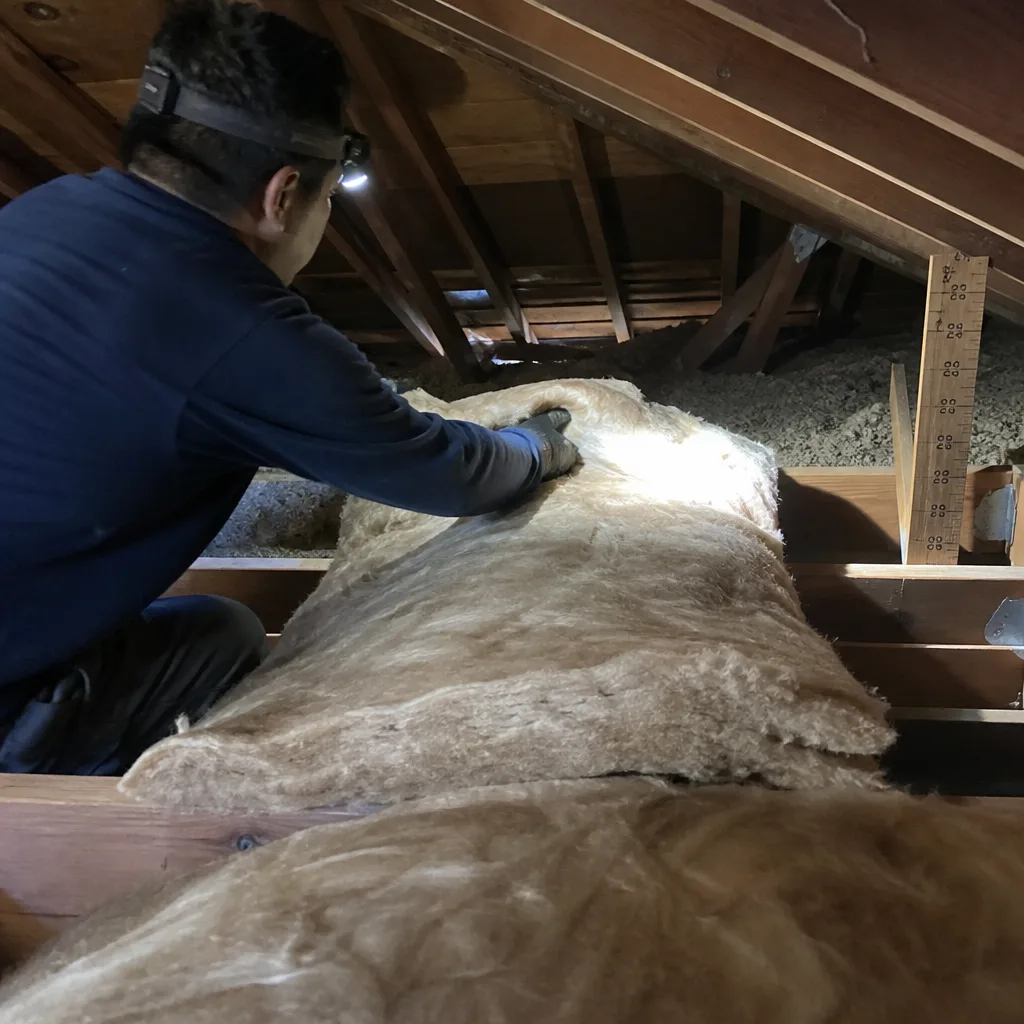
Before comparing costs, inventory what DIY attic insulation actually demands. We’ve cleaned up enough partial DIY jobs in Torrance to know the gap between “watched three YouTube videos” and “ready to produce a building-envelope improvement.”
Physical Prerequisites
Torrance attic temperatures run 110-130°F from June through October. That’s not discomfort; that’s heat illness territory. The OSHA general duty clause applies to your own home - no one is enforcing it, but your physiology doesn’t care. We’ve had homeowners tell us they planned to work in their attic for six hours on a Saturday in August. That’s not realistic without acclimatization, hydration protocols, and a spotter. Most first-time DIYers budget 4 hours and need 12, spread across three mornings because of heat exhaustion.
Access matters too. Torrance’s older homes in Old Torrance and the Hollywood Riviera area often have scuttle holes rather than pull-down stairs. Getting blow-in equipment through a 22-by-30-inch opening while maneuvering in a truss-framed attic with 6-foot headroom at the ridge is a spatial puzzle that frustrates most homeowners by hour two.
Equipment and Learning Curve
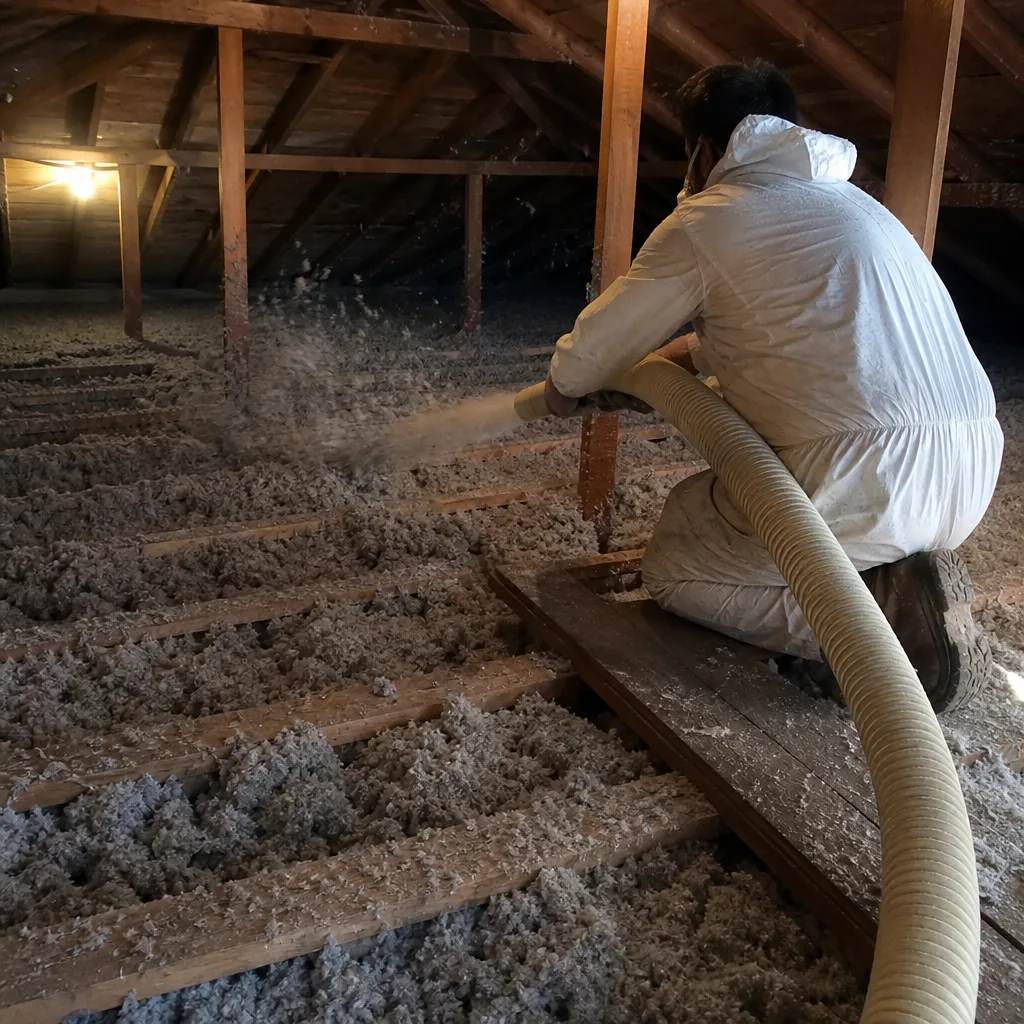
Blown insulation requires a blower machine. The Home Depot on Hawthorne Boulevard in Torrance rents Intec Force/2 machines for approximately $75 per day with minimum material purchase. That’s the easy part. The learning curve includes:
- Machine calibration: Setting the air-to-material ratio for cellulose versus fiberglass. Too much air and you get dust clouds and poor density; too little and you clog the hose. First-time users typically waste 15-20% of material on calibration errors.
- Hose management: A 150-foot hose in a 120°F attic kinks, snags on trusses, and requires two people for efficient operation. Most DIY teams are one person in the attic, one feeding the machine.
- Depth verification: R-38 in Torrance’s climate zone requires approximately 12 inches of blown fiberglass or 10 inches of cellulose. Measuring consistently across an irregular attic floor with existing insulation, ducting, and electrical runs is tedious. We’ve found DIY jobs with 8-inch averages labeled as R-38.
- Obstruction work: Blowing around HVAC boots, wiring runs, and recessed light housings without burying heat-producing fixtures requires technique, not just caution.
Spray foam is not a realistic DIY option for most homeowners. Two-component polyurethane systems (Icynene, Demilec) require respirator-fit certification, controlled temperature application (substrate and ambient between 60-90°F), and precise mix ratios that drift with altitude and humidity. Torrance’s marine layer mornings and afternoon dry heat create conditions that trip first-time applicators. We’ve removed DIY spray foam from attics in North Torrance that expanded at 4:1 instead of 2:1 because the homeowner mixed at 65°F and the substrate warmed to 85°F by afternoon.
The Honest Self-Assessment
DIY attic insulation is reasonable if you: have clear attic access, can work in extreme heat for 4-hour blocks, have a second person available, own or can borrow proper respiratory protection (N95 minimum for fiberglass, P100 for cellulose dust), and are not pursuing rebates or compliance documentation. If any of those conditions fail, the cost comparison becomes irrelevant.
Where DIY Attic Insulation Reliably Underperforms
The building science is clear: insulation without air sealing produces modest results. The sequence matters - seal first, then insulate. This is not opinion; it’s the ASHRAE 62.2 ventilation standard and the California Energy Commission’s prescribed practice. DIY installations consistently invert or skip this sequence.
The Top-Plate Gap
In platform-framed homes - most of Torrance’s housing stock - the wall top plate is a continuous linear breach between conditioned space and attic. A typical 1,500-square-foot home has 180 linear feet of top plate. At 1/16-inch average gap width, that’s 135 square inches of uncontrolled leakage, equivalent to a 12-by-12-inch hole in your ceiling. Professional crews seal this with fire-rated caulk or foam before insulation touches the attic floor. DIY installers rarely locate all top-plate joints, particularly where interior walls intersect the attic plane.
HVAC Boots and Duct Penetrations
Flex duct boots in Torrance attics are common leakage points. The boot-to-drywall joint, the boot-to-flex connection, and the flex-to-plenum connection each require mastic or foam sealant. Blowing insulation over an unsealed boot buries the problem and often compresses the flex, reducing airflow. We’ve measured supply ducts in Torrance homes where DIY insulation reduced airflow 15-20% by compressing flex at the boot.
Recessed Light Housings
IC-rated (insulation contact) housings can be buried; non-IC cannot. Torrance homes built 1955-1985 typically have non-IC housings. A DIY installer often cannot determine IC status without removing the trim and reading the housing label. Blowing insulation against a non-IC housing with a 75-watt incandescent or early LED creates a fire hazard. Professional crews verify IC status, install fire-rated covers where needed, and document the condition.
Sequence Errors
The correct sequence is: remove or isolate old insulation if contaminated; air seal all penetrations; verify sealing with visual inspection; install baffles at eaves; then blow insulation to depth. DIY installers often blow first, discover a leak later, and disturb the new insulation to seal - creating uneven density and thin spots. We’ve seen attics in Walteria where the homeowner blew insulation, then tried to seal top plates from below through ceiling penetrations, punching dozens of holes in new drywall.
The performance gap is measurable. A DIY blow-in job without air sealing typically achieves 30-40% of the predicted energy savings. A professionally sealed and insulated attic achieves 80-90%. The blower-door test - a pressurization reading that shows, in one number, how much air your building envelope is losing - quantifies this. We’ve tested DIY jobs in Torrance that read 3,800 CFM50 before work and 3,200 after: a 16% improvement that cost $900 in materials. Our typical sealed-and-insulated attic in the same neighborhood drops from 3,800 to 2,100 CFM50: a 45% improvement. The DIY job wasn’t wrong; it was incomplete in ways the homeowner couldn’t see.
True Cost Comparison: DIY vs. Professional in Torrance
The $2,000 savings figure circulates widely. It’s wrong for most Torrance projects once you account for full scope. For a detailed breakdown, see our Insulation Cost Breakdown: The Torrance Homeowner’s Reference for 2026; here’s the actual math for a typical 1,500-square-foot attic, R-38 upgrade, with no existing insulation removal.
DIY Cost Stack
| Item | Cost |
|---|---|
| Blown fiberglass (40 bags @ ~$35) | $1,400 |
| Blower machine rental (2 days, Home Depot Torrance) | $150 |
| Respiratory protection, lighting, misc. | $120 |
| Air sealing materials (foam, caulk, mastic) | $180 |
| Building permit (if pulled for alteration) | $350-$600 |
| HERS rater fee (mandatory for SCE rebate) | $450-$650 |
| DIY total with rebate path | $2,650-$3,100 |
| DIY total without permit/rebate | $1,850 |
Professional Cost Stack
Our Attic Insulation in Torrance pricing for comparable scope: $2,800-$3,600 for air sealing plus blown fiberglass to R-38, including permit, HERS verification, and blower-door documentation. The gap is $400-$900, not $2,000. That gap buys: warranty coverage, workers’ compensation protection, documented photo record, and the 365-Day Done Right Promise.
Where DIY savings are genuine: small jobs under 1,000 square feet, no air sealing needed, no rebate pursued, and the homeowner already owns equipment. A 600-square-foot garage attic in South Torrance, for example, might cost $400 DIY versus $1,200 professional. The 3:1 ratio holds for simple, small scopes.
Where DIY savings evaporate: any project requiring insulation removal (rodent contamination, water damage), any spray foam application, any project with HVAC modification, and any home where the owner plans to sell within two years and needs compliance documentation. The re-work cost of a failed HERS inspection alone - typically $800-$1,200 for re-inspection and documentation - erases the DIY margin.
Three Scopes Where DIY Makes Sense - and Three Where It Doesn’t
DIY-Reasonable Scopes
1. Simple blow-in over existing insulation in a clean attic
Existing insulation is dry, uncontaminated, and uncompressed. Attic has clear access, IC-rated or no recessed lights, and minimal HVAC presence. Homeowner wants thermal improvement only, no rebate, no near-term sale. Typical in Torrance’s 1970s-1980s tract homes with intact original insulation.
2. Garage or accessory structure
No Title 24 compliance required. No HERS path. Simple rectangular footprint, no penetrations. We’ve guided homeowners through these scopes by phone - the work is genuinely straightforward.
3. Batt replacement in walls with open drywall
During a remodel with drywall removed, replacing R-13 batts with R-15 or R-21 is mechanical work. The hard part (drywall removal) is already done. Use Rockwool or CertainTeed batts; both cut cleanly with a serrated knife and friction-fit well.
DIY-Ill-Advised Scopes
1. Any project with existing insulation removal
Old insulation in Torrance often contains rodent droppings, asbestos (pre-1980 vermiculite), or moisture damage. Removal requires HEPA filtration, protective equipment, and proper disposal. The Los Angeles County household hazardous waste program does not accept contaminated insulation at standard drop-offs. We’ve handled removal where the homeowner’s initial $800 DIY quote became a $2,400 professional remediation after they discovered asbestos-containing vermiculite.
2. Spray foam in any enclosed cavity
Open-cell (Icynene-style) and closed-cell (Demilec-style) foams both require substrate temperature control, mix ratio verification, and ventilation management during cure. Off-gassing in a Torrance attic with limited ventilation creates health hazards. We’ve removed DIY foam that shrank 20% because the homeowner applied at 55°F during a marine layer morning.
3. Crawl space encapsulation
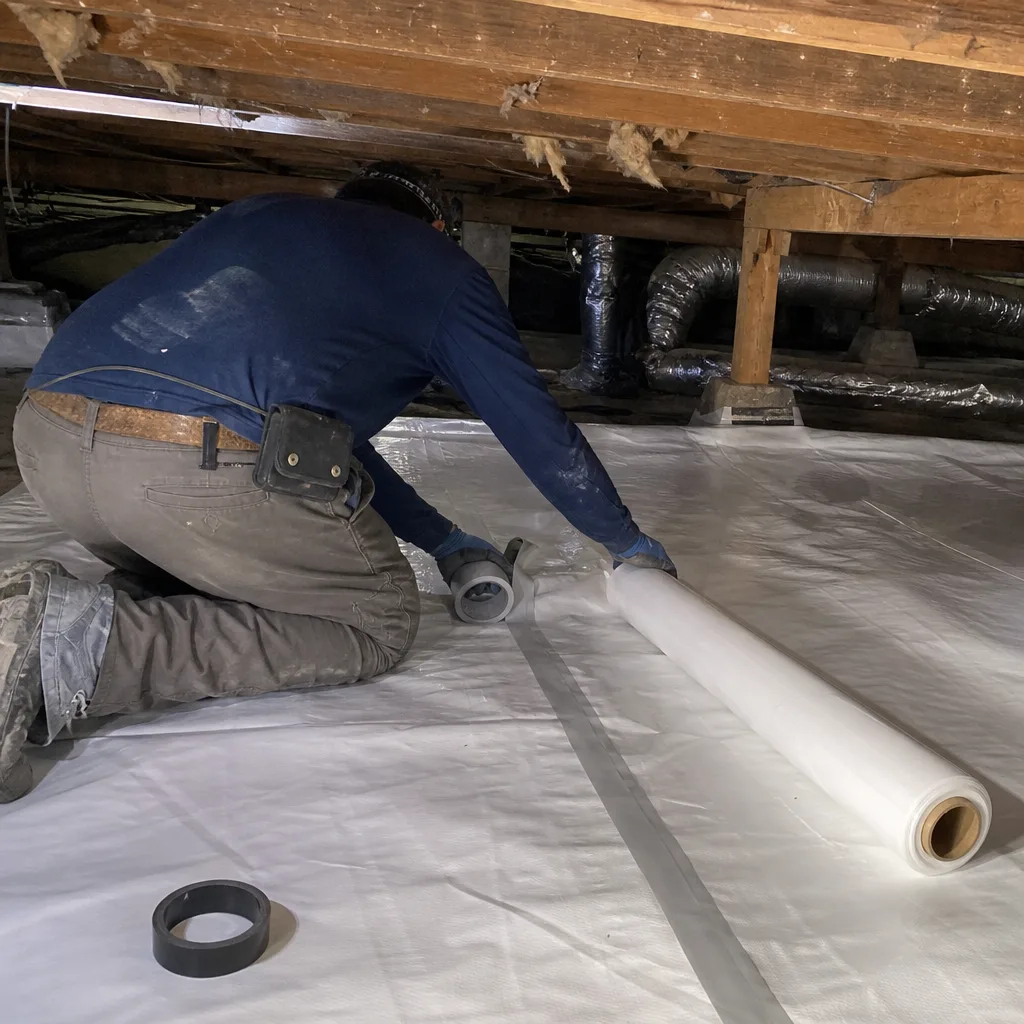
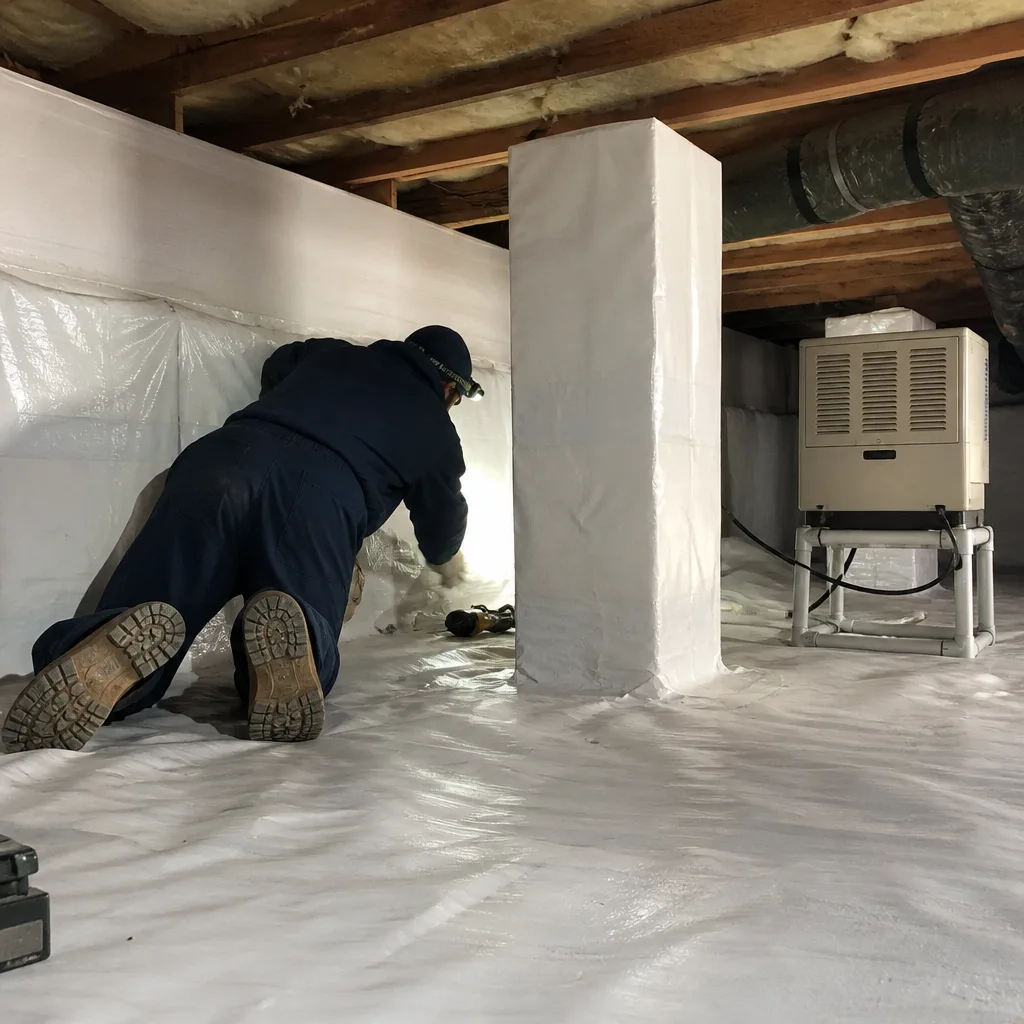
This is not an insulation project; it’s a moisture management system. Vapor barrier selection (6-mil versus 10-mil versus reinforced), seam sealing, wall insulation, and conditioning requirements interact in ways that determine whether the crawl space becomes drier or traps moisture against floor joists. Our Crawl Space Encapsulation & Vapor Barrier in Torrance page details the full scope. DIY encapsulation in Torrance’s clay-heavy soils often fails at the perimeter seal, where soil movement cracks tape and adhesive.
Title 24, HERS, and SCE Rebates: The Compliance Layer
California’s Title 24, Part 6 energy code - covered in depth in our Insulation Permits, Codes & Inspections in CA: What You Need to Know - creates a parallel compliance path that runs alongside the building permit process. For insulation work, the critical document is the CF2R - the Certificate of Installation for insulation and air sealing. Only a HERS rater or a HERS-verified contractor can sign this certificate.
The Southern California Edison (SCE) Energy Upgrade California rebate program requires:
- Pre-installation HERS assessment with blower-door baseline
- Installation by a participating contractor using approved materials
- Post-installation HERS verification with blower-door test-out
- CF2R submission through the California Home Energy Rating System registry
The rebate values vary by improvement tier, but a typical Torrance attic upgrade with air sealing qualifies for $600-$1,200 in SCE incentives. The homeowner cannot perform their own HERS verification; the rater must be independent of the installation contractor (though many contractors work with established rater partnerships).
What this means practically: if you’re pursuing the rebate, DIY is not an option. The HERS rater fee ($450-$650) is additive to your DIY cost, and the rater cannot sign off on work they didn’t witness or that doesn’t meet Title 24 installation standards. We’ve been called to re-do DIY blow-in jobs where the homeowner assumed the rater would “just check the depth and sign.” HERS raters don’t work that way. They measure density, verify coverage uniformity, check for compression at eaves, and confirm air sealing was completed before insulation.
For homeowners not pursuing rebates, Title 24 compliance still matters if you sell. Since 2019, California requires disclosure of energy features and compliance documentation for alterations. A buyer’s inspector who finds non-compliant insulation can trigger a re-negotiation or demand professional remediation. In Torrance’s competitive market, where homes in the Riviera and West Torrance often receive multiple offers, any friction in disclosure can shift buyer interest to the next listing.
Common Mistakes to Avoid
- Blowing insulation over unsealed recessed lights. In Torrance’s 1960s-1980s housing stock, non-IC housings are common. Burying them creates fire risk and voids insurance coverage for fire damage. Verify IC status or install fire-rated covers first.
- Compressing flex duct with new insulation. The weight of blown cellulose, particularly if over-fluffed, collapses flex duct and reduces airflow. We’ve measured 20% airflow reduction in DIY jobs where the homeowner didn’t box or support ducts before blowing.
- Blocking soffit vents with insulation. Torrance’s coastal climate requires attic ventilation to manage moisture. Blowing insulation to the eave without baffles chokes soffit intake and can cause condensation on roof decking. Cardboard baffles cost $2 each; skipping them risks rot.
- Pulling a permit as owner-builder, then hiring day labor. The owner-builder exemption requires personal performance or licensed subcontractors. Hiring unlicensed workers voids the exemption and exposes you to workers’ comp liability if someone is injured in your attic.
- Assuming R-value equals performance. R-38 on the bag assumes proper installation depth, no compression, and complete coverage. A DIY job with thin spots, compression at edges, and gaps around obstructions performs at R-25 equivalent even if the average depth reads correctly.
- Ignoring the air sealing prerequisite. In our experience across 9,000+ homes, the blower-door number improves 15-20% from insulation alone and 40-50% from sealing plus insulation. Skipping sealing is where most DIY savings evaporate into underperformance.
When to Call a Professional
Call a licensed contractor when your project touches any of these: existing insulation removal, spray foam application, HVAC duct modification, Title 24 compliance documentation, SCE rebate pursuit, or sale within 24 months. The legal and financial exposure of DIY in these scopes exceeds the modest cost gap.
For Torrance homeowners evaluating scope, Topside Attic Insulation Torrance home provides free estimates with written pricing before any work starts - Haven Standard Clause 1, no exceptions. We also offer a Free Second Opinion on any written estimate; bring us a competing quote and we’ll read it with you. Call (424) 704-9866 to schedule. Every job closes with a Documented Photo Record and, on applicable work, before-and-after blower-door readings so you can verify the air-sealing result in a single figure.
Frequently Asked Questions
Professional air sealing plus blown insulation for a typical 1,500-square-foot Torrance attic runs $2,800-$3,600, while a full DIY equivalent including equipment rental, materials, permit, and mandatory HERS fees costs $2,650-$3,100. The true gap is $400-$900, not the $2,000+ many homeowners assume. For a free written estimate on your specific home, call (424) 704-9866.
Yes, for simple maintenance-grade blow-in work on your primary residence. You cannot legally sign your own Title 24 CF2R certificate, perform your own HERS verification, or generate the blower-door documentation required for SCE rebates. Any project classified as an alteration - involving existing insulation removal, HVAC modification, or structural change - requires a CSLB-licensed contractor.
The City of Torrance Building Division requires permits for insulation work classified as alteration, not maintenance. Adding insulation over existing material in an unfinished attic typically does not require permit. Removing old insulation, modifying HVAC, or insulating as part of a larger energy upgrade does. When in doubt, call the Building Division at (424) 704-9866 with your specific scope.
A blower-door test is a pressurization reading that shows, in one number, how much air your building envelope is losing. It’s mandatory for SCE rebate eligibility and provides documented proof of air-sealing improvement. We publish before-and-after blower-door numbers on every applicable job so homeowners can verify performance change. DIY installations cannot include a valid blower-door test for rebate purposes.
No. Two-component polyurethane foams like Icynene and Demilec require controlled application conditions, respirator-fit certification, and precise mix ratios that vary with temperature and humidity. Torrance’s marine layer mornings and afternoon heat create conditions that cause off-ratio mixing, shrinkage, and health hazards from off-gassing. We’ve removed failed DIY spray foam from multiple Torrance attics.
Possibly. Standard HO-3 policies contain exclusions for damage from work performed by the insured, particularly unpermitted alterations. If DIY insulation contacts a non-IC recessed light and causes fire, or if moisture damage results from blocked ventilation, your carrier may deny the claim. Verify your policy’s “work performed by insured” exclusion before proceeding.
The Bottom Line
The DIY versus professional insulation question in Torrance is not primarily about skill or budget. It’s about scope definition and legal compliance. Small, simple blow-in jobs in clean attics without rebate or sale timelines can save $400-$900 DIY. Most projects involving air sealing, code compliance, utility incentives, or existing insulation removal are more expensive, more legally exposed, and less thermally effective when attempted without licensed, documented professional execution. The building envelope is not forgiving of partial work. We’ve seen what saves money and what costs it twice. If you’re uncertain where your project falls, explore our more guides & resources or get a written estimate. Under Haven Standard, it’s free, it’s detailed, and it arrives before anyone asks for a commitment.
Written by Wes Okafor, Owner at Topside Attic Insulation Torrance, serving Torrance since 2016.