
Last updated September 24, 2026
Insulation Cost Breakdown: The Torrance Homeowner’s Reference for 2026
The lowest insulation quote you receive in Torrance is almost certainly missing something. In a 2,000 square foot attic scope, the gap between a $1,800 bid and a $3,400 bid is rarely the material - it’s roughly 6-8 hours of air sealing labor, a permit, and a blower-door test. The homeowner who picks the low number pays for the omitted work later in energy costs. This guide breaks down every line item that belongs in a legitimate 2026 insulation bid in Torrance, shows you how to spot what’s been left out, and explains how to calculate whether the job will pay for itself before you sign anything. For more guides & resources on attic insulation, visit our blog.
Quick Answer
A complete attic insulation job for a typical 1,500-2,000 square foot Torrance home in 2026 runs $2,800-$4,200 for blown cellulose or fiberglass with proper air sealing, permits, and blower-door verification included. The same scope in open-cell spray foam costs $8,500-$12,000. The 60-80% price spread between competing bids usually reflects whether air sealing labor, permit fees, and HERS documentation are itemized or omitted entirely.
Table of Contents
- Why Torrance Insulation Bids Vary by 60-80% for the Same Attic
- Line-Item Cost Structure: What a 2026 Bid Should Show
- Material Cost Comparison: Cellulose vs. Fiberglass vs. Spray Foam
- SCE Energy Upgrade California Rebates: 2026 Requirements for Torrance
- When Spray Foam’s 3-4x Premium Is Worth It
- The Cost of Not Insulating Correctly: Calculating Your Over-Spend
- What a Legitimate Written Price Looks Like vs. a Ballpark
- Common Mistakes to Avoid
- When to Call a Professional
- Frequently Asked Questions
- The Bottom Line
Why Torrance Insulation Bids Vary by 60-80% for the Same Attic
We’ve reviewed thousands of competing estimates since 2016, and the pattern hasn’t changed. Two contractors walk the same Torrance attic - say, a 1,800 square foot ranch in Southwood or a two-story in Walteria - and return bids that look like different jobs entirely. They aren’t. One contractor itemized everything. The other buried assumptions or omitted scope they planned to charge for later.
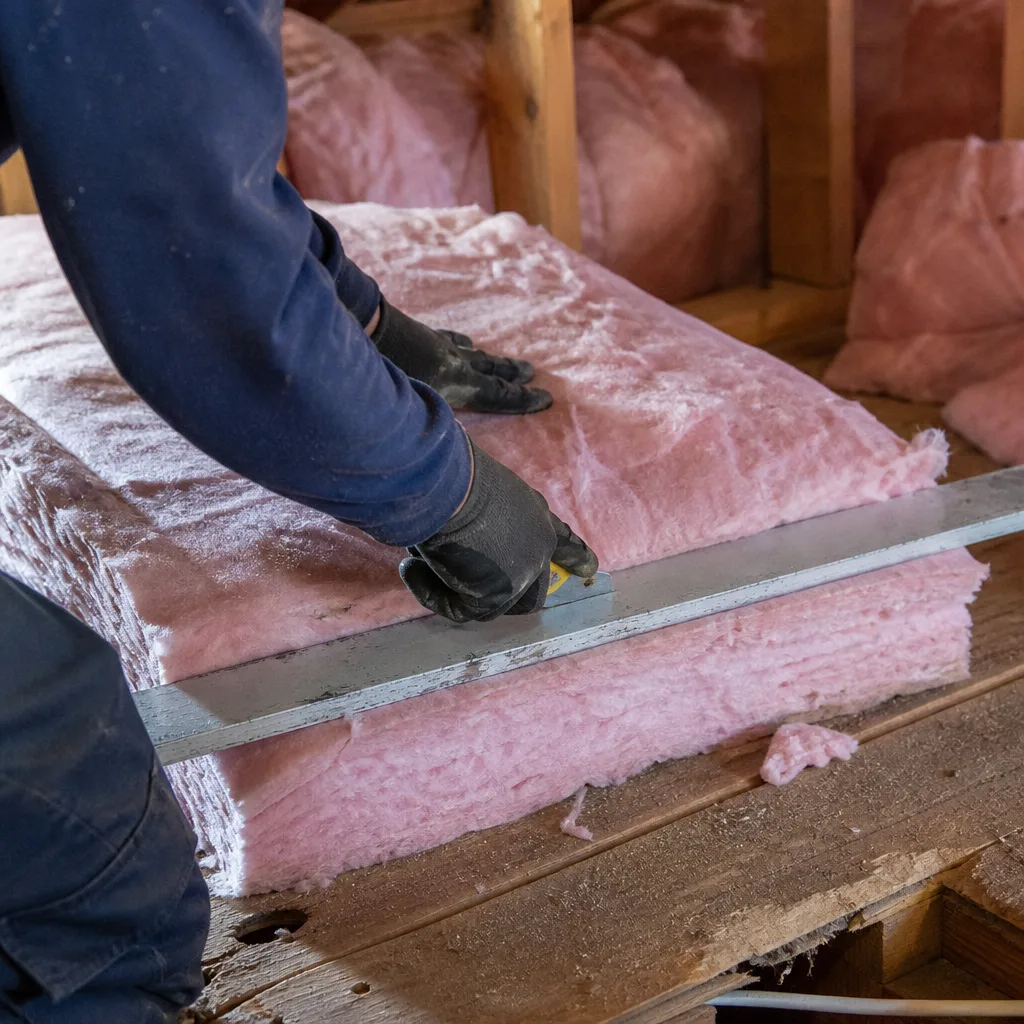
The biggest source of variance is air sealing labor. In Torrance’s climate, with our mild winters and increasingly hot summers, an attic with R-38 blown over unsealed top plates and can-light penetrations performs like an attic with R-19. The conditioned air escapes through gaps the insulation doesn’t touch. Proper air sealing - caulking top plates, sealing can lights with fire-rated covers, foaming wire and plumbing penetrations - takes 6-8 hours in a typical Torrance attic. At $85-$110 per hour for skilled envelope work, that’s $510-$880 of labor that some bids simply don’t mention.
Permit fees create another gap. The City of Torrance requires a building permit for insulation work that involves removal or addition of material above R-19 in conditioned attics. See our detailed guide on Insulation Permits, Codes & Inspections in CA: What You Need to Know for full compliance requirements. The permit itself runs $180-$260 depending on project valuation. Some contractors skip permitting and hope the homeowner doesn’t ask. Others roll it into “administrative fees” without showing the number.
HERS verification - the third major variance - is where bids diverge most sharply. For SCE rebate eligibility, a certified HERS rater must document pre- and post-work blower-door tests. The test costs $350-$500 in the Torrance market. Contractors who don’t work with HERS raters, or who don’t plan to file for rebates, leave this out entirely. The homeowner who wants the rebate pays twice: once for the omitted scope, again to hire a rater separately.
Finally, material specification matters. A bid that says “blown insulation, R-38” without naming the product, the manufacturer, or the installed density is not a specification. It’s a placeholder. Owens Corning AttiCat fiberglass, Knauf Jet Stream Ultra cellulose, and GreenFiber stabilized cellulose perform differently at the same nominal R-value, and they price differently at Southern California supplier yards. A legitimate bid names the material and the installed density - pounds per square foot for cellulose, minimum thickness for fiberglass - so you know what was priced.
Line-Item Cost Structure: What a 2026 Bid Should Show
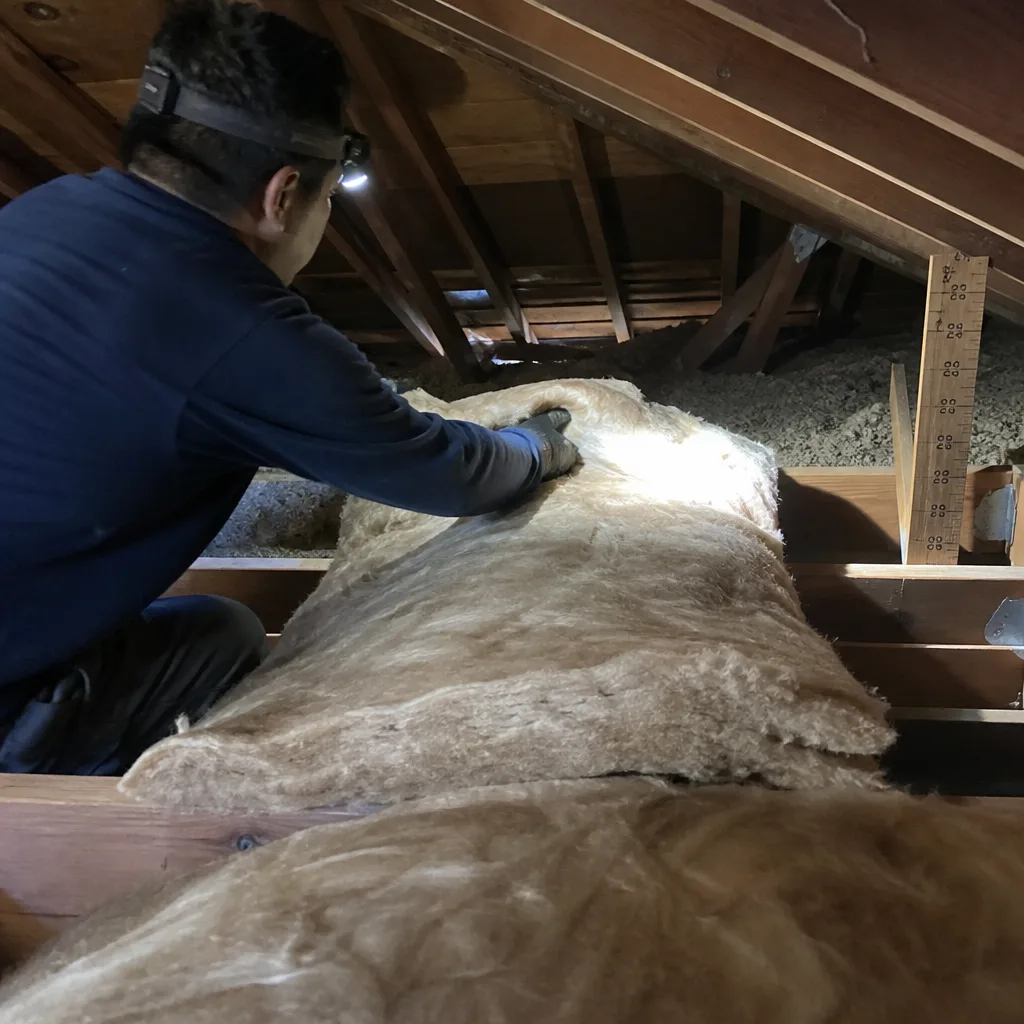
Below is the cost structure we use for a typical 1,500-2,000 square foot Torrance attic in 2026. These numbers reflect current Southern California supplier pricing, prevailing wage for envelope technicians in the South Bay, and Torrance’s permit schedule. Your attic may differ in accessibility, existing conditions, or square footage, but the line-item format should not.
| Line Item | Blown Cellulose | Blown Fiberglass | Open-Cell Spray Foam |
|---|---|---|---|
| Material (installed, R-38) | $1.10-$1.40/sq ft | $0.95-$1.25/sq ft | $3.80-$4.50/sq ft |
| Air sealing labor (6-8 hrs) | $680-$880 | $680-$880 | $680-$880 |
| Prep/cleanup (baffles, damming, protection) | $240-$360 | $240-$360 | $180-$280 |
| Building permit (City of Torrance) | $180-$260 | $180-$260 | $220-$300 |
| Blower-door test (pre/post) | $350-$450 | $350-$450 | $350-$450 |
| HERS rater documentation (CF2R) | $180-$250 | $180-$250 | $180-$250 |
| Typical total, 1,800 sq ft attic | $2,950-$3,850 | $2,650-$3,450 | $9,200-$11,400 |
Notice that air sealing, permit, blower-door test, and HERS documentation appear on every column. These are not optional add-ons. They are prerequisites for a job that performs as specified and qualifies for rebates. A bid that omits any of these four items is not a lower price for the same scope. It’s a different scope entirely.
In our experience across Torrance neighborhoods from Old Torrance to Hollywood Riviera, the attics that perform worst after “new insulation” are the ones where air sealing was skipped. If you’re unsure whether your attic needs attention, review our Insulation Warning Signs: A Torrance Homeowner’s Reference Guide. The homeowner sees fresh, fluffy material and assumes the job was done. The blower-door number tells a different story. We’ve tested attics in South Torrance where new R-38 cellulose was blown over unsealed top plates, and the post-work CFM50 reading barely moved from the pre-work baseline. The insulation looked correct. The building envelope was still leaking.
Material Cost Comparison: Cellulose vs. Fiberglass vs. Spray Foam
Each material has a place in Torrance’s climate, and none is universally superior. The right choice depends on your attic’s condition, your budget, and whether you’re optimizing for first cost or long-term performance.
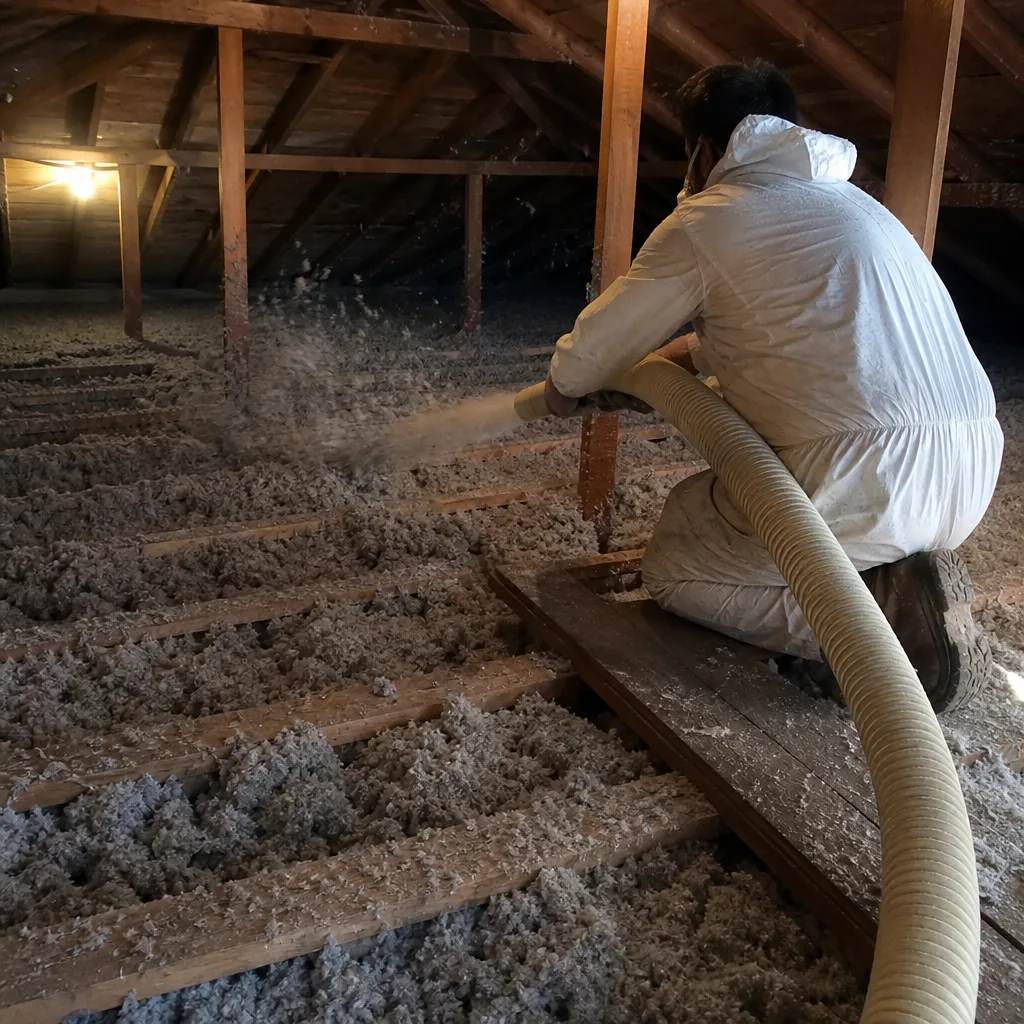
Blown cellulose - typically Knauf Jet Stream Ultra or GreenFiber stabilized cellulose - runs $1.10-$1.40 per square foot installed at R-38 in Torrance. Cellulose is treated with borate fire retardant, settles slightly less than loose-fill fiberglass, and performs well in our mild, dry climate where moisture issues are rare. At 1.5-2.0 pounds per square foot installed density, it fills irregular joist cavities better than fiberglass batts. The tradeoff: cellulose is heavier, so it isn’t suitable for every attic floor structure, and it requires more careful air sealing underneath because it can filter through gaps over time.
Blown fiberglass - Owens Corning AttiCat or CertainTeed InsulSafe SP - runs $0.95-$1.25 per square foot at R-38. It’s lighter, faster to install, and doesn’t settle appreciably. In Torrance’s coastal climate, where humidity stays moderate year-round, fiberglass doesn’t face the moisture-loading issues that affect it in Gulf Coast or Pacific Northwest markets. For year-round maintenance tips, see our Seasonal Insulation Care for Torrance: Year-Round Homeowner’s Guide. The downside: fiberglass is more air-permeable than cellulose, meaning it does less to block convective heat loss on its own. Without thorough air sealing beneath it, fiberglass performs below its rated R-value in real conditions.
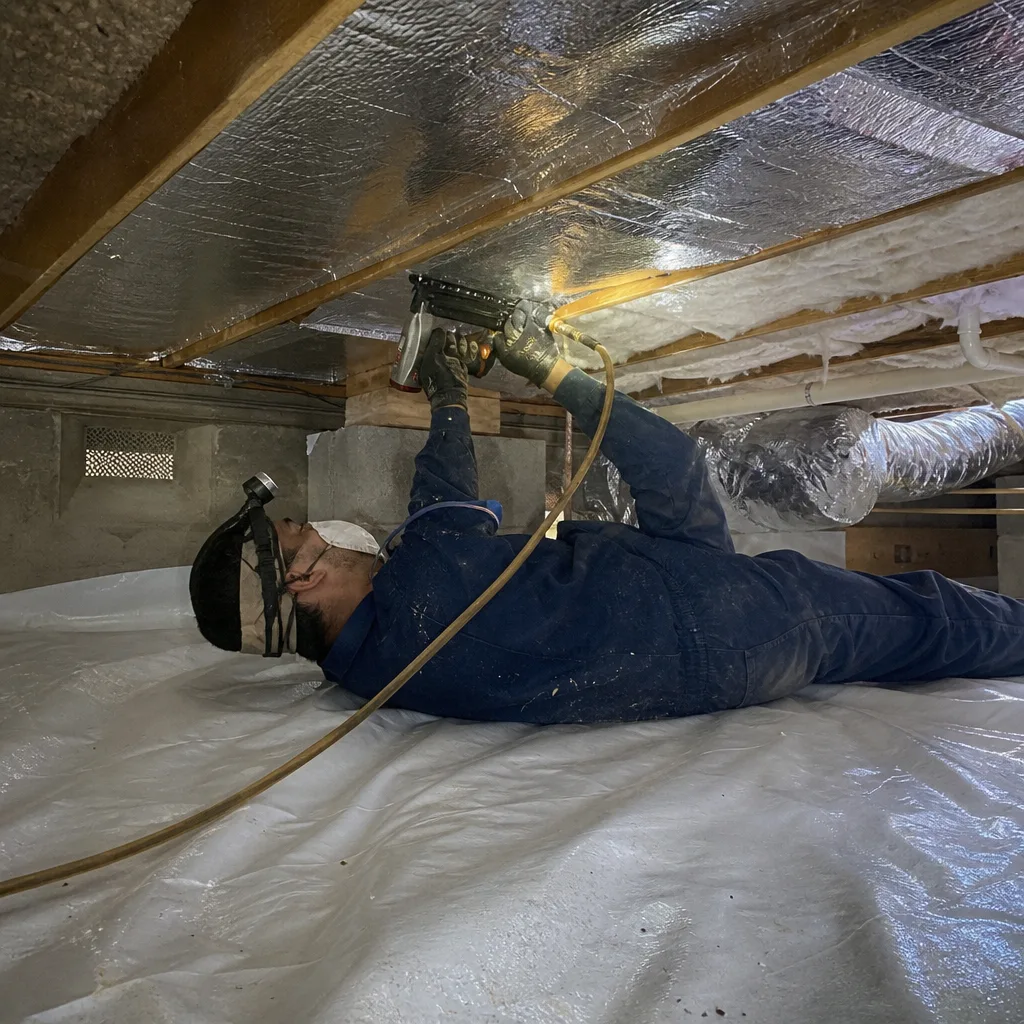
Open-cell spray foam - Icynene LD-C-50 or Demilec Heatlok Soya - runs $3.80-$4.50 per square foot at 3.5 inches (approximately R-13, applied to roof deck for conditioned attic assemblies) or $3.20-$3.80 for flash-and-batt hybrid systems. Spray foam is the only material that simultaneously insulates and air seals, which is why it’s specified for conditioned attics and complex roof geometries where batt or blown insulation can’t be installed effectively. The premium is substantial: 3-4x the cost of blown material for equivalent thermal performance. The justification for that premium is air sealing integration, not R-value alone.
Here’s how we think about material selection in Torrance:
- Vented attic, standard joist bays, no major air leakage paths: cellulose with thorough air sealing delivers the best performance per dollar.
- Vented attic, limited access, or floor structure that can’t handle cellulose weight: blown fiberglass with equivalent air sealing.
- Conditioned attic conversion, cathedral ceiling, or roof deck application where venting isn’t possible: open-cell spray foam, or hybrid flash-and-batt with closed-cell foam at the roof deck.
- Radiant heat gain through roof deck is the primary problem (common in west-facing Torrance attics): radiant barrier plus vented attic with blown material often outperforms spray foam at half the cost.
We’ve published before-and-after blower-door numbers on every applicable job since 2016. The best cellulose-plus-air-sealing jobs in Torrance have achieved 40-50% CFM50 reduction. The best spray foam jobs have achieved 55-65%. The gap narrows when air sealing is done thoroughly before blown material goes in.
SCE Energy Upgrade California Rebates: 2026 Requirements for Torrance
Southern California Edison’s Energy Upgrade California program offers rebates for insulation and air sealing work in Torrance ZIP codes, but the documentation requirements are specific and unforgiving. A job that qualifies on merit can be disqualified on paperwork. Here’s how to structure the work so the rebate applies.
Step 1: Pre-work blower-door test with HERS rater. The rater establishes the baseline CFM50 and completes the CF1R form (Certificate of Field Verification and Diagnostic Testing, Registration). This must happen before any material is installed. Retroactive testing is not accepted.
Step 2: Air sealing work documented with photos. The rater or contractor photographs sealed top plates, can light covers, penetration foaming, and other air sealing measures. These photos attach to the CF2R (Certificate of Field Verification and Diagnostic Testing, Completion).
Step 3: Insulation installation to specified R-value and density. The rater verifies installed depth and, for cellulose, installed density with a core sample. The CF2R records the post-work blower-door test showing CFM50 reduction.
Step 4: CF2R submission within 30 days of completion. Delays beyond 30 days risk rebate forfeiture. The rebate amount for attic insulation plus air sealing in 2026 is typically $600-$1,200 for Torrance homes, depending on pre-work CFM50 and percentage improvement achieved.
The most common technicality that forfeits rebates: air sealing performed without HERS pre-registration. Homeowners hire a contractor to “add insulation,” the contractor blows material without testing, and the homeowner later learns the rebate requires a pre-work baseline that no longer exists. The work still happened. The rebate does not.
Another frequent error: using a contractor who isn’t familiar with the CF2R process. The form has specific fields for air sealing measures, insulation type and R-value, and blower-door results. A contractor who doesn’t regularly work with HERS raters may complete the work correctly but fail to document it in the format SCE accepts. At Topside Attic Insulation Torrance, we coordinate HERS scheduling as part of every rebate-eligible job - the rater is named in the written scope before work starts, not called in as an afterthought.
When Spray Foam’s 3-4x Premium Is Worth It
At $9,200-$11,400 for a typical 1,800 square foot attic, open-cell spray foam is not a casual upgrade. The premium is justified in specific conditions and difficult to recoup in others. Here’s how we evaluate it with Torrance homeowners.
Spray foam makes sense when:
- The attic is being converted to conditioned space. A vented attic with blown insulation cannot become a habitable room without fundamentally changing the thermal boundary. Spray foam at the roof deck creates that boundary.
- The roof geometry is complex - multiple dormers, valleys, or low-slope sections where blown material can’t be installed at consistent depth or where venting is impractical. We’ve seen this in older Torrance homes in Old Torrance and the area near Torrance High School, where original construction predates modern venting requirements.
- HVAC ductwork runs through the attic. In Torrance’s increasingly hot summers, attic ductwork in a vented attic can reach 140°F. Spray foam at the roof deck drops attic temperature dramatically, reducing duct losses and improving cooling efficiency. The payback calculation must include HVAC runtime reduction, not just heating savings.
- The homeowner plans to remain in the home for 15+ years. At current SCE rates, the simple payback on spray foam versus cellulose with air sealing is typically 12-18 years for thermal performance alone. If ductwork efficiency gains are included, that can drop to 8-12 years.
Spray foam is difficult to justify when:
- The attic is vented, the ductwork is in conditioned space, and the primary goal is reducing winter heat loss. Torrance’s heating degree days are low. The energy savings from R-38 cellulose with thorough air sealing often approach those of spray foam at 40% of the cost.
- The roof deck has existing moisture issues. Spray foam is a vapor retarder, not a vapor barrier, but it still changes how the roof assembly dries. In Torrance’s coastal microclimates, particularly near the beach cities boundary, roof decks with historical moisture problems need assessment before any foam application.
- The homeowner is selling within 5 years. The next buyer won’t pay a premium for spray foam they don’t understand, and the energy savings won’t have accumulated enough to cover the cost delta.
Our documented results show that a well-executed cellulose job with thorough air sealing can achieve 40-50% CFM50 reduction in a typical Torrance vented attic. Spray foam on the same house might achieve 55-65%. The question for the homeowner is whether that incremental 10-15% improvement is worth 3-4x the cost. Sometimes it is. Often it isn’t.
The Cost of Not Insulating Correctly: Calculating Your Over-Spend
Every homeowner in Torrance with an under-insulated or poorly sealed attic is paying a premium on their SCE bill that can be quantified. Here’s the method we use during home energy audits to show homeowners what they’re currently spending on inefficiency.
Step 1: Find your daily kWh average. Log into your SCE account and pull 12 months of usage. Divide total annual kWh by 365. A typical 1,800 square foot Torrance home with poor attic insulation and air leakage runs 28-35 kWh/day. A comparable home with proper envelope performance runs 18-24 kWh/day.
Step 2: Compare to EnergyStar regional baseline. EnergyStar’s calculator for Los Angeles-Long Beach-Anaheim climate zone estimates 20-22 kWh/day for a 1,800 square foot home built to current code with proper insulation and air sealing. If your actual usage is 30 kWh/day, your excess is 8-10 kWh/day.
Step 3: Convert to dollars. At SCE’s 2026 Tier 1 rate of approximately $0.28/kWh and Tier 2 rate of $0.36/kWh (rates vary slightly by time-of-use plan), that 8-10 kWh/day excess costs $2.24-$3.60 per day, or $820-$1,310 per year. This is the annual cost of your attic’s poor performance.
Step 4: Apply simple payback. A $3,200 cellulose job with air sealing, divided by $1,000 annual savings, pays back in 3.2 years. A $10,000 spray foam job, divided by the same savings plus 15% HVAC efficiency gain, might save $1,300 annually and pay back in 7.7 years.
These are simplified calculations. Actual savings depend on your home’s specific leakage paths, your HVAC system’s efficiency, your thermostat settings, and whether you have solar offsetting daytime usage. But the framework is sound: there is a real number attached to doing nothing, and it’s larger than most homeowners assume. In Torrance’s mild climate, we sometimes hear that insulation “doesn’t matter as much.” The SCE bills we review say otherwise, especially as summers trend hotter and air conditioning runtime extends.
We’ve documented this calculation for hundreds of Torrance homes. The homeowner who knows their number makes a better decision than the homeowner who guesses.
What a Legitimate Written Price Looks Like vs. a Ballpark
Under Haven Standard Clause 1, every job we perform begins with a written price, written scope, and written warranty before anyone lifts a tool. No exceptions since 2016. Here’s what that document contains, and what we look for when reviewing competing estimates for our free second opinion service.
Five line items that must appear:
- Scope description with square footage and location. “Air seal and insulate vented attic above conditioned space, approximately 1,800 square feet, at [address], Torrance, CA.” Vague descriptions like “attic insulation” without location or dimensions allow scope creep.
- Material specification with manufacturer, product name, R-value, and installed density or thickness. “Knauf Jet Stream Ultra stabilized cellulose, R-38, minimum 1.6 lbs/sq ft installed density.” A specification that omits density or names only “blown insulation” is not a specification.
- Air sealing description with specific measures. “Seal top plates with acoustical sealant; install fire-rated covers on 6 can lights; foam seal all wire and plumbing penetrations; install baffles at eaves to maintain vent channel.” Generic “air sealing included” language is meaningless. The measures must be named.
- Permit inclusion with jurisdiction and fee. “City of Torrance building permit, $220, included.” If the permit isn’t mentioned, ask whether the work will be permitted. Unpermitted work can complicate home sales and insurance claims.
- Blower-door test inclusion with pre/post timing. “Pre-work and post-work blower-door test with certified HERS rater, CF1R and CF2R documentation, $420, included.” Without this, rebate eligibility and performance verification are impossible.
Two line items commonly omitted by contractors who intend to charge later:
- Insulation removal and disposal. If existing insulation is contaminated, compressed below R-19, or contains rodent debris, it must be removed before new material is installed. Removal adds $0.60-$1.10 per square foot. Bids that assume “blow over existing” without inspecting it may add this cost after work begins.
- Attic floor repair or walkway installation. Torrance attics in homes built before 1980 often have partial flooring or none at all. Safe work access requires plywood walkways or temporary flooring. Some bids omit this and present it as a necessary add-on once the crew is on site.
A ballpark estimate - “probably around three grand” - is not a written price. It cannot be compared to another estimate, it cannot be held to if conditions change, and it provides no basis for the 365-Day Done Right Promise. We deliver our written price after a site visit that includes attic inspection, blower-door baseline if applicable, and photo documentation. The homeowner knows what they’re buying, what it costs, and what they’ll receive before anyone starts.
Common Mistakes to Avoid
- Comparing bids that aren’t the same scope. A $1,800 bid without air sealing, permit, or blower-door test is not a “better deal” than a $3,400 bid that includes all three. It’s a different job. Line-item each bid before comparing totals.
- Assuming R-value is the only metric that matters. R-value measures conductive heat flow, not air leakage. An R-38 attic with unsealed penetrations performs like R-19 in real conditions. The blower-door number tells you what R-value cannot.
- Skipping the HERS pre-test to save $400. Without a pre-work blower-door test, you cannot claim SCE rebates and you cannot verify that the work improved anything. The $400 test protects a $600-$1,200 rebate and provides performance documentation.
- Choosing spray foam for thermal performance alone. In a vented Torrance attic with standard joist bays, spray foam’s thermal advantage over cellulose with air sealing is marginal. The premium pays off for conditioned attics, complex roofs, or ductwork in the attic - not for simple R-value.
- Ignoring Torrance’s specific coastal climate factors. Homes within a mile of the coast face higher humidity and salt air exposure. Material selection and vapor management differ from inland Torrance neighborhoods. A contractor who treats all Torrance homes identically may specify incorrectly for your microclimate.
- Accepting verbal promises about rebates. SCE rebate eligibility depends on specific documentation (CF1R, CF2R, blower-door delta) submitted within 30 days. A contractor who says “you’ll probably qualify” without naming the rater and the timeline is speculating with your money.
- Not asking for the blower-door number. Every legitimate insulation contractor should be able to tell you the pre-work CFM50 and the target post-work CFM50. If they can’t, they aren’t measuring performance. At Envelope Insulation Co., we publish before-and-after numbers on every applicable job so homeowners can verify results.
When to Call a Professional
Call a professional when your attic insulation is below R-30, when you feel temperature variation between rooms, when your SCE bills trend upward without usage changes, or when you’re considering any HVAC upgrade. A failing envelope makes even a new furnace or heat pump work harder than necessary.
Call immediately if you find rodent debris, moisture staining, or compressed insulation below R-19. These conditions require removal and remediation before new material is installed, and they indicate air leakage paths that need sealing.
Topside Attic Insulation Torrance offers free estimates in Torrance. Every estimate includes attic inspection, photo documentation, and a written price with line-item scope. Call (424) 704-9866 to schedule. A live person answers 24/7 - no voicemail loops, no callback windows measured in business days.
Frequently Asked Questions
A complete attic insulation job for a typical 1,500-2,000 square foot Torrance home runs $2,650-$3,850 for blown fiberglass or cellulose with air sealing, permit, and blower-door testing included. Open-cell spray foam for the same attic costs $9,200-$11,400. The 60-80% spread between competing bids usually reflects whether air sealing, permits, and HERS documentation are itemized or omitted. Call (424) 704-9866 for a written price on your specific home - estimates are free.
Adding new insulation over old is cheaper upfront but rarely the right choice. In Torrance’s climate, old insulation below R-19 is typically compressed, contaminated, or installed over unsealed air leaks. Blowing new material over it preserves those problems and may void manufacturer warranties. Removal and replacement with proper air sealing costs 40-60% more but delivers measurable performance improvement. We provide before-and-after blower-door numbers so you can see the difference.
Yes, if the work is structured correctly. SCE’s Energy Upgrade California program offers $600-$1,200 for attic insulation plus air sealing in Torrance ZIP codes, but requires a pre-work blower-door test by a certified HERS rater, documented air sealing measures, and CF2R submission within 30 days. The rebate is forfeited if the pre-test wasn’t registered before work began. We coordinate HERS scheduling as part of every rebate-eligible job.
Spray foam’s 3-4x premium over blown material is justified for conditioned attic conversions, complex roof geometries, or attics with significant HVAC ductwork. For standard vented attics with simple joist bays, cellulose with thorough air sealing achieves comparable blower-door results at 40% of the cost. The decision depends on your roof type, ductwork location, and how long you’ll stay in the home. We calculate simple payback for both options during our estimate.
A legitimate written price must show five line items: scope with square footage and location; material specification with manufacturer, product name, R-value, and installed density; air sealing description with specific measures; permit inclusion with jurisdiction and fee; and blower-door test inclusion with pre/post timing. Bids that omit any of these are quoting different scopes, not lower prices for the same work.
A typical 1,800 square foot Torrance attic takes one day for air sealing and one day for insulation installation, assuming no removal or remediation is needed. Jobs requiring insulation removal, rodent proofing, or extensive floor repair add a day. Spray foam applications require cure time and may extend to three days. We provide a written schedule with the written price before work starts.
Yes, measurably. A typical Torrance home with poor attic insulation and air leakage uses 8-10 kWh/day more than an equivalent home with proper envelope performance. At current SCE rates, that’s $820-$1,310 annually. A $3,200 cellulose job with air sealing pays back in 3-4 years at that savings rate. We calculate your specific over-spend during our energy audit using your actual usage history.
The Bottom Line
Insulation bids in Torrance vary by 60-80% not because contractors disagree on material costs, but because they disagree on what belongs in the scope. Air sealing labor, permit fees, and blower-door verification are the three items most commonly omitted from low bids, and they’re the three items that determine whether the job performs. A written price with five specific line items - scope, material spec, air sealing description, permit inclusion, and blower-door test - protects you from paying twice: once for the low bid, again for the work that should have been included. Calculate your current over-spend from SCE usage, compare payback periods honestly, and choose material based on your roof type and stay duration, not on R-value alone. The lowest bid is rarely the least expensive choice.
Written by Wes Okafor, Owner at Topside Attic Insulation Torrance, serving Torrance since 2016.