
Last updated September 24, 2026
Insulation Warning Signs: A Torrance Homeowner’s Reference Guide
Most Torrance homeowners check their attic insulation once - usually right after they buy the house - and never think about it again. Here’s the problem: insulation doesn’t fail dramatically. It fails invisibly, and the first place it shows up isn’t in the attic. It’s in your Southern California Edison bill, your smart thermostat’s runtime report, and the temperature difference between your living room ceiling at 3 p.m. and your bedroom ceiling at the same hour. After 9,000+ homes sealed and insulated since 2016, we’ve learned that the homeowners who catch insulation problems early are the ones who know which numbers to track and what a meaningful change looks like. This guide gives you those numbers.
Quick Answer
The warning signs that your Torrance home’s insulation is failing include: utility bills climbing more than 15% year-over-year without a rate increase, HVAC runtime exceeding 18 minutes per cooling cycle on 90°F days, ceiling surface temperatures more than 8°F above your indoor setpoint during peak heat, and visible “ghosting” lines or water staining on ceilings. These signals indicate degraded attic insulation, failed air sealing, or both - and they’re measurable before you ever climb into the attic.
Table of Contents
- How to Read Your SCE Bill as an Insulation Diagnostic
- Interior Surface Temperature Mapping: The $15 Test
- HVAC Runtime as a Performance Metric
- Visible Warning Signs Specific to Torrance Homes
- The One Measurement You Can Take From Below
- Common Mistakes to Avoid
- When to Call a Professional
- Frequently Asked Questions
How to Read Your SCE Bill as an Insulation Diagnostic
Your Southern California Edison bill contains more insulation intelligence than most home inspections. The key is the “daily average kWh” trend line, which SCE displays on monthly bills and in more detail through their online portal. Learning to read this trend separates envelope problems from equipment problems - and saves you from replacing a perfectly good air conditioner when the real issue is in the attic, as explained in our Complete Guide to Insulation in Torrance.
Pattern One: The Stepwise Increase
A stepwise increase shows up as a new, permanently higher baseline that arrives between one summer and the next and stays there. In Torrance, where coastal moderation keeps us cooler than inland LA County but still demands significant cooling from July through October, a typical home might show 18-22 kWh daily average in June, then jump to 28-32 kWh the following June with no rate change. The step is the signature of envelope degradation: insulation settling, air sealing failing at top plates or can lights, or - common in 1960s-1980s Torrance tract construction - original fiberglass batts compressing below their labeled R-value.
We’ve measured this exact pattern in homes from Topside Attic Insulation Torrance home across neighborhoods from Old Torrance to Southwood. The blower-door test - a pressurization reading that shows, in one number, how much air your building envelope is losing - typically confirms it: a home that tested at 3,500 CFM50 five years ago now tests at 5,200 CFM50, meaning conditioned air is escaping 49% faster through gaps the insulation used to block.
Pattern Two: The Spike
A spike is different. It arrives suddenly, often mid-season, and may be accompanied by audible changes in your HVAC system. A spike from 22 kWh to 35 kWh over two weeks in August usually implicates equipment failure: a refrigerant leak, failing capacitor, or compressor issue. The insulation hasn’t changed; the system is working harder to move the same heat against declining mechanical performance.
The diagnostic value is in knowing which pattern you’re seeing. Stepwise increase means call an insulation contractor. Spike means call your HVAC technician first, then verify envelope performance after the equipment is repaired. We’ve arrived at Torrance homes where the homeowner had already received a $14,000 air conditioner replacement quote - when the real problem was attic insulation compressed to R-11 in a home built for R-30, plus failed air sealing at every recessed light housing.
What to Do With This Information
- Log into sce.com and download 24 months of usage data in CSV format.
- Plot daily average kWh by month, or use SCE’s built-in year-over-year comparison.
- Look for the step versus the spike. A step that holds for 3+ months is envelope.
- Cross-reference with cooling degree days (CDD) from NOAA for Torrance - SCE’s “similar home” comparison is useful but doesn’t account for envelope condition.
- If you see a stepwise increase of 15% or more with no rate change, schedule a home energy audit that includes a blower-door test.
Under Haven Standard: Have it in writing - every audit we perform includes a written scope, written price, and documented photo record before any work starts. We also publish before-and-after blower-door numbers on every applicable job, so you can verify the performance change you paid for.
Interior Surface Temperature Mapping: The $15 Test
An infrared thermometer from any hardware store in Torrance - Home Depot on Hawthorne Boulevard, or Harbor Freight on Carson Street - gives you data that most insulation contractors charge to collect. The technique is simple: measure ceiling surface temperatures room by room on a peak-heat afternoon, and map the variance.
How to Perform the Test
- Wait for a day when outdoor temperature in Torrance exceeds 85°F - July through September provides plenty of candidates.
- Set your thermostat to 72°F and let the system run for 45 minutes to reach steady state.
- Starting at 2:30 p.m., point the infrared thermometer at the ceiling center of each room, holding it 12-18 inches from the surface.
- Record the temperature, room name, and time.
- Repeat at 4:00 p.m. to catch peak thermal load.
What the Numbers Mean
A well-insulated, well-sealed Torrance home with R-38 attic insulation and proper air sealing typically shows ceiling surface temperatures within 4-6°F of the indoor air temperature. That means 78-84°F when the room is 72°F. Variance between rooms on the same floor should stay under 4°F.
When we see a 4°F or greater variance between rooms on the same floor, the cause is almost always in the attic above. Common findings:
- Hot room, cold adjacent room: Missing or displaced insulation above the hot room, often from cable installation, prior rodent activity, or a storage board placed over batts that compressed them to R-8 or below.
- Linear hot stripe across ceiling: Air bypassing insulation along a joist bay, creating a thermal bridge. In Torrance’s 1950s-1970s ranch homes, this often tracks directly above a top plate that was never sealed during original construction.
- Hot circle around recessed light: Missing fire-rated cover (IC-rated enclosure), allowing direct attic air contact with the ceiling. This is both a thermal bypass and a fire code violation in California.
We’ve mapped these patterns in homes from the Hollywood Riviera to the Torrance Highlands. The infrared thermometer doesn’t lie - and it doesn’t require attic access. One homeowner in West Torrance found a 14°F variance between her master bedroom (ceiling: 86°F) and her guest room (ceiling: 72°F). The cause: a contractor had stored plywood sheets in the attic over the master bedroom, compressing Owens Corning fiberglass batts to less than half their designed thickness. The fix was insulation replacement, not more cooling capacity.
HVAC Runtime as a Performance Metric
Your smart thermostat is an insulation diagnostic tool that you already own. Nest, Ecobee, Honeywell Home, and most current systems log runtime data that reveals when your building envelope is failing - often months before you notice comfort changes.
Establishing Your Baseline
The metric that matters is runtime per degree of setpoint differential, normalized for outdoor temperature. Here’s how to build it:
- Access your thermostat’s history - Nest calls this “Energy History,” Ecobee calls it “Home IQ.”
- Select a representative summer week from your first year in the home, or your first year with the smart thermostat.
- For each day, note: total cooling runtime (minutes), indoor setpoint (°F), and peak outdoor temperature (°F from weather.gov for Torrance).
- Calculate: cooling runtime ÷ (peak outdoor temp − indoor setpoint). This gives you minutes per degree of thermal load.
A typical Torrance home with decent envelope performance shows 12-18 minutes per degree on a 90°F day with a 72°F setpoint. That means 216-324 minutes (3.6-5.4 hours) of total cooling runtime.
Recognizing Degradation
When runtime per degree increases by 20% or more year-over-year with no setpoint change, your HVAC system is compensating for thermal loss that the insulation used to prevent. The equipment is working longer to maintain the same temperature because more conditioned air is escaping, or more attic heat is penetrating, than the envelope was designed to allow.
We’ve documented this in Torrance homes where the runtime per degree climbed from 15 minutes to 22 minutes over three summers. The homeowners assumed their 14-year-old air conditioner was failing. Blower-door testing showed the real cause: failed air sealing at can lights and bathroom exhaust fans, plus settled cellulose insulation that had dropped from R-38 to an effective R-22. After Attic Insulation in Torrance work that included air sealing of all top plates and penetration points before adding new blown-in insulation, runtime per degree returned to 16 minutes - without touching the HVAC equipment.
The Torrance Climate Factor
Torrance’s coastal location creates a specific pattern. Morning marine layer keeps outdoor temperatures moderate, but afternoon sun penetration - especially in south-facing rooms in neighborhoods above the Palos Verdes Peninsula fog line - drives rapid attic temperature spikes. A well-sealed attic with proper ventilation might hit 110°F. An attic with failed air sealing and degraded insulation can reach 140°F or higher, forcing the HVAC system to run continuously from 2 p.m. to 7 p.m. to maintain setpoint. The runtime data captures this stress in a way that a single temperature reading cannot.
Visible Warning Signs Specific to Torrance Homes
Some insulation failures do leave visible evidence - if you know what the evidence means. These signs are particularly common in Torrance’s housing stock, which ranges from 1920s Craftsman bungalows in Old Torrance to 1980s-1990s tract homes in Southwood and North Torrance.
Ghosting Lines on Ceilings
Dark, sooty lines that track ceiling joists or wall studs are called “ghosting.” They’re caused by airborne particles - dust, cooking oils, candle soot - depositing on cooler ceiling surfaces. The cooler surfaces occur where insulation is missing or compressed, or where air bypasses insulation along framing members. In Torrance, we see this frequently in homes with original Knauf or Johns Manville fiberglass batts that have settled below the joist tops, creating a thermal bridge where the framing is colder than the insulated bays.
Ghosting is not a cosmetic problem to paint over. It’s a map of envelope failure. The dark lines mark exactly where conditioned air is contacting cold surfaces, condensing moisture, and depositing particles - and where your heated or cooled air is escaping.
Water Staining at the Eave Line
Staining or darkening along the ceiling perimeter, where the ceiling meets the exterior walls, indicates condensation from inadequate attic ventilation. In Torrance’s climate, this pattern often appears after homeowners add insulation without verifying soffit vent airflow. The new insulation blocks the vents, attic humidity rises, and cool air conditioning ducts running near the eave line sweat onto the drywall below.
We’ve corrected this in Torrance homes where the previous contractor had blown GreenFiber cellulose directly against the eaves, burying the soffit vents. The fix isn’t removing insulation - it’s installing proper baffles to maintain the ventilation channel, then replacing the insulation with full depth. Under Haven Standard, we document this with photos before and after, including blower-door readings where applicable.
Insulation Visible Through Recessed Lights
If you can see insulation - pink, yellow, gray, or white fibers - around the edge of a recessed can light when the bulb is removed, you have two problems. First, there’s no fire-rated cover (IC-rated enclosure) on that light, which is a California Building Code violation for contact with combustible materials. Second, that light housing is a direct thermal bypass: attic air moves freely into your conditioned space, and your conditioned air escapes into the attic.
In Torrance’s 1970s-1990s homes, non-IC-rated can lights were standard installation. We’ve found homes with 30+ recessed lights, every one an unsealed penetration. Sealing these with proper covers and fire-rated foam is air-sealing work that must precede any insulation addition - per our sealed-first-then-insulated protocol.
Other Visual Indicators
- Light visible through attic floor from below: Indicates gaps at partition walls, plumbing chases, or chimney bypasses - major air leakage sites.
- Insulation stained dark or matted: Suggests past roof leaks or ongoing condensation; compromised insulation performs at a fraction of rated R-value.
- Uneven insulation surface with “valleys”: Indicates foot traffic, storage, or prior work that displaced material without replacement.
The One Measurement You Can Take From Below
You don’t need attic access to document insulation failure. You need a $15 infrared thermometer, a 90°F day, and 10 minutes.
The Test
- Choose a day when Torrance’s afternoon high will exceed 85°F - check the forecast at weather.gov for the Torrance station.
- At 3:00 p.m., with your thermostat at 72°F and the system running continuously for at least 30 minutes, measure the ceiling surface temperature in the center of each room.
- Record the temperature and the room name.
The Threshold
Above 80°F ceiling surface temperature when indoor air is 72°F is a documented performance failure. Not a comfort preference. Not “some people run hot.” A thermal performance failure that means your attic is transferring heat into your living space faster than your insulation and air sealing were designed to allow.
We’ve measured 94°F ceiling surfaces in Torrance homes where the homeowner had been told their insulation was “fine” during a visual inspection. The attic had R-19 fiberglass batts - original to a 1978 build - that had settled to R-12 effective, plus zero air sealing at top plates. The ceiling was nearly as hot as the attic above it because the insulation wasn’t doing its job and the air sealing had never been done.
The 80°F threshold comes from building science, not opinion. At an 80°F surface temperature with 72°F air, the radiant asymmetry becomes noticeable to occupants. More importantly, the heat flux through the ceiling has reached a level where your HVAC system cannot maintain setpoint efficiently during peak load hours. You’re paying to cool air that is being reheated from above faster than the equipment can compensate.
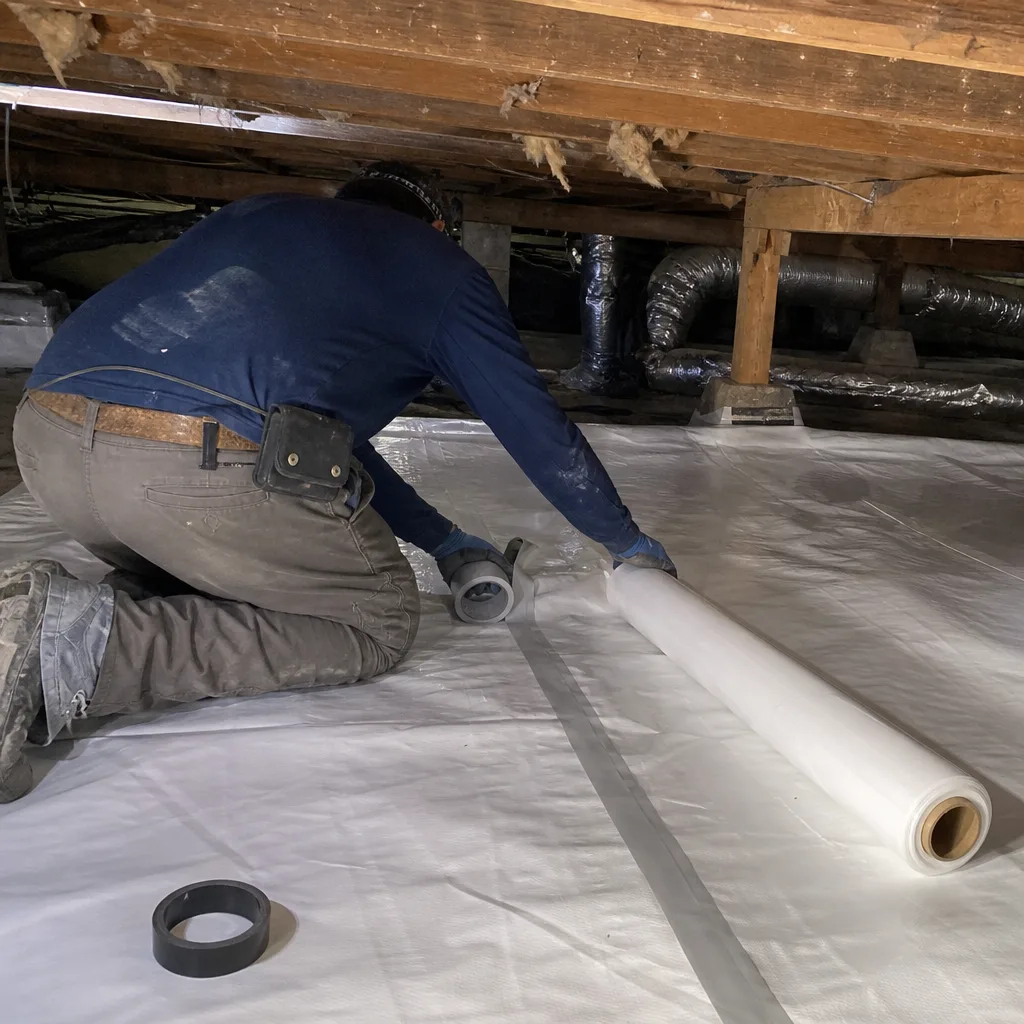
For Crawl Space Encapsulation & Vapor Barrier in Torrance work, we apply the same principle to floor surfaces: a crawl space with failed vapor barrier and inadequate insulation will show floor surface temperatures 5-8°F below the room air temperature in winter, creating the cold-floor complaints common in South Torrance homes with vented crawl spaces.
Common Mistakes to Avoid
- Adding insulation without air sealing first. Blown fiberglass or cellulose over an unsealed attic floor simply buries the leaks. The conditioned air still escapes; you just can’t see it. We never install insulation before sealing top plates, can lights, and all penetrations - sealed first, then insulated, in that order.
- Trusting a visual inspection alone. Insulation that looks “fine” from the attic hatch may be compressed, water-stained, or bypassed by air leaks invisible from above. We measure with a blower-door test and document with photos, not eyeball estimates.
- Replacing HVAC equipment before verifying envelope performance. A new air conditioner cannot overcome a failing building envelope. We’ve seen $12,000 system replacements that solved nothing because the real problem was attic insulation at half its designed R-value. Always test the envelope first.
- Ignoring the SCE bill trend. Waiting for “something to feel wrong” means you’ve already paid for months of degraded performance. The bill trend shows the problem before your body does.
- Compressing insulation with attic storage. Every plywood sheet, every box, every holiday decoration bin crushes fiberglass or cellulose to a fraction of rated performance. If you need attic storage, build a raised platform above the insulation, not on top of it.
- Blocking soffit vents with new insulation. Torrance homes need proper attic ventilation to manage humidity and prevent condensation. Adding insulation without maintaining the ventilation channel creates new moisture problems while solving the thermal one.
- Accepting a verbal estimate. Under Haven Standard Clause 1, every job begins with a written price, written scope, and written warranty before anyone lifts a tool. A contractor who won’t put the price in writing before starting won’t put the work quality in writing either.
When to Call a Professional
Call an insulation contractor when you’ve documented any of the following: SCE daily average kWh up 15% year-over-year with no rate change, ceiling surface temperatures above 80°F during peak heat, HVAC runtime per degree increased 20% or more, or visible ghosting, staining, or light penetration from the attic. These are not maintenance items; they’re envelope failures that worsen with time and compound your energy costs every billing cycle.
Topside Attic Insulation Torrance offers free estimates in Torrance - call (424) 704-9866. Every estimate includes a written scope, written price, and documented photo record. We also provide free second opinions on any written estimate from another contractor; bring us their paperwork and we’ll read it with you. For Spray Foam Insulation in Torrance or any building envelope service, we begin with air sealing and end with before-and-after blower-door numbers you can verify.
Frequently Asked Questions
Most complete attic insulation replacements in a Torrance single-family home run between $3,200 and $6,800, depending on attic square footage, accessibility, whether insulation removal is required, and whether air sealing is included. A typical 1,600-square-foot home with R-38 blown-in fiberglass or cellulose, full air sealing of top plates and penetrations, and fire-rated can light covers falls in the $4,200-$5,400 range. We provide a written price before any work starts - no exceptions. Call (424) 704-9866 for an exact quote; estimates are free.
You can, but you shouldn’t - not without air sealing first and verifying the existing insulation is dry, uncontaminated, and uncompressed. Adding new material over wet, rodent-affected, or heavily compressed insulation traps problems and reduces the new material’s effectiveness. We remove and replace when the existing insulation is compromised, and we always seal before we insulate. The 365-Day Done Right Promise applies either way.
Measure the depth with a ruler at multiple points and compare to the labeled R-value. Fiberglass batts labeled R-30 should measure about 10 inches; if they’re 5 inches, they’re performing at roughly R-15. Cellulose settles naturally 10-15% over decades; more than that indicates moisture history or disturbance. We document depth and condition with photos on every assessment.
Spray foam provides superior air sealing and higher R-value per inch, which matters in Torrance’s limited attic spaces - especially in older homes with shallow rafter bays. Open-cell spray foam from Demilec or Icynene at 5.5 inches achieves R-19 plus complete air sealing; closed-cell achieves R-38 at 5.5 inches but costs more. Fiberglass and cellulose remain cost-effective for open attics with adequate depth available. We specify based on your attic geometry, budget, and performance goals, with no proprietary product lock-in.
Fiberglass batts and blown-in cellulose last 20-30 years when dry and undisturbed, but Torrance’s coastal humidity and temperature cycling accelerate degradation. Insulation in homes within two miles of the coast may show moisture-related compression 10-15 years sooner than inland equivalents, which is why we recommend our Seasonal Insulation Care for Torrance: Year-Round Homeowner’s Guide. The critical factor is not age but performance: a 15-year-old installation that still tests at designed R-value with intact air sealing doesn’t need replacement. A 10-year-old installation with water staining, rodent damage, or failed air sealing does.
Yes - measurably. Our documented before-and-after blower-door numbers show typical reductions of 25-40% in air leakage after proper air sealing and insulation replacement. Translated to SCE bills, that’s often $80-$150 monthly reduction during peak cooling season for a 1,500-2,000 square foot Torrance home. The exact savings depend on your baseline leakage, equipment efficiency, and occupancy patterns. We don’t promise specific dollar savings; we promise specific performance improvements you can verify.
The Bottom Line
Insulation failure in a Torrance home announces itself in data before it announces itself in discomfort. Your SCE bill’s trend line, your smart thermostat’s runtime report, and your ceiling surface temperatures on a 90°F afternoon are diagnostic tools that cost nothing to use and reveal problems months before they become expensive. The 80°F ceiling threshold, the 15% bill increase, the 20% runtime degradation - these are specific, actionable signals, not vague complaints. Document them, understand what pattern you’re seeing, and you’ll know whether you’re facing envelope degradation, equipment failure, or both. When the numbers point to the envelope, start with air sealing and verify with a blower-door test. Everything else is secondary.
Written by Wes Okafor, Owner at Topside Attic Insulation Torrance, serving Torrance since 2016.