
Last updated September 23, 2026
Seasonal Insulation Care for Torrance: Year-Round Homeowner’s Guide
Torrance’s weather looks mild on paper. No freezing winters, no monsoons. But the marine layer that suppresses summer heat until 11 a.m. also drives attic humidity above 70% RH on roughly 80 mornings a year, and that moisture, trapped against improperly vapor-managed insulation, degrades R-value quietly over years. Most homeowners in Torrance discover the damage only when their summer cooling bills spike or a home inspector flags compressed, discolored batts during a sale. This guide breaks down what we’ve learned from 9,000+ homes since 2016: four distinct thermal and humidity regimes that stress your insulation envelope differently, and the specific maintenance actions that prevent failure in each one.
Quick Answer
Seasonal insulation care in Torrance means four targeted inspections per year aligned to local thermal and humidity regimes, not generic calendar advice. November through March demands condensation prevention and ventilation checks; April through June requires spray foam adhesion inspection after thermal cycling; July through September calls for radiant barrier verification; and October is your pre-marine-layer window to seal roof penetrations and attic hatches. A simple annual log with five data points per visit protects your investment and builds documented value for resale.
Table of Contents
- November-March: Marine Layer Season and Condensation Risk
- April-June: Thermal Cycling and Spray Foam Stress
- July-September: Peak Radiant Load and Barrier Performance
- October: The Pre-Rain Transition Checklist
- The Annual Log: Building a Documented Record
- Material-Specific Care by Insulation Type
- Common Mistakes to Avoid
- When to Call a Professional
- Frequently Asked Questions
November-March: Marine Layer Season and Condensation Risk
This is the highest condensation-risk period for Torrance attics, and most homeowners miss it entirely. From November through March, the marine layer sits thick over the South Bay, often not burning off until midday. Attic temperatures in neighborhoods like Old Torrance and Southwood can hover within 10°F of outdoor dew point for six to eight hours at a stretch. When warm, moist air migrates through ceiling penetrations and contacts cooler roof sheathing, condensation forms. Over a season, that moisture accumulates in fiberglass batts, reducing their effective R-value by 20-40% before you notice any interior symptom.
The fix is ventilation management, not more insulation. Here’s what we check on every Torrance home during this window:
- Verify eave-to-ridge ventilation ratio. California building code and good practice call for 1:150 net free area (NFA), meaning one square foot of vent opening for every 150 square feet of attic floor. In practice, a 1,500 square foot Torrance ranch needs 10 square feet of total NFA, split evenly between intake at the soffits and exhaust at the ridge. We measure this, not guess. A professional attic inspection in Torrance includes NFA calculation.
- Check soffit vents for blockage. Blown-in insulation, especially GreenFiber cellulose or Owens Corning loose-fill, drifts over time. We use a ruler and a flashlight from the attic side to confirm at least 3 inches of clear air space above the vent opening. In Torrance’s humid marine layer season, a blocked soffit vent turns the adjacent bay into a moisture trap.
- Inspect for thermal bypasses. Top plates, wire penetrations, and can light housings are the pathways that carry conditioned, moisture-laden air into the attic. We seal these first, always, before adding insulation. Our blower-door test, a pressurization reading that shows in one number how much air your building envelope is losing, typically reads 3,500-5,000 CFM50 in unsealed Torrance homes from the 1960s-1980s. After sealing top plates and penetrations with Icynene or Demilec spray foam at the attic floor, that number usually drops 40-60%.
- Document moisture indicators. Water staining on roof sheathing, rusted nail heads, and darkened insulation are the early warnings. We photograph everything and add it to the homeowner’s record.
In the Hollywood Riviera area, where afternoon sun hits harder even in winter, we’ve seen attics that read dry at 9 a.m. but show fresh condensation by 7 p.m. as temperatures drop and the marine layer rolls back in. That daily cycle is why November through March inspection matters more here than in inland Los Angeles County.
April-June: Thermal Cycling and Spray Foam Stress
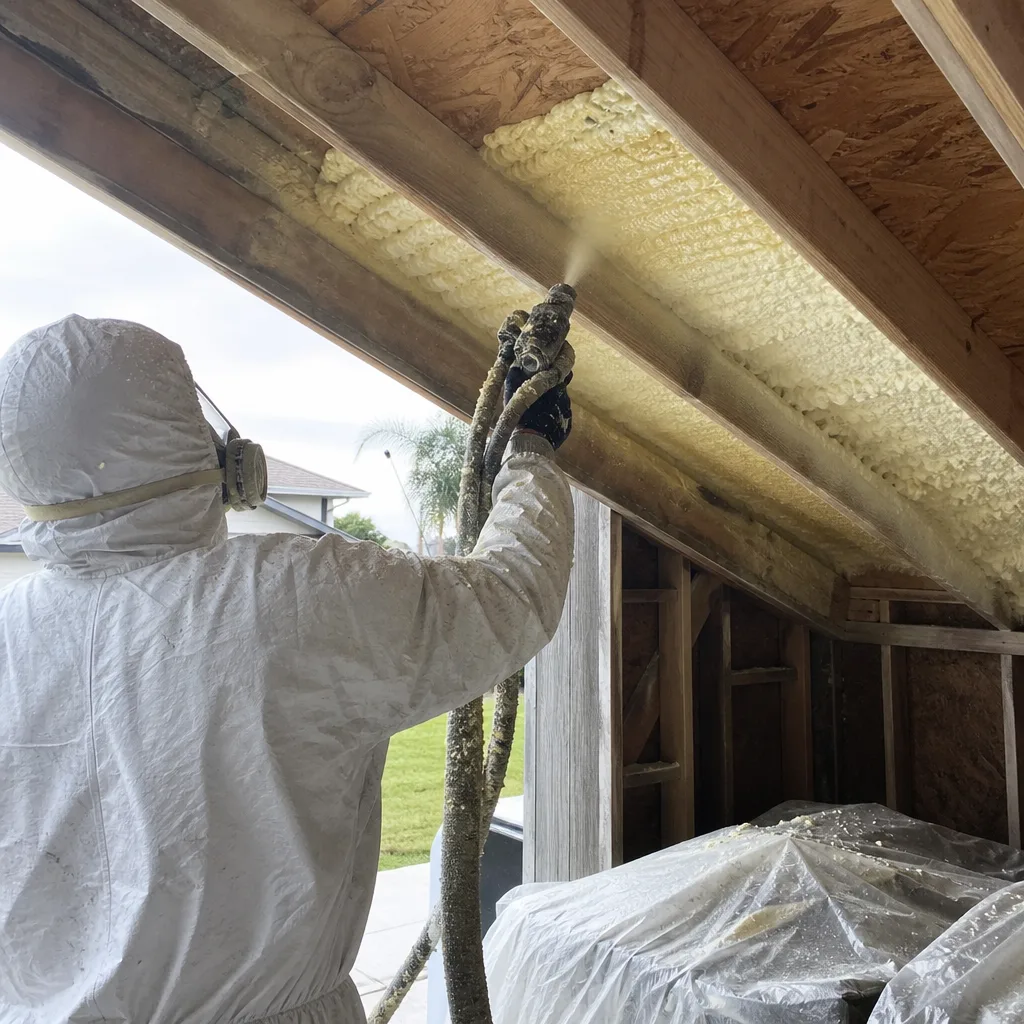
April through June is Torrance’s most dramatic thermal swing period. Marine layer mornings in the 50s give way to afternoons in the 80s, and attic temperatures can move 50°F in six hours. That cycling expands and contracts every material in your envelope, and it particularly stresses spray foam adhesion at framing interfaces.
Spray foam, whether open-cell Icynene or closed-cell Demilec, bonds to wood framing at installation. Over a decade of Torrance thermal cycling, that bond can fatigue. The failure mode is subtle: a hairline gap between foam and stud, or delamination from roof sheathing. Air moves through that gap, and with it, moisture. The foam itself still looks intact from the attic side.
Here’s what to inspect during this window:
- Visual scan along foam-to-framing edges. Look for any line of separation, any shadow that suggests a gap. Use a flashlight at a low angle to catch surface irregularities.
- Probe gently with a plastic putty knife. If the foam moves independently of the framing, the bond has failed. Do not use metal; you can damage the foam and create the problem you’re checking for.
- Check for dust accumulation on foam surfaces. Persistent airflow through a gap will deposit fine dust in a streak pattern. That’s your tell.
- Note any new odors in living spaces below. Spray foam with compromised adhesion can allow attic air, including any rodent or mold activity, to migrate downward. We handle attic insulation concerns across Torrance when homeowners report this.
The April-June window is also when we recommend Torrance homeowners review their spray foam installation documentation. Under Haven Standard, every job we complete includes the product batch, installation date, and before-and-after blower-door numbers. If your foam was installed before 2016, or if you have no documentation, this is the season to plan an assessment. Thermal cycling damage is cumulative; catching it at year eight prevents the costly removal and reapplication needed at year fifteen.
In North Torrance, where 1950s tract homes often have spray foam retrofits over original knob-and-tube wiring (now de-energized but still present), we pay particular attention to foam-to-electrical penetration bonds. The differential movement between rigid foam and old wiring insulation is a known failure point.
July-September: Peak Radiant Load and Barrier Performance
July through September is when Torrance attics see their highest radiant loads. Roof deck temperatures in West Torrance and Walteria can reach 150°F by 2 p.m., and that infrared radiation transfers directly to insulation below unless a radiant barrier interrupts it. But a radiant barrier only works when installed correctly, and “correctly” is specific.
The physics are simple: radiant barrier foil must face an air gap of at least 3/4 inch to reflect infrared energy. If the foil sags and touches the insulation below, it becomes a conductor, not a reflector. The R-value contribution drops to zero. In Torrance’s peak season, that can mean a 10-15°F difference in attic air temperature, which translates directly to cooling load and equipment runtime.
Here’s the July-September verification protocol:
- Confirm foil orientation. The reflective surface must face the roof deck, not the insulation. Dust accumulation on the upper surface is normal and does not significantly degrade performance. Dust on the lower surface means the foil is upside-down or double-sided product was used incorrectly.
- Measure air gap at multiple points. We use a simple ruler: 3/4 inch minimum, measured from foil to the top of the insulation below. In practice, we look for 1 inch to allow for future settling. Sagging is common in Torrance attics where installers used staples alone without proper strapping, or where summer heat has degraded the plastic support structure.
- Check for contact with insulation. Any point where foil touches fiberglass, cellulose, or foam creates a thermal bridge. We mark these locations for correction, typically by adding support strapping or, in severe cases, re-installing the barrier with proper suspension.
- Verify edge termination. Radiant barrier foil should terminate at the ridge vent, not block it, and should not extend into soffit vents where it can obstruct airflow. In Torrance’s coastal climate, that balance, radiant reflection plus convective ventilation, is what keeps attic humidity in check during the marine layer season.
We’ve measured attic air temperatures of 135°F in unbarriered Torrance attics during August, versus 105°F in properly barriered attics with intact air gaps. That 30°F difference is the difference between your HVAC running three cycles per hour versus six. Over a South Bay summer, that’s hundreds of dollars and significant equipment wear.
If your home has no radiant barrier, July-September is the season to evaluate whether installation makes sense. Attic insulation upgrades in Torrance often include barrier addition as part of a comprehensive envelope improvement, with before-and-after blower-door numbers to verify that air sealing wasn’t neglected in the process.
October: The Pre-Rain Transition Checklist
October is Torrance’s narrow maintenance window. The marine layer has retreated, the peak heat has passed, and the first winter rains, typically arriving in late November, haven’t yet started. This is when you seal the envelope against humidity intrusion before the marine layer season begins.
Our October protocol targets the pathways that marine-layer moisture exploits:
- Roof penetrations: Vent pipes, chimney flashings, and HVAC platform supports. We look for lifted flashing, cracked sealant, and gaps where rodents have enlarged openings. Any penetration that leaks liquid water will also admit humid air.
- Attic hatch gasket: The most common unsealed opening in Torrance homes. A proper gasket is closed-cell foam, compressible, and continuous. We replace any gasket that’s hardened, torn, or missing segments. A 24×30 inch hatch with a 1/4 inch gap leaks as much air as a 4-inch diameter hole in your ceiling.
- Duct boot tape: The flex duct connections at ceiling registers often rely on foil tape that degrades in attic heat. October is when we re-tape with mastic-backed foil or replace with mechanical clamps. In Torrance’s humidity regime, leaky duct boots don’t just waste energy, they pressurize the attic with conditioned air that carries moisture to cold surfaces.
- Exhaust fan terminations: Bathroom and kitchen fans must vent through the roof or gable wall, not terminate in the attic. We verify damper operation; a stuck-open damper is an open pathway for humid air year-round.
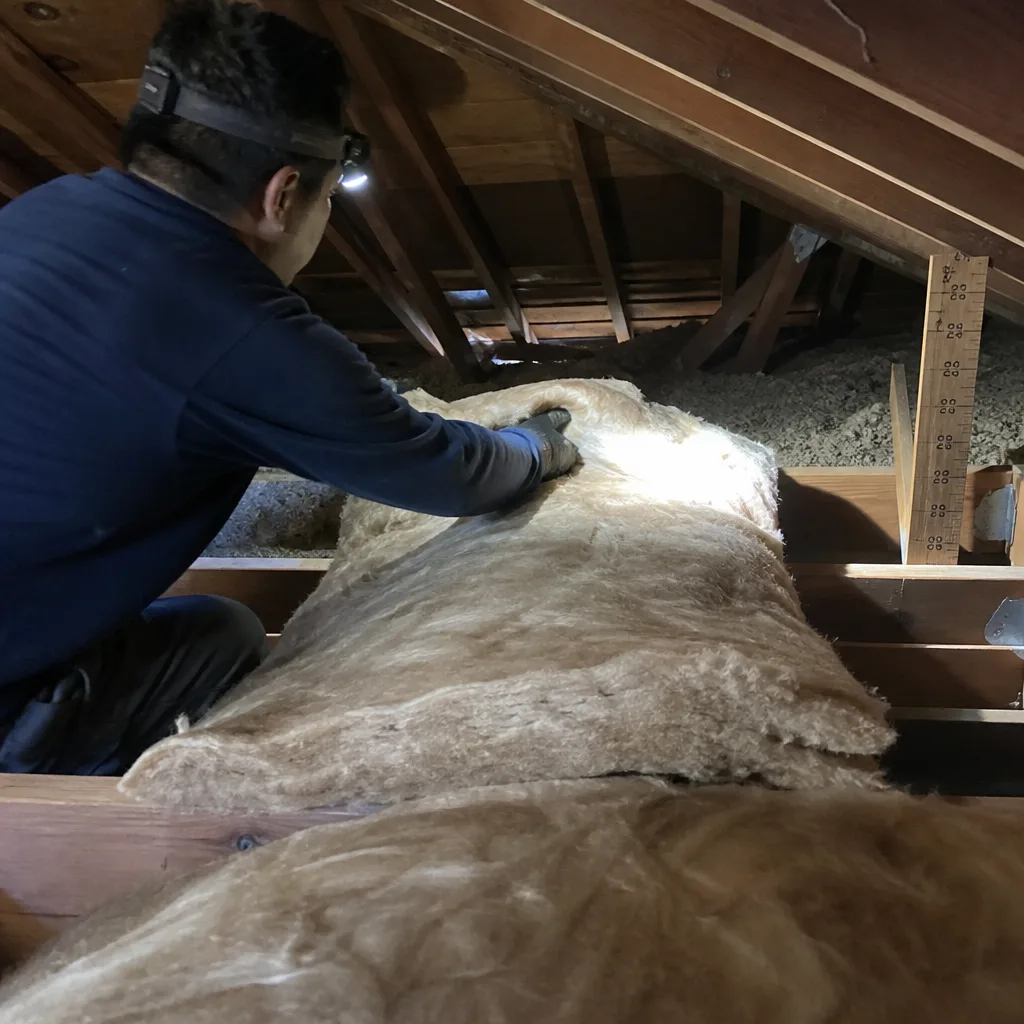
- Insulation displacement from summer activity: If HVAC technicians, electricians, or pest control have been in your attic since last October, insulation is likely disturbed. We rake it level and restore coverage depth before the marine layer returns.
In the Torrance Hills area, where homes sit higher and catch more wind-driven rain, we add a roof-edge inspection to the October list. Wind-lifted shingles at the eave can admit water that runs down the fascia and into soffit vents, wetting insulation from below. The fix is roofing, not insulation, but the insulation damage is what the homeowner sees first.
Every October inspection we complete includes a Documented Photo Record, included on every job, not available on request. You receive dated images of every item checked, with any findings marked. When you sell your Torrance home, that record is due-diligence gold for a buyer’s inspector.
The Annual Log: Building a Documented Record
Continuity of records is what separates homeowners who catch problems early from those who discover them during a pre-sale inspection. We’ve developed a simple single-page log structure that takes ten minutes per entry and builds documented value over years.
Four entries per year, aligned to the regimes above. Five data points each:
- Date of inspection
- Attic temperature at time of measurement (infrared thermometer, pointed at roof deck)
- Measured insulation depth (ruler, multiple locations, averaged)
- Visible moisture indicators (none, staining, active drip, mold, rusted fasteners)
- Ventilation clear/blocked status (soffit vents clear, ridge vent clear, both partially blocked, both blocked)
That’s it. Twenty data points per year, eighty over a typical ownership period. The pattern that emerges is more valuable than any single reading. A homeowner in South Torrance who logs 14-inch insulation depth in January 2020, 13 inches in January 2021, and 11 inches in January 2022 knows they have settling or disturbance, not guesswork. A homeowner who notes “staining present” in three consecutive November entries knows they have a chronic ventilation problem, not a one-time leak.
For buyers doing due diligence on a Torrance home, an annual log with this structure signals a maintained envelope. For sellers, it’s a negotiation tool that justifies asking price. We’ve had homeowners tell us the log we helped them start added measurable confidence to their sale transaction.
Under Haven Standard, we provide a template log to any Torrance homeowner who requests it, no appointment required. Call (424) 704-9866 and we’ll email the PDF.
Material-Specific Care by Insulation Type
Different insulation materials fail differently in Torrance’s climate regime. Here’s what to watch for, specific to what’s in your attic.
Fiberglass Batts and Loose-Fill
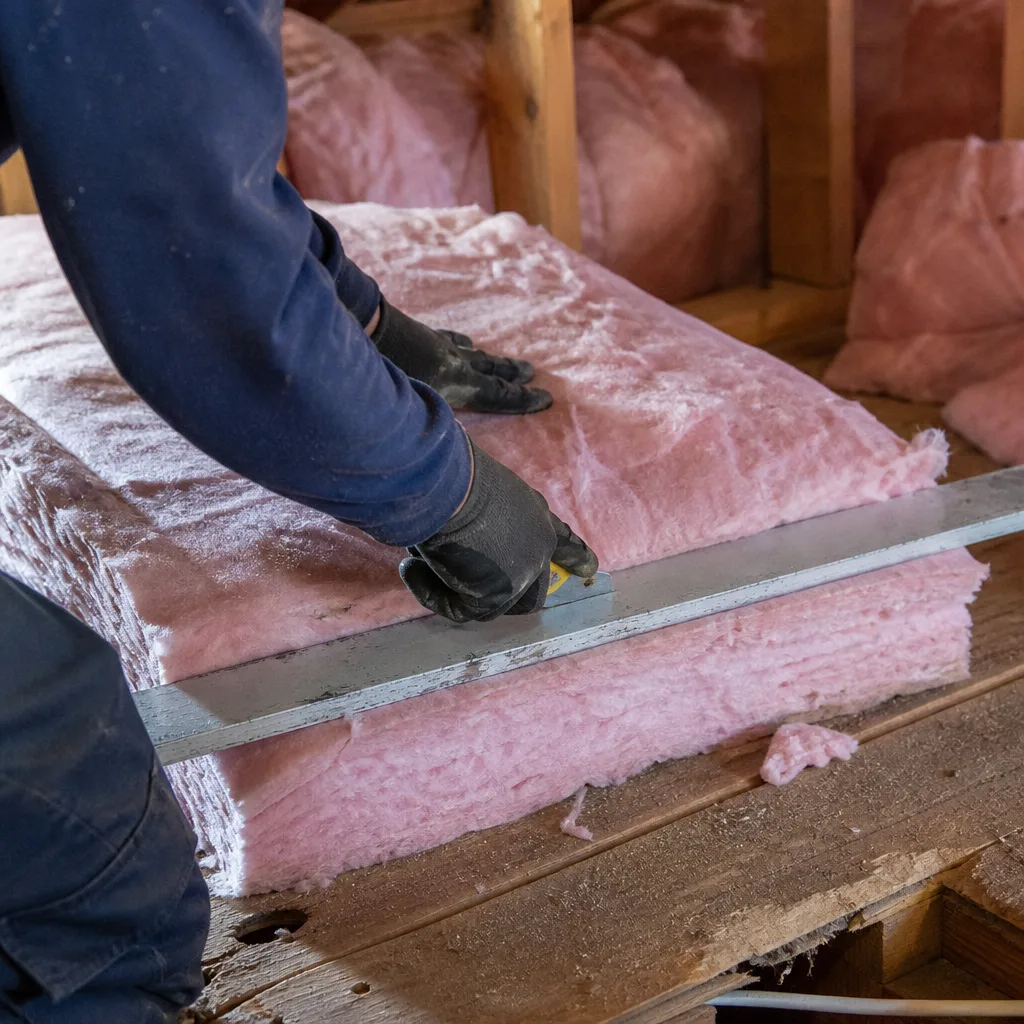
Fiberglass doesn’t absorb moisture, but it holds it between fibers when vapor management fails. In Torrance’s marine layer season, we’ve pulled batts from Del Amo area attics that weighed twice their dry weight, with visible mold on the paper facing. The R-value was effectively halved. Check for: compression (permanent R-value loss), discoloration (moisture indicator), and gaps at framing members (thermal bridging).
Cellulose (GreenFiber and Similar)
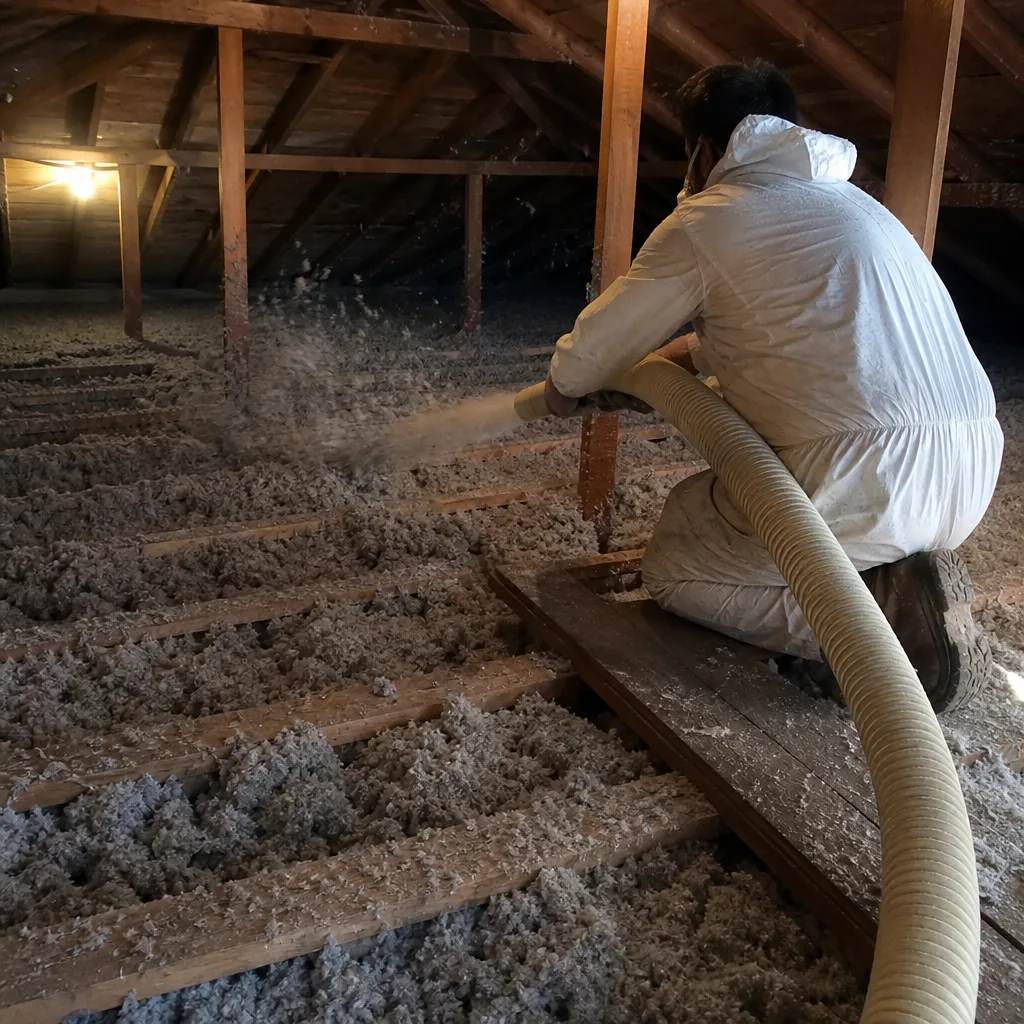
GreenFiber and other cellulose products are treated with borate for fire and pest resistance, but borate doesn’t prevent moisture absorption. Cellulose compacts when wet and doesn’t recover. In Torrance, we see this most often near bathroom exhaust fans that terminate in the attic. Check for: settled areas (indicates past wetting), unusual density variation, and borate dust on the attic floor (sign of degradation).
Spray Foam (Icynene, Demilec)
Open-cell Icynene is vapor-permeable; closed-cell Demilec is a vapor barrier. In Torrance’s humidity regime, open-cell on the roof deck requires careful management of interior humidity sources. Closed-cell at the attic floor is more forgiving but must maintain adhesion, as discussed in the April-June section. Check for: yellowing (UV degradation if exposed), surface dust streaks (airflow gaps), and odor changes.
Radiant Barrier Foil
As detailed in the July-September section, the critical factors are air gap maintenance and orientation. Additional check: corrosion at staple points. In Torrance’s salt-air influence, galvanized staples can rust through in 5-7 years, causing localized sagging.
Crawl Space Materials
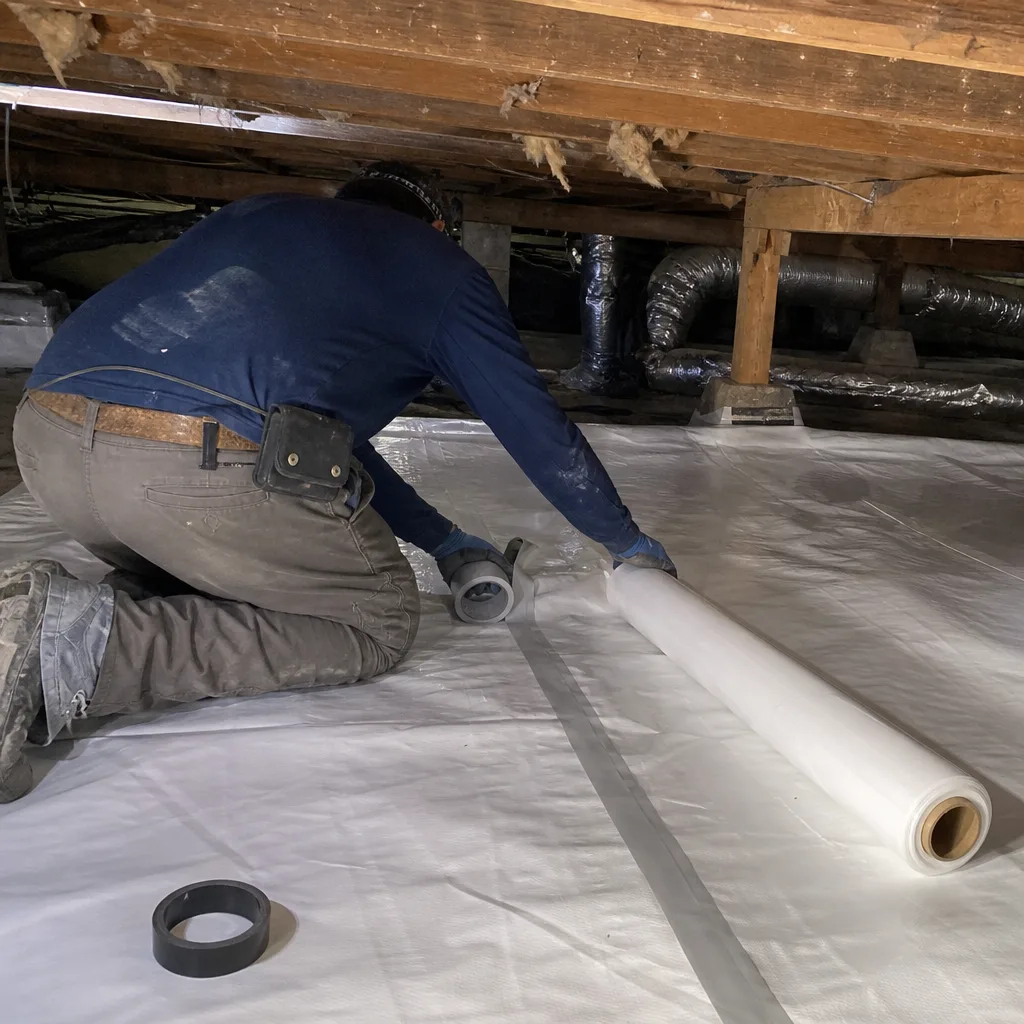
For homes with crawl space encapsulation in Torrance, the seasonal regime differs. Ground moisture is year-round, not marine-layer dependent. Vapor barrier inspection should happen quarterly, not seasonally. Look for: tears, seam separation, and condensation on the barrier’s upper surface (indicates warm, humid air contacting the cooler ground).
Common Mistakes to Avoid
- Adding insulation over unsealed air leaks. This is the most common error we correct in Torrance. Blown fiberglass over a leaky attic floor acts as a filter, trapping dust and creating a gray stripe pattern that homeowners mistake for mold. The real problem is conditioned air escaping through the leak. Seal first, insulate second, always.
- Blocking soffit vents with insulation “to add more R-value.” In Old Torrance bungalows with shallow rafter bays, homeowners sometimes stuff insulation tight to the eave. This kills ventilation and creates the condensation problem they were trying to prevent. Baffles, properly installed, maintain the air channel.
- Installing radiant barrier without verifying air gap. We’ve seen “radiant barriers” lying directly on insulation, stapled flat, performing zero reflective function. The homeowner paid for a product that does nothing. Measure the gap, or have it measured.
- Ignoring the attic hatch. A $20 gasket and four latch clips transform the leakiest component in most Torrance attics into a sealed assembly. Yet we estimate 70% of homes lack this simple fix.
- Skipping October maintenance because “it never rains here.” Torrance averages 14 inches of annual rainfall, concentrated in December through March. October is your preparation window. Miss it, and you’re sealing gaps in December rain.
- Assuming spray foam is “maintenance-free.” No building material is maintenance-free in a thermal cycling environment. Ten-year adhesion checks are prudent, not paranoid.
- Discarding documentation from prior work. The written scope, blower-door numbers, and photo record from your last insulation job are your baseline for comparison. Store them with your home records, not in the attic where heat degrades paper.
When to Call a Professional
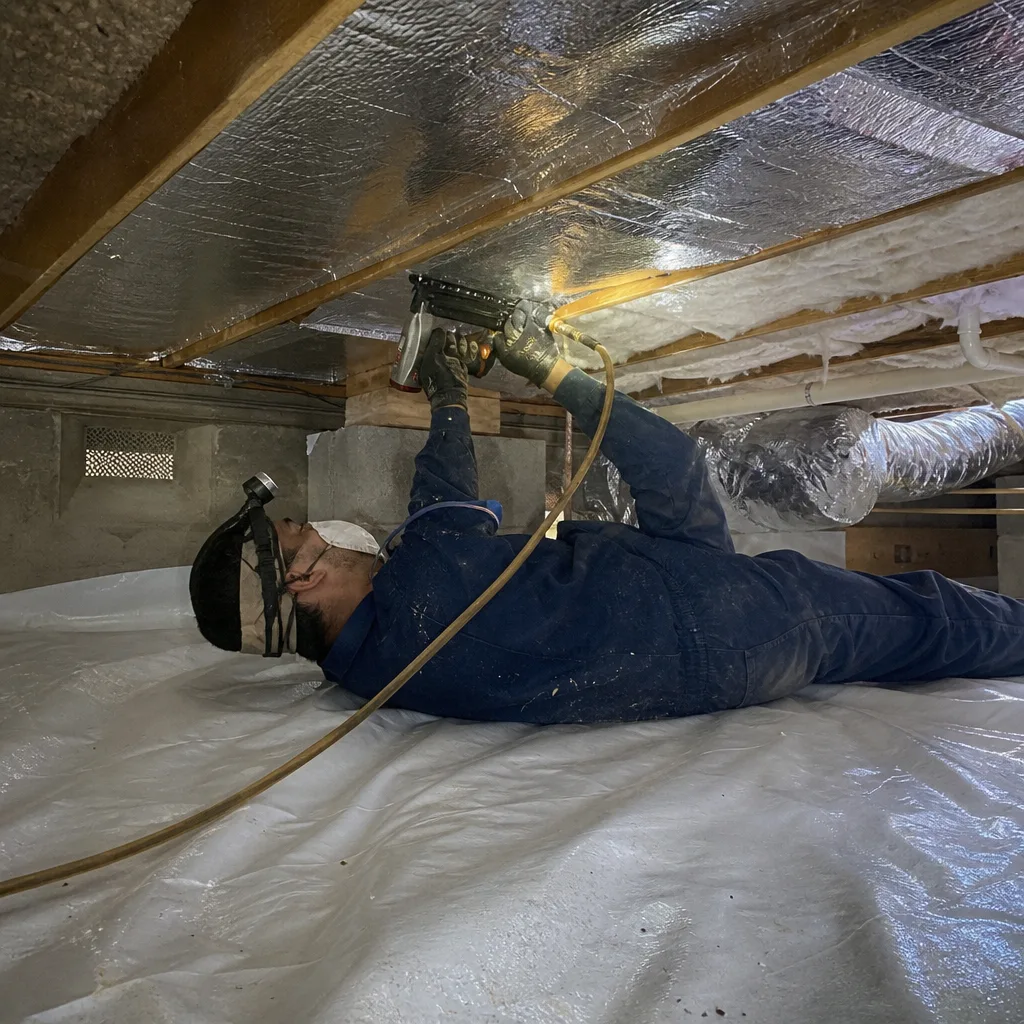
Some conditions warrant professional assessment regardless of your DIY comfort level. Active water dripping from roof sheathing, mold covering more than 10 square feet, or spray foam delamination exceeding hand-sized areas all require trained response. Electrical wiring in contact with insulation, or any evidence of rodent infestation, also crosses the line into professional territory.
Topside Attic Insulation Torrance offers free estimates in Torrance. Call (424) 704-9866. Every assessment includes a written price before any work starts, documented photo record, and on applicable jobs, before-and-after blower-door numbers so you can verify the air-sealing result. The 365-Day Done Right Promise applies to all completed work.
Frequently Asked Questions
Four times per year, aligned to the thermal and humidity regimes described in this guide. November, February, May, and August are practical anchor points that catch each regime mid-cycle. A ten-minute inspection with the five-point log builds a record that outlasts your ownership.
No. California Title 24 energy code sets the same prescriptive R-value requirements for Torrance as for Riverside or San Bernardino: R-38 minimum in attics for new construction, R-30 for retrofits where space is limited. Torrance’s marine layer humidity actually makes proper installation more critical, not less, because moisture degradation is the failure mode here, not extreme cold.
Most seasonal maintenance is homeowner-performed at near-zero cost: gasket replacement ($15-30), baffle installation ($20-40 in materials), log-keeping (free). Professional inspection and air-sealing correction typically runs $400-900 for a Torrance single-family home, depending on accessibility and extent of sealing needed. Full insulation replacement, when required, ranges $2.50-4.50 per square foot for blown-in fiberglass or cellulose, $4.50-8.00 for spray foam. Call (424) 704-9866 for an exact quote on your home - estimates are free, and we provide a written price before any work starts.
Sometimes, but only after verifying three conditions: the old insulation is dry, uncompressed, and uncontaminated. Wet or moldy insulation must be removed. Compressed fiberglass has permanently lost R-value and should be removed or fluffed, not buried. Rodent-contaminated insulation poses health risks and must be removed with proper PPE and disposal. We provide insulation removal and replacement in Torrance when conditions warrant.
Differences in air sealing quality, ventilation balance, and interior humidity sources. A home with unsealed can lights, a humidifier running indoors, and blocked soffit vents will show condensation while a neighboring home with sealed penetrations and clear ventilation does not. The variation is in the envelope performance, not the climate.
Prevented failure is the primary return. A moisture-damaged attic requiring full insulation removal, mold remediation, and re-insulation can cost $4,000-8,000 in Torrance. Seasonal maintenance prevents this. Secondary returns include reduced HVAC runtime (10-20% in our measured before-and-after cases) and documented condition at resale, which supports asking price and reduces buyer negotiation pressure.
The Bottom Line
Torrance’s climate demands a regime-specific approach to insulation care, not generic seasonal advice. The marine layer drives humidity risk from November through March. Thermal cycling stresses spray foam adhesion from April through June. Peak radiant load tests your barrier from July through September. And October is your narrow window to seal the envelope before the cycle repeats. A simple annual log with five data points per entry builds documented value and catches degradation before it becomes failure. The homeowners who thrive are the ones who treat their insulation envelope as a maintained system, not an install-and-forget component.
Written by Wes Okafor, Owner at Topside Attic Insulation Torrance, serving Torrance since 2016.