
Last updated September 24, 2026
How to Hire a Insulation Contractor in Torrance: A Step-by-Step Guide
A contractor who skips air sealing and installs R-49 blown cellulose will improve your home’s thermal resistance, and leave the convective bypass that was responsible for 40 to 60 percent of your heat gain exactly where it was. You will have paid full price for half the result. In Torrance, where marine-layer humidity and summer Santa Ana heat create year-round envelope stress, this mistake is especially costly. This guide shows you how to screen insulation contractors before anyone writes a bid, how to read that bid line by line, and how to verify the work was actually done. For Insulation Warning Signs: A Torrance Homeowner’s Reference Guide, see our companion piece.
Quick Answer
Hiring an insulation contractor in Torrance starts with license verification against the right CSLB classification, continues with a bid that specifies air-sealing materials and locations in writing, and ends with documentation that proves the work: a blower-door report, photos of installed depth, and a permit closure if the scope required one. The single most important pre-bid question is whether the contractor will perform a blower-door test before insulation goes in.
Table of Contents
- The Three License Types for California Insulation Work
- Seven Questions to Ask Before the Bid Is Written
- How to Read a Written Bid Line by Line
- Certificates, CF2Rs, and Blower-Door Reports: What Proves the Work
- Why the Lowest Bid in Torrance Usually Omits Air Sealing
- Red Flags That Should End the Conversation
- Torrance Permits, Title 24, and What Inspectors Actually Check
The Three License Types for California Insulation Work
California contractors carry classifications that determine what they are legally permitted to do. For insulation work, three licenses appear in Torrance. Knowing which one your contractor holds tells you whether they can handle your scope start to finish.
C-2 Insulation and Acoustical Contractor. This is the narrowest and most specific license. It authorizes installation of thermal and acoustical insulation, weather stripping, and firestopping. A C-2 holder can blow cellulose, hang fiberglass batts, and spray open- or closed-cell foam. What it does not authorize is structural modification, electrical work around recessed fixtures, or HVAC duct alteration. If your job involves moving can lights or rerouting flex duct, the C-2 contractor must subcontract that portion or you need a broader license.
C-38 Refrigeration Contractor. This license covers mechanical insulation, refrigeration piping, and HVAC-adjacent thermal barriers. You will see C-38 holders bidding duct wrap and attic insulation in Torrance when the job is bundled with HVAC replacement. The risk: a C-38 contractor may treat insulation as an accessory to the mechanical system rather than as a building-envelope discipline. Air sealing of top plates and stack effect paths often falls outside their standard scope.
B General Building Contractor. A B license permits construction of any structure, including all trades subcontracted under the B. A B contractor can self-perform insulation if they hold the requisite experience, or they can subcontract to a C-2. The B license is necessary when insulation is part of a larger remodel, addition, or envelope reconstruction. In Torrance’s 1950s and 1960s housing stock, where knob-and-tube remediation or rafter sistering often precedes insulation, the B license matters.
Verify any license at cslb.ca.gov. Check that the license is active, that the business name matches the bid, and that there are no pending disciplinary actions. In our experience, about one in four “insulation contractors” advertising in Torrance are operating under a suspended license or a license held by a different entity entirely.
Seven Questions to Ask Before the Bid Is Written
These questions separate contractors who understand building science from those who install material. Ask them in person or by text before anyone measures your attic. The competent answer and the red-flag answer follow each.
- Will you perform a blower-door test before the insulation goes in?
Competent answer: “Yes. We test before air sealing, after air sealing, and after insulation to document the change.” The blower-door test, a pressurization reading that shows in one number how much air your building envelope is losing, establishes the baseline and proves the result.
Red flag: “We don’t need to. We can tell by looking.” Convective bypasses are invisible. A visual inspection cannot measure stack effect or quantify leakage. - How do you document installed R-value?
Competent answer: “We photograph depth markers against framing members at minimum five locations per attic zone, and we note the coverage area and material density on your invoice.” For blown-in insulation in Torrance, settled depth determines achieved R-value, not bag count.
Red flag: “The bags are labeled R-38.” Bag labels specify R-value at a tested density and thickness. Settling, wind washing, and incomplete coverage reduce actual performance. - Do you pull a building permit for this scope?
Competent answer: “Yes, for attic insulation over conditioned space in Torrance, the Building Division requires a permit if we’re altering the thermal envelope. We pull it, schedule inspection, and close it out.” The permit triggers a Title 24 compliance review.
Red flag: “Permits just add cost and delay.” Unpermitted work voids some homeowners insurance policies and creates disclosure liability at sale. - What does ‘air sealing included’ specify in your bid?
Competent answer: “We seal top plates at all interior and exterior walls with acoustic sealant or fire-rated caulk, foam all wire and plumbing penetrations, box or cover can lights with rated enclosures, and seal the chimney chase and duct boots. The bid lists materials and estimated linear footage.” This is the Haven Standard approach: sealed first, then insulated.
Red flag: “We spray some foam around the obvious stuff.” Without itemization, air sealing becomes whatever the crew has time for before the blower truck arrives. - What insulation materials do you source, and do you lock me into one brand?
Competent answer: “We source from Owens Corning, Johns Manville, Knauf, and others depending on your application and budget. No proprietary lock-in.” Material selection should match the assembly, not the contractor’s distributor rebate.
Red flag: “We only use [single brand] because it’s the best.” This often signals a volume rebate arrangement, not a performance-based recommendation. - What documentation do I receive when the crew leaves?
Competent answer: “A written scope completion checklist, photos of installed depth and sealed locations, blower-door before-and-after readings, and your warranty document.” This is what a Documented Photo Record looks like in practice.
Red flag: “We’ll email you the invoice.” An invoice is not documentation of work performed. - What happens if I find a problem after installation?
Competent answer: “Our 365-Day Done Right Promise means we return and correct it. You already have the written scope, so we both know what ‘right’ looks like.” Under Haven Standard: if it’s not done right, we make it right.
Red flag: “Call us and we’ll see what we can do.” Vague post-sale commitments predict vague post-sale response.
How to Read a Written Bid Line by Line
A legitimate insulation bid in Torrance is a scope document, not a price. Here is how to read it.
Line 1: Scope description. Look for specificity. “Insulate attic to R-38” is insufficient. “Install GreenFiber all-borate cellulose at settled depth of 10.25 inches across 1,200 square feet of attic floor, with baffles at all eave vents” is what you need. The scope should name the material, the target R-value, the coverage area, and any prep or protection work.
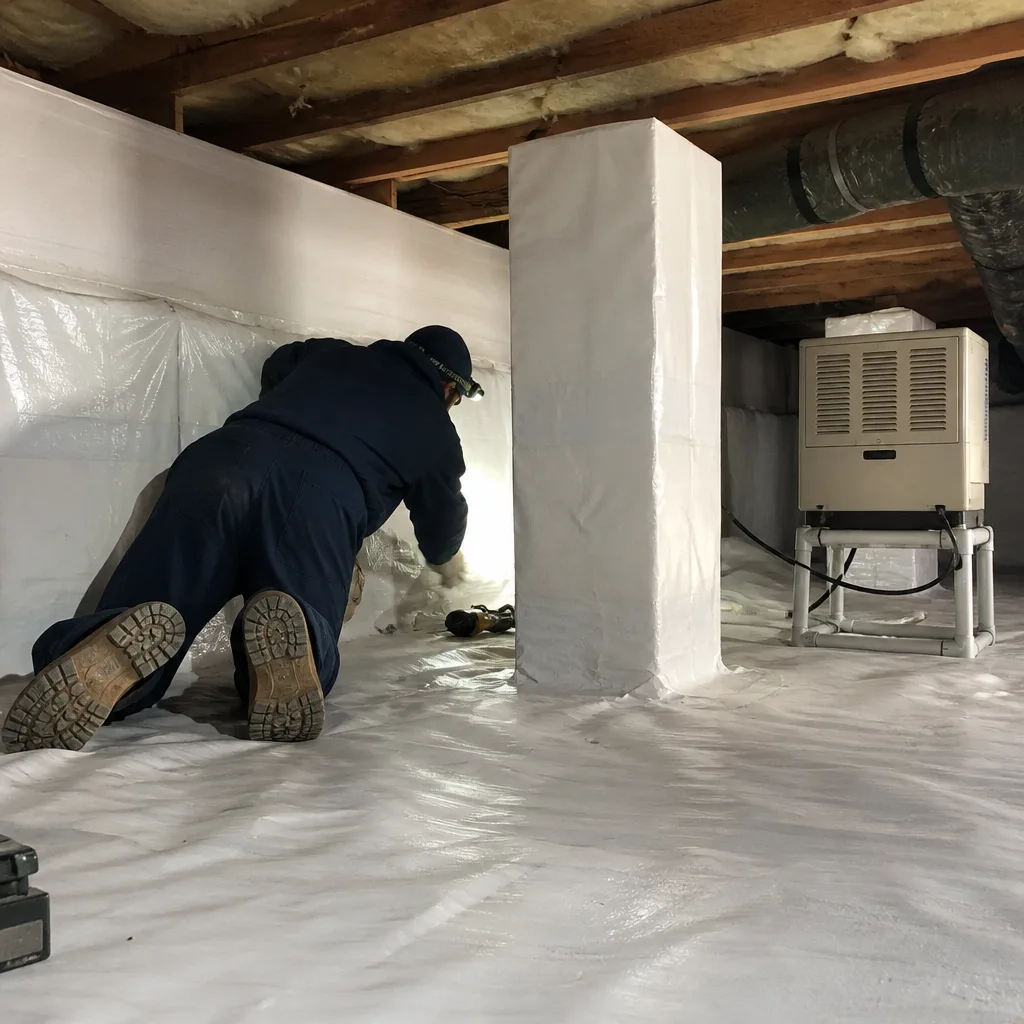
Line 2: Air sealing. This is where most bids diverge in actual value. A bid that states “air sealing included” without itemization is functionally meaningless. A proper bid specifies: materials (acoustic sealant, fire-rated caulk, two-part foam, rigid foam board, rated light covers); locations (top plates, penetrations, can lights, chimney chase, duct boots, attic access hatch); and estimated quantities (linear feet of top plate, count of can lights, count of penetrations). If your Torrance home has a raised foundation with a vented crawl space, the bid should also address subfloor sealing or crawl space encapsulation if that is part of the scope.
Line 3: Preparation and protection. Does the bid include attic cleaning, rodent debris removal, or contaminated insulation extraction? In Torrance’s older neighborhoods near Madrona Marsh and the oil field buffer zones, we regularly find vermiculite or rodent-affected material that must be removed before new insulation goes in. The bid should state whether this is included, excluded, or contingent on inspection.
Line 4: Equipment and testing. A bid that includes blower-door testing will list it as a line item, often with the target ACH50 or CFM50 reduction. If you are considering spray foam insulation, the bid should also note ventilation and re-occupancy timing, since off-gassing protocols differ between open-cell and closed-cell products.
Line 5: Permit and inspection. The bid should state who pulls the permit, who pays the fee, and who schedules the inspection. In Torrance, the Building Division at City Hall handles residential insulation permits. For details on requirements, see Insulation Permits, Codes & Inspections in CA: What You Need to Know. Some contractors add permit cost as a pass-through; others absorb it. Either is fine if it is disclosed.
Line 6: Warranty and follow-up. Look for a written warranty term, what it covers (material, labor, performance), and how to invoke it. The Haven Standard requires a written warranty delivered before work starts, not after.
Line 7: Price and payment terms. The total should be a flat price, not time-and-materials. Payment schedule should be stated: typical terms are a deposit at contract and balance at substantial completion. Never pay in full before inspection sign-off.
Certificates, CF2Rs, and Blower-Door Reports: What Proves the Work
Homeowners often receive paperwork at job completion without knowing what each document actually certifies. Here is the distinction.
Certificate of Completion. This is a contractor-generated document stating that the work described was performed. It has no regulatory standing. A Certificate of Completion proves that the contractor believes they finished the job. It does not prove the job was done correctly, completely, or to code.
Title 24 CF2R. The Certificate of Field Verification and Diagnostic Testing is a California Energy Commission form required for most insulation work in new construction and significant alterations. A HERS rater or certified technician completes it. The CF2R verifies that installed insulation meets the R-value and installation criteria specified in the Title 24 compliance documents. In Torrance, if your job required a permit, the CF2R is typically necessary for final inspection. It proves code compliance; it does not prove air-sealing performance.
Blower-door report. This is the only document that proves the building envelope performs better after the work than before. The report contains: pre-work CFM50 or ACH50; post-air-sealing CFM50 or ACH50; post-insulation CFM50 or ACH50 if the contractor tests in phases; and the calculated reduction in air leakage. At Envelope Insulation Co., we publish these numbers on every applicable job because they are the single figure that shows, in context, what the homeowner actually paid for.
In our experience across Torrance, from the hillside homes in Southwood to the postwar tract housing near Wilson Park, pre-work blower-door readings typically fall between 3,500 and 6,000 CFM50 for homes built before 1980. After proper air sealing and insulation, we expect to see 35 to 55 percent reduction. A contractor who cannot or will not produce these numbers is asking you to trust rather than verify.
Why the Lowest Bid in Torrance Usually Omits Air Sealing
Air sealing is the most labor-intensive phase of a legitimate insulation job. In a typical 1,400-square-foot Torrance attic, proper air sealing takes a two-person crew four to six hours: moving existing insulation to expose top plates, foaming penetrations, boxing can lights, sealing the chimney chase, and detailing the attic access hatch. Blown cellulose installation takes ninety minutes.
A contractor competing on price has a structural incentive to skip or minimize air sealing. The homeowner sees a lower number, the crew finishes faster, and the result looks identical from the attic hatch: fresh, fluffy insulation covering everything that made the attic uncomfortable before. The convective bypasses remain active. The homeowner pays for R-value that cannot perform because conditioned air continues to escape through gaps the insulation does not seal.
To compare bids fairly, normalize them to the same scope. Ask each contractor to bid these identical line items: air sealing with material and location specification; insulation with material, R-value, and coverage area; prep and protection; blower-door testing; permit and inspection; warranty. A bid that omits any of these is not a lower price for the same job. It is a lower price for a different job.
For attic insulation in Torrance, most complete jobs in homes between 1,200 and 2,000 square feet run between $3,800 and $7,200 depending on access difficulty, existing material condition, and whether spray foam is specified for rim joists or kneewalls. A bid below $2,500 for this scope should trigger immediate scrutiny of what was excluded.
Red Flags That Should End the Conversation
- Pressure to sign today. A contractor who offers a “today only” discount is optimizing for closure, not your outcome. Under Haven Standard: Written Price Before Any Work Starts, always. There is no expiration on a legitimate flat price.
- No physical business address. Verify the contractor’s listed address. PO boxes and virtual offices are common among operators who intend to disappear after collecting deposits. Torrance contractors should have a traceable presence in the South Bay.
- Refusal to provide a written scope before work. Verbal scopes are unenforceable. If the contractor will not put materials, locations, and performance targets in writing, they cannot be held to them.
- “We don’t need permits for this.” In Torrance, attic insulation over conditioned space typically requires a permit if the thermal envelope is altered. A contractor who avoids permitting may also avoid inspection, which means no independent verification of installed depth or fire safety clearances.
- No mention of ventilation. Torrance’s marine climate means attics need functional intake and exhaust ventilation. A contractor who proposes adding insulation without inspecting or upgrading baffles and vents risks creating moisture problems that manifest as mold in eighteen to thirty-six months.
- Payment demanded in full upfront. Standard terms are deposit at contract, balance at completion. Full prepayment removes the contractor’s incentive to return and correct deficiencies.
- Inability to explain R-value vs. air leakage. A contractor who conflates these concepts, or who claims that higher R-value alone solves comfort problems, does not understand the physics they are being hired to manipulate.
Torrance Permits, Title 24, and What Inspectors Actually Check
The Torrance Building Division, located at City Hall on Torrance Boulevard, enforces the California Building Code and Title 24 energy standards. For residential insulation, here is what actually happens.
Permit requirement. A permit is required for insulation installation when the work alters the thermal envelope of a conditioned space. This includes adding insulation to an attic where none existed, replacing insulation below a threshold R-value, or installing insulation in walls during remodel. Simple like-for-like replacement of damaged material in an already-insulated attic may not require permitting; the Building Division can confirm in a two-minute phone call.
Title 24 compliance. California’s energy code specifies minimum R-values by climate zone. Torrance sits in Climate Zone 6, which requires R-38 minimum for attic insulation in new construction and significant alterations. Existing buildings are subject to alteration standards that may differ; a knowledgeable contractor will reference the specific Title 24 table applicable to your project year.
What inspectors check. Torrance inspectors verify: installed depth against the marked R-value (they carry depth gauges); clearance from heat-producing fixtures (recessed lights, flues, metal chimneys); attic ventilation ratios (1:150 or 1:300 depending on configuration); and proper installation of baffles to prevent wind washing at eaves. They do not perform blower-door tests. A passed inspection proves code compliance, not envelope performance. That distinction matters.
CF2R and HERS verification. For jobs requiring HERS verification, a certified rater visits independently to measure insulation depth, check for gaps and compression, and complete the CF2R form. This is separate from the city inspection and adds cost, but it provides third-party documentation that the installed product matches the compliance documents.
Common Mistakes to Avoid
- Comparing bids without normalizing scope. A $4,200 bid with detailed air sealing and a $2,800 bid without it are not comparable. Normalize to identical line items before comparing price.
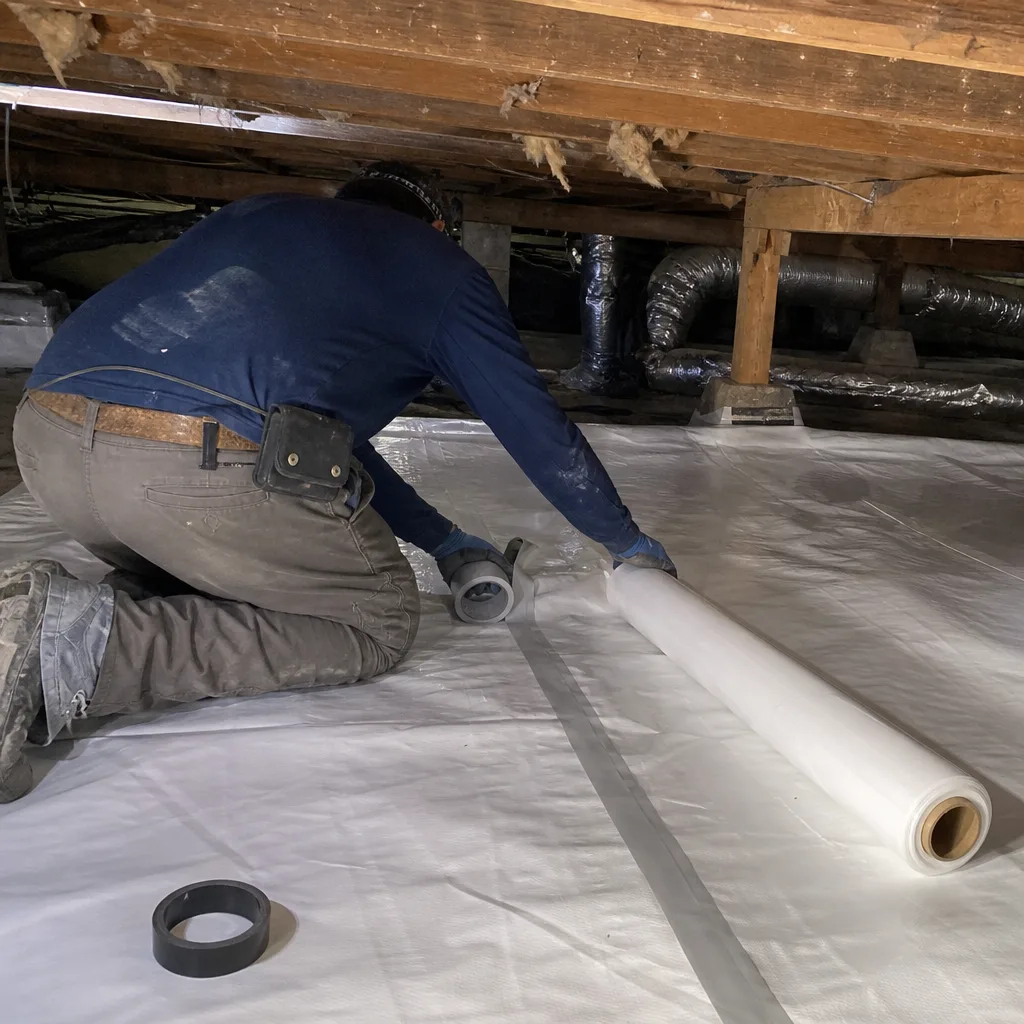
- Ignoring the crawl space. In Torrance’s raised-foundation homes, particularly in the older neighborhoods between Crenshaw Boulevard and Western Avenue, a vented crawl space with uninsulated joists can undo attic improvements. Address the envelope as a system, not a collection of parts.
- Assuming all cellulose is equivalent. GreenFiber all-borate cellulose, for example, uses only borate fire retardants; some lower-cost products use ammonium sulfate, which can corrode metal fixtures in humid conditions. The material specification matters in coastal climates.
- Skipping the pre-work blower-door test. Without a baseline, you cannot verify improvement. A contractor who resists baseline measurement is a contractor who does not want to be held accountable for results.
- Neglecting to verify permit closure. A permit that is opened but not finaled creates a cloud on title. Confirm final inspection sign-off before making final payment.
- Choosing spray foam based on R-value alone. Spray foam insulation provides air sealing and R-value simultaneously, but open-cell and closed-cell products have different vapor permeance, density, and cost profiles. Match the product to the assembly, not the advertisement.
- Forgetting to ask about post-installation access. If you have HVAC equipment or storage in your Torrance attic, confirm how the contractor preserves access pathways without creating thermal bridges.
When to Call a Professional
Call a professional insulation contractor when your home shows persistent signs of envelope failure: rooms that are consistently hotter or colder than the thermostat setting, energy bills that rise without rate increases, ice dam formation in rare cold snaps, or visible floor joists in the attic indicating settled or missing insulation. In Torrance, where summer attic temperatures regularly exceed 140 degrees, inadequate insulation accelerates HVAC wear and degrades indoor air quality.
Topside Attic Insulation Torrance offers free estimates in Torrance. We will review your existing conditions, perform a blower-door test if the scope warrants it, and provide a written price before any work starts. Call (424) 704-9866 to schedule.
Frequently Asked Questions
Most complete attic insulation jobs in Torrance homes between 1,200 and 2,000 square feet run between $3,800 and $7,200, depending on access difficulty, existing material condition, and whether air sealing, rodent remediation, or spray foam detailing is included. See our Insulation Cost Breakdown: The Torrance Homeowner’s Reference for 2026 for detailed pricing factors. The lowest bids in this market typically omit air sealing labor, which is the most time-intensive and highest-leverage part of the job. Call (424) 704-9866 for a written price on your specific home - estimates are free.
Yes, if the work alters the thermal envelope of a conditioned space. The Torrance Building Division requires permits for adding insulation where none existed, replacing insulation below current R-value thresholds, or insulating during remodel work. A permit triggers inspection for depth, clearance from heat fixtures, and ventilation compliance. Your contractor should pull the permit, schedule inspection, and confirm final sign-off.
A blower-door test is a pressurization reading that shows, in one number, how much air your building envelope is losing. The test depressurizes the house with a calibrated fan mounted in an exterior door, measuring the airflow required to maintain a 50-pascal pressure difference. The result, expressed as CFM50 or ACH50, establishes a baseline before work and proves improvement after air sealing and insulation. Without it, you are buying material, not verified performance.
Repair is cheaper only when the existing material is intact, uncontaminated, and properly installed to current depth. In Torrance’s older homes, we regularly find insulation that has settled below half its original depth, been compromised by rodent activity, or installed with gaps and compression that eliminate effective R-value. In these cases, removal and replacement delivers lower lifecycle cost than repair. A competent contractor assesses this during the initial inspection and documents the finding with photos.
Request a Documented Photo Record showing sealed top plates, foamed penetrations, covered can lights, and sealed chimney chases. The photos should be geotagged or dated, with visible framing members for location reference. Additionally, a post-work blower-door report showing measurable reduction in CFM50 proves that the envelope leaked less after the crew left than before. Photos alone can be staged; photos plus blower-door data cannot.
Same-day repair is possible for limited scope, such as sealing an attic access hatch or adding insulation to a small, accessible area. Complete attic air sealing and insulation typically requires scheduling due to crew allocation, material ordering, and permit lead time. At Topside Attic Insulation Torrance, we provide a written price at inspection and schedule work within five to ten business days, with emergency scheduling available for homes with active roof leaks or HVAC failure related to attic conditions.
We source from Owens Corning, Johns Manville, Knauf, and other manufacturers depending on the application. For attic floors in Torrance’s marine climate, we often specify GreenFiber all-borate cellulose for its fire resistance and moisture tolerance. For rim joists and kneewalls, closed-cell spray foam provides air sealing and R-value in constrained spaces. The right material depends on your specific assembly, budget, and performance goals - not on a single-brand preference.
The Bottom Line
Hiring an insulation contractor in Torrance is not primarily about finding the lowest price or verifying a license number. For more guides & resources on selecting and working with contractors, explore our blog. It is about securing a scope that includes air sealing as a specified, itemized prerequisite; receiving documentation that proves the work was done; and holding the contractor accountable to measurable performance rather than installed material. Ask the seven questions before the bid is written. Read the bid for specificity, not friendliness. Verify the permit and the blower-door result. The contractor who welcomes this scrutiny is the contractor who has nothing to hide.
Written by Wes Okafor, Owner at Topside Attic Insulation Torrance, serving Torrance since 2016.