
Rockwool Attic Air Sealing: The Torrance Owner’s Guide
Rockwool-compatible attic air sealing in Torrance typically runs $1,800-$3,400 for a complete top-plate and penetration seal on a 1,200-2,000 square foot home, and we stock the rigid stone-wool board, acoustic sealant, and fire-rated foam systems needed for same-day starts. Most Torrance homeowners discover the problem when their newly installed Rockwool batts underperform: rooms stay hot, the upstairs HVAC runs nonstop, and the attic hatch drops a column of 140-degree air every time it’s lifted. That’s not a Rockwool failure. It’s air moving through the envelope faster than the insulation can slow it.
We see this pattern constantly in Torrance’s post-war ranch tracts and 1980s two-stories, where top plates were never sealed and can lights were cut into drywall with no airtight box. The Rockwool is doing its job. The air sealing underneath it wasn’t there to begin with, or it failed where caulk aged out and pulled away from framing. Wes Okafor’s standard approach - and the one we’ve applied to over 9,000 homes since 2016 - is to run a blower-door depressurization test first, seal every measurable leak, then verify with a second test before insulation ever touches the attic floor.
Which Rockwool Models This Applies To
Rockwool doesn’t sell a single “attic air sealing kit.” What we’re matching is the building assembly: your Rockwool Comfortbatt, Comfortboard, or AFB evo batt installation needs compatible air-barrier materials at the boundaries. For attic floors, we typically pair Rockwool batts with Owens Corning EnergyComplete or Knauf Ecoseal Plus for the seal layer, then detail with 3M Fire Block Foam or Hilti CFS-S SIL silicone where penetrations pass through top plates. The critical match is density and compression: Comfortbatt at 3.5 inches compressed into a 2×10 bay needs a rigid air barrier below it, not just loose-fill, or the batt bridges and gaps form at the edges.
To identify what you have, check the paper facing or ink-stamped edge of any exposed batt for “Roxul” (pre-2018 branding) or current Rockwool product codes. Measure the cavity depth and note whether the batts sit on drywall alone or on a substrate board. If you’re seeing black streaking on the facing, that’s filter deposition - air moving through the batt, carrying dust, and proving the seal layer failed. For Torrance’s mix of coastal moisture and inland heat, we don’t use generic latex caulk at the top plate; it checks and pulls away in 18-24 months. We spec acoustic sealant or fire-rated intumescent foam, depending on the penetration type. Topside Attic Insulation Torrance is an independent service provider, not affiliated with Rockwool, and we source materials from multiple manufacturers including Rockwool, Owens Corning, Johns Manville, and Knauf with no proprietary lock-in.
Signs Your Rockwool Attic Air Sealing Is Failing
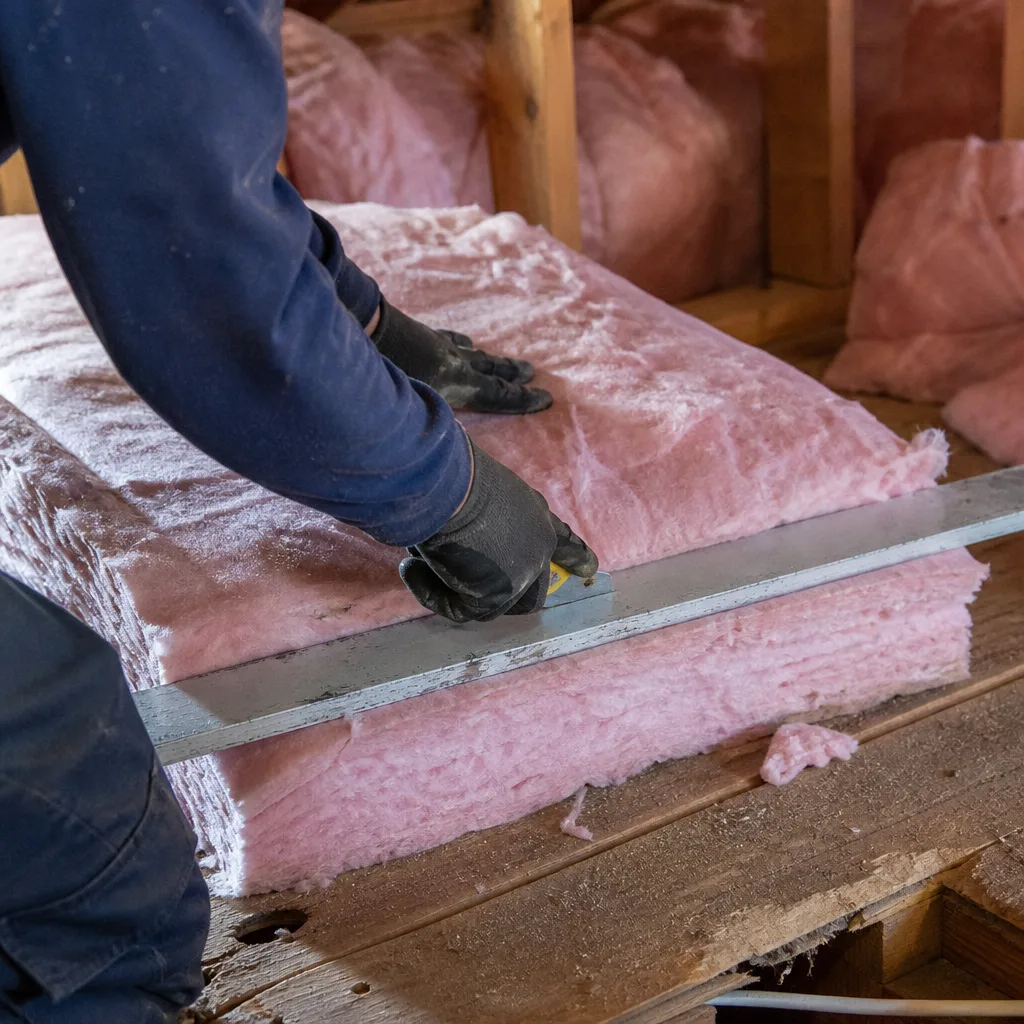
- Uneven room temperatures across the same duct zone. When the air barrier at the top plate has gaps, conditioned air escapes into the attic faster in some wall bays than others. The rooms below those leaks run 4-8 degrees warmer in Torrance’s August heat, and the homeowner cranks the thermostat lower to compensate.
- Black streaking or darkening on Rockwool batt faces. This is filter deposition - airborne dust catching in the fibers as air moves through the batt instead of across the sealed surface. Clean Rockwool is yellow-brown; streaked batts are a diagnostic photograph of air leakage, and we document this on every inspection.
- Attic hatch drops a visible heat column when opened. In a properly sealed attic, the hatch should feel warm, not blast furnace-hot. That column is convective flow through unsealed gaps around the hatch frame, often compounded by missing or compressed weatherstrip that should have been replaced during the original install.
- HVAC runtime increases year-over-year with no equipment change. A blower-door reading that drifts from 2,800 CFM50 to 3,600 CFM50 over three years indicates sealant failure at penetrations, not equipment degradation. We see this in Torrance’s Del Amo neighborhood on homes where original acoustic sealant was applied too thin to maintain elasticity.
- Moisture staining on ceiling drywall below exterior walls. Warm, humid attic air meeting cooler conditioned air at a leaky top plate creates condensation in winter. In Torrance’s mild climate this is subtle but persistent, and it shows first at the northwest corners where overnight cooling is greatest.
Replacement Cost & What’s Included
| Component | Torrance Price Range |
|---|---|
| Top-plate seal (acoustic sealant + detail foam), 1,200-1,600 sq ft home | $1,800-$2,400 |
| Top-plate + full penetration package (can lights, bath fans, wiring, plumbing stacks), 1,600-2,400 sq ft | $2,600-$3,400 |
| Attic hatch rebuild with rigid insulated cover and weatherstrip | $340-$520 |
| Before-and-after blower-door test with written report | Included |
| Documented Photo Record of all sealed penetrations | Included |
What drives the range: accessibility (truss height and clear span), quantity of can lights needing airtight boxes, and whether existing sealant must be removed before reapplication. Every job starts with a written price under Haven Standard Clause 1 - flat scope, flat number, no work begins without your signature on it. The 365-Day Done Right Promise covers labor and materials; if a seal pulls or a foam joint cracks, we return and fix it. We don’t charge diagnostic fees for callback work on our own installations.
DIY or Call Us?
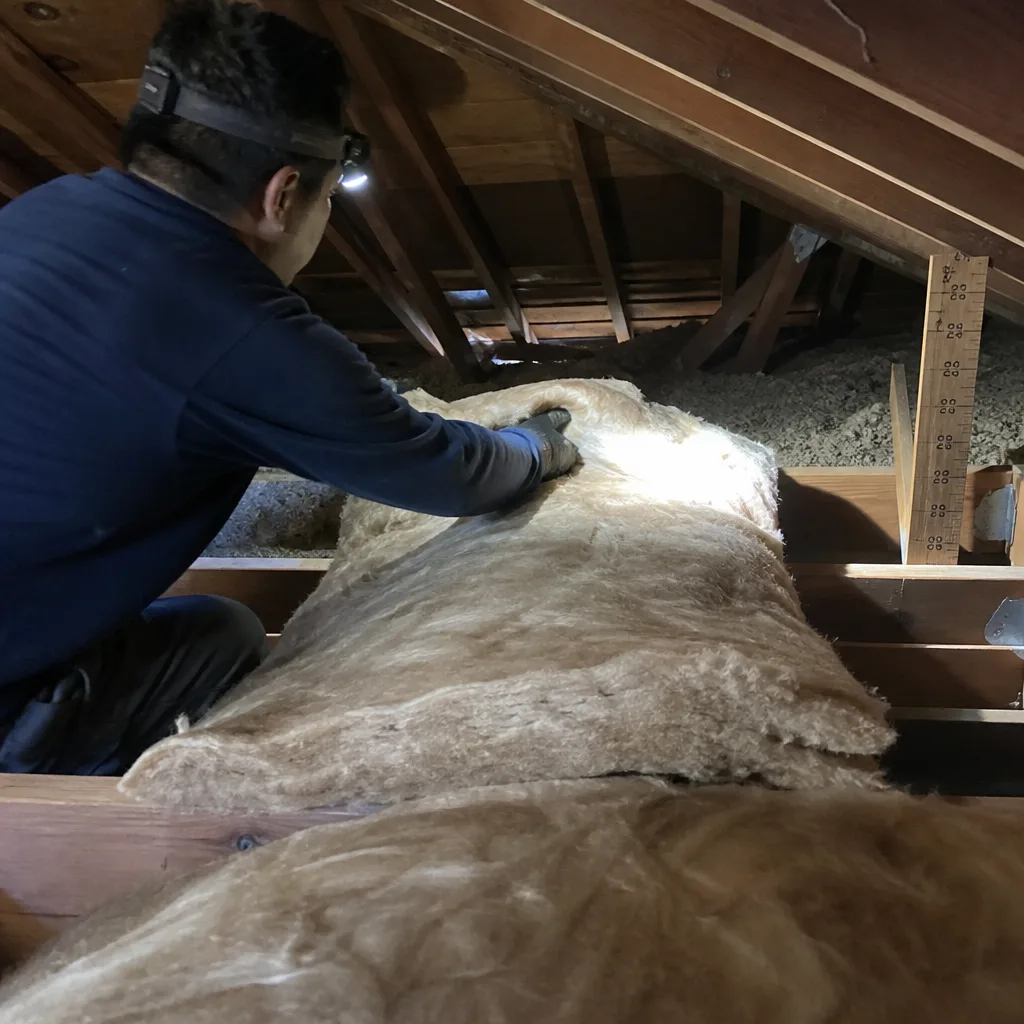
What you can safely check: lift the attic hatch on a 95-degree Torrance afternoon and feel for a heat blast. Look at your Rockwool batts for black streaking. Check the perimeter of the hatch frame for crumbling caulk or missing weatherstrip. These observations tell you whether the problem exists; they don’t tell you where the leaks are distributed across the attic floor.
Where DIY goes wrong: top-plate sealing requires working at the attic perimeter, often on narrow framing members, with headroom limited by rafter slope. The sealant must be continuous and the right spec for the substrate - acoustic sealant for wood-to-wood, intumescent foam for mixed penetrations, fire-rated detail around chimneys and flues. Miss one bath fan penetration and the blower-door reading barely moves; the homeowner thinks the job is done. We find this constantly on Torrance homes where the owner sealed visibly but skipped the buried wiring penetrations behind the insulation. The blower-door test catches what the eye cannot. Call (424) 704-9866 for a free estimate with written pricing before any work starts.
FAQs
Properly specified acoustic sealant and fire-rated foam should maintain performance for 15-25 years in Torrance’s mild coastal-influenced climate, though homes in the warmer inland pockets near Wilson Park see slightly faster aging at the attic hatch from thermal cycling. We warranty our labor for 365 days and inspect any callback at no charge. Call (424) 704-9866 to schedule a condition check if your home is past the 10-year mark.
Partial repair is viable when the failure is isolated - a single pulled bead at a top plate, one failed can-light box, degraded hatch weatherstrip. Distributed failure across multiple penetrations usually costs more in labor to patch than to strip and reseal comprehensively, and the blower-door test proves whether the patch achieved the target. We quote both approaches when we inspect. Call (424) 704-9866 for a free second opinion on any written estimate you’ve already received.
Most 1,500-2,000 square foot homes in Torrance take one full day for two technicians: morning blower-door test, four to six hours of sealing work, afternoon verification test, photo documentation, and written report. Larger homes or those with extensive can-light retrofitting may run into a second day. We don’t stage insulation delivery until the post-seal blower-door number meets the spec written in your scope.
Yes - acoustic sealant in tubes, fire-rated 2-part foam, preformed can-light airtight boxes, and rigid top-plate backing board are stocked on every Torrance service vehicle. Rockwool batts and Comfortboard ship directly from our supplier; we don’t carry full batt inventory on the truck because sizing varies by cavity depth. For same-day starts, we confirm material spec at the estimate and stage delivery for the morning of the job.
Seal the leaks first. The insulation’s just holding the work in place. That’s the sequence we follow on every attic in Torrance, from the post-war ranches near Torrance Beach to the two-stories off Hawthorne Boulevard, and it’s why we run the blower-door test before we unload a single tool.
Written by Wes Okafor, Owner & Lead Insulation Technician, Topside Attic Insulation Torrance at Topside Attic Insulation Torrance, serving Torrance and nearby areas.