
Johns Manville Blown-In Insulation in Torrance: What to Know First
We provide independent Johns Manville blown-in insulation service in Torrance, typically completing attic retrofits and dense-pack wall jobs in one day with a written price locked before any work starts. Most Johns Manville blown-in cellulose or fiberglass top-ups in a Torrance single-family home run between $1,800 and $3,400, depending on existing depth and air-sealing needs. This page is for homeowners who already have Johns Manville insulation in place and need to know whether to add more, replace what’s there, or fix what’s failing. Call (424) 704-9866 to schedule a free estimate with blower-door diagnostics included.
How Johns Manville Products Fail - and How We Fix Them
- Climate Pro Fiberglass settling in coastal Torrance attics. The low-density blown fiberglass in JM’s Climate Pro line compacts faster than spec sheets suggest when it sits above vented soffits pulling moist Pacific air. We’ve pulled samples in the Del Amo area that measured 30% below labeled R-value after eight years. We remove the settled layer, seal top plates and can-light penetrations with closed-cell foam, then reinstall to true depth with a settled-density calculation.
- Spider Plus spray-applied cellulose bridging in angled ceilings. Spider Plus is designed to stick to open cavities, but in Torrance’s 1950s-1970s tract homes with irregular rafter bays, it bridges and leaves voids at the eaves. Our fix: dense-pack those same cavities with dry cellulose behind mesh, or switch to blown-in fiberglass where the geometry won’t hold a spray bond. We document the void locations with photos before and after.
- Formaldehyde-free batt gaps around top plates in retrofit jobs. JM’s formaldehyde-free batts, often used as a base layer with blown-in top-up, don’t recover full thickness after compression. Gaps open at the plate line, the exact spot where stack effect pulls conditioned air upward. We pull the compressed batts, foam-seal the plate, then replace with fresh blown-in cellulose to continuous depth.
- Blown-in fiberglass dusting through recessed fixtures. JM’s blown fiberglass is finer than cellulose; without sealed IC-rated housings or Tenmat covers, it migrates through can-light trim into living space. We see this in Harbor Gateway-adjacent homes with original non-IC fixtures. Our crew installs fire-rated covers, seals the housing perimeter, then blows insulation to full depth without the dust path.
- Insul-Safe CX cellulose moisture uptake near bathroom vents. Insul-Safe CX is treated with borate for fire and mold resistance, but when a bathroom vent terminates in the attic, the borate doesn’t stop the moisture cycle. We’ve found wet, clumped CX in Torrance Hills homes where the vent duct was never properly connected. We remove the damaged material, repair the vent termination, seal the penetration, then replace with fresh CX only after verifying airflow.
Our Johns Manville Blown-In Insulation Process
- 1
Call and schedule. A live person answers; you get a two-hour arrival window and a text when the technician is en route. Under Haven Standard: Arrive on schedule, you get a named technician.
- 2
Blower-door depressurization test. We pressurize the house to 50 Pascals and measure CFM50 - the cubic feet per minute of air leakage at that pressure. This number determines whether we seal first or whether the attic floor is tight enough to insulate directly.
- 3
Attic inspection and photo documentation. We photograph every penetration, existing insulation depth, and any failure mode we find. You get these photos in your written report.
- 4
Written price before any work starts. Flat price, written scope, written warranty. Haven Standard Clause 1. No work begins until you sign it.
- 5
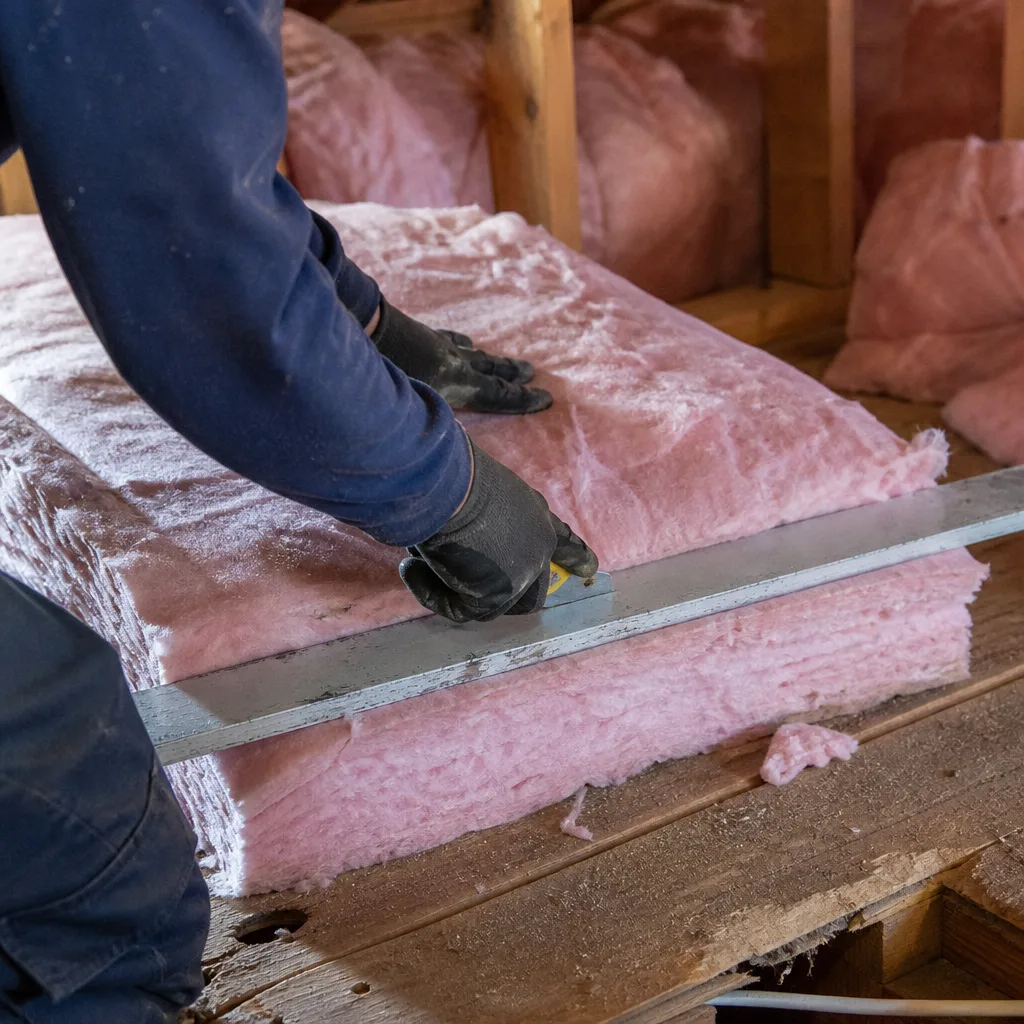
Air sealing first, then insulation. We foam-seal top plates, wire penetrations, chimney chases, and fixture gaps. Then we blow JM cellulose or fiberglass to calculated depth, accounting for settled density. Seal the leaks first. The insulation’s just holding the work in place.
- 6
Post-job blower-door test and documented record. We run the house again and hand you the before-and-after CFM50, R-values achieved, and photos of sealed penetrations. The 365-Day Done Right Promise begins when you sign off.
What Johns Manville Blown-In Insulation Costs in Torrance
| Job Type | Typical Range | What Moves the Price |
|---|---|---|
| Blown cellulose top-up (attic, 1,200-1,800 sq ft) | $1,800 - $2,800 | Existing depth, access difficulty, whether air sealing is needed first |
| Blown fiberglass full replacement (attic) | $2,400 - $3,800 | Removal of old material, joist cavity obstructions, ventilation baffle install |
| Dense-pack wall insulation (JM Spider or cellulose) | $3,200 - $5,500 | Wall area, interior vs. exterior access, plaster vs. drywall |
| Air sealing + blown top-up package | $2,800 - $4,200 | CFM50 reduction target, number of can lights, chimney chase complexity |
Homes in the Hills or near the coast often need more air-sealing labor than inland Torrance tracts because of wind exposure and older construction. We don’t guess; the blower-door test tells us exactly where your money goes. Call (424) 704-9866 for a free estimate - estimates include the diagnostic test and a written price with no obligation.
Why Torrance Homeowners Call Topside Attic Insulation Torrance for Johns Manville Work
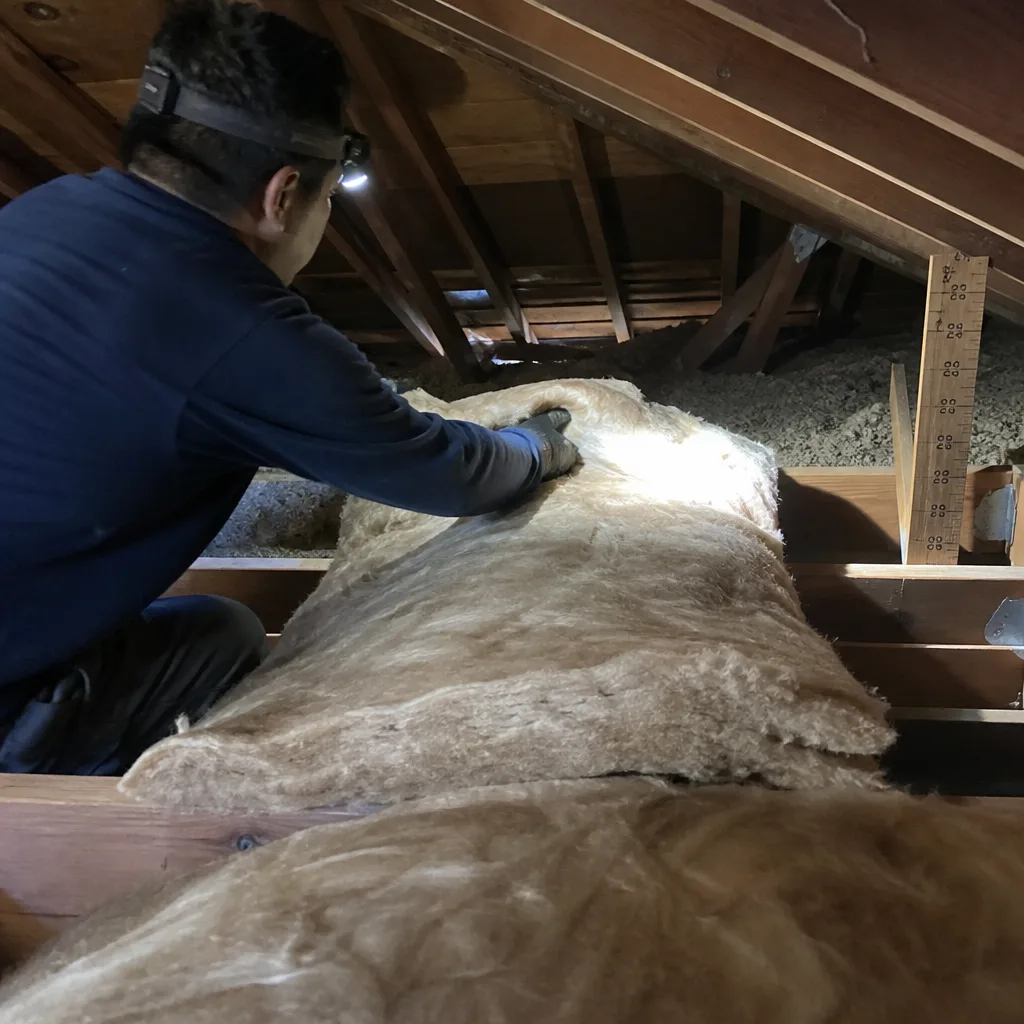
We’re an independent Johns Manville service provider, not a franchise or authorized dealer, which means we source JM materials when they’re the right fit and switch to Owens Corning, Knauf, Rockwool, or Reflectix when another product solves the problem better. Wes Okafor has run blower-door tests on attics across Torrance since before most contractors here knew what CFM50 meant. Every job closes with a documented photo record and, on air-sealing work, published before-and-after blower-door numbers you can verify yourself. The 365-Day Done Right Promise is in writing before anyone starts. Calls are answered by a live person 24/7, and we offer a free second opinion on any competing written estimate.
FAQs
No - Johns Manville’s product warranty covers manufacturing defects, not installation modifications, so adding compatible blown-in material doesn’t void it. However, mixing JM blown fiberglass with incompatible loose-fill products can create thermal gaps at the interface; we match density and fiber type to prevent this. Call (424) 704-9866 and we’ll review what’s in your attic now.
JM has discontinued several older blown-in formulations, but blown insulation doesn’t have “parts” in the traditional sense; we match thermal performance and density with current JM stock or equivalent third-party material. If you have a specific JM product label in your attic, photograph it and we’ll cross-reference the R-value and settled density spec. Estimates are free.
Topping up is cheaper when the existing material is dry, uncompressed, and free of rodent contamination; removal and replacement is necessary when we find moisture damage, fecal matter, or settled fiberglass below 50% of labeled thickness. In Torrance’s coastal climate, we see more moisture calls than inland contractors do. We’ll photograph what we find and give you both options in writing.
Most attic top-ups and air-sealing packages finish in one day; dense-pack wall work takes two days because of the access and cure-time requirements. We don’t schedule work until the written price is signed, so turnaround depends on your approval speed, not ours. Same-week scheduling is usually available. Call (424) 704-9866 to check current openings.
We work with Johns Manville, Owens Corning, Knauf, Rockwool, CertainTeed, and Reflectix, depending on what the job requires. We’re not locked to any single manufacturer, which matters when a Torrance home’s geometry or ventilation profile makes another product the better fit. The written scope specifies exactly what material goes where before work starts.
Written by Wes Okafor, Owner & Lead Insulation Technician, Topside Attic Insulation Torrance at Topside Attic Insulation Torrance, serving Torrance and nearby areas.