
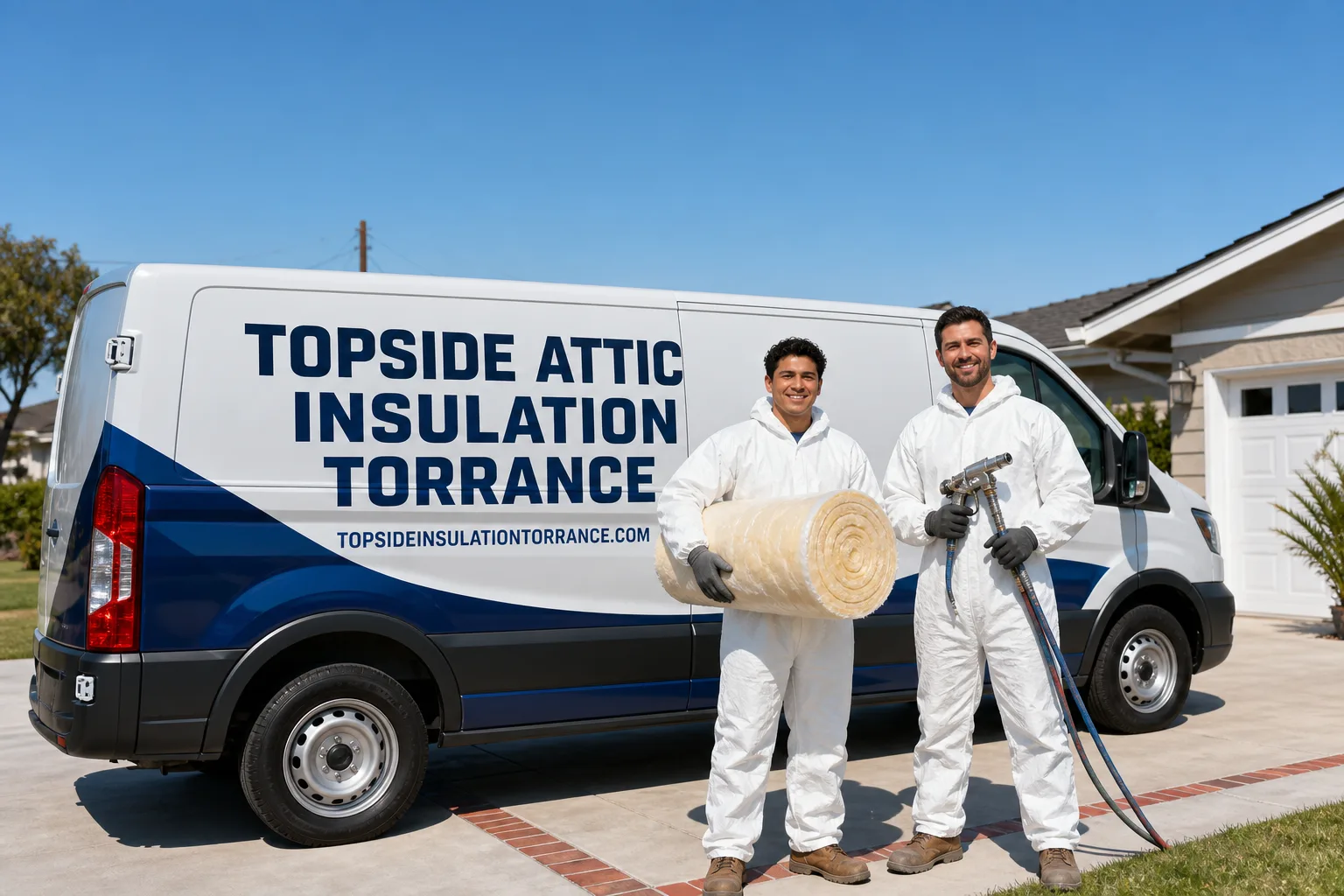
Fast, Reliable Attic Insulation Across Lomita
Most attic insulation jobs in Lomita run $2,800-$5,400 for a full replacement on a typical 1,000 sq ft postwar home, and we can usually inspect and price the work within 24 hours of your call. We’re familiar with the tight lots along Lomita Boulevard, the raised foundations near Narbonne Avenue, and the diesel-stained batts that come standard in 1950s tract houses here. Our crews work Lomita weekly, dispatching from our Los Angeles office, and we answer calls live at (424) 704-9866.
Why Topside Attic Insulation Torrance Is Lomita’s Preferred Attic Insulation Company
We’ve insulated and air-sealed hundreds of homes in Lomita since 2016, and the pattern is consistent: original R-11 batts, gray with port-corridor particulate, top plates never sealed, soffit vents buried by previous contractors. Our customers here leave reviews mentioning the blower-door numbers we publish, the photo records we deliver, and the fact that we actually show up when scheduled.
Response time to Lomita is typically same-day or next-day for inspections. We know the local housing stock - the 900-1,400 sq ft post-WWII single-families with hollow 2×4 walls and uninsulated crawl spaces - so we don’t waste time on guesses. Every Lomita job starts with a written price and ends with a Documented Photo Record, plus before-and-after blower-door readings on air-sealing work.
Under our 365-Day Done Right Promise, if the insulation settles, if a penetration was missed, if the attic isn’t performing as scoped, we make it right. No voicemail loops, no callback windows. A live person answers at (424) 704-9866.
Our Attic Insulation Services in Lomita
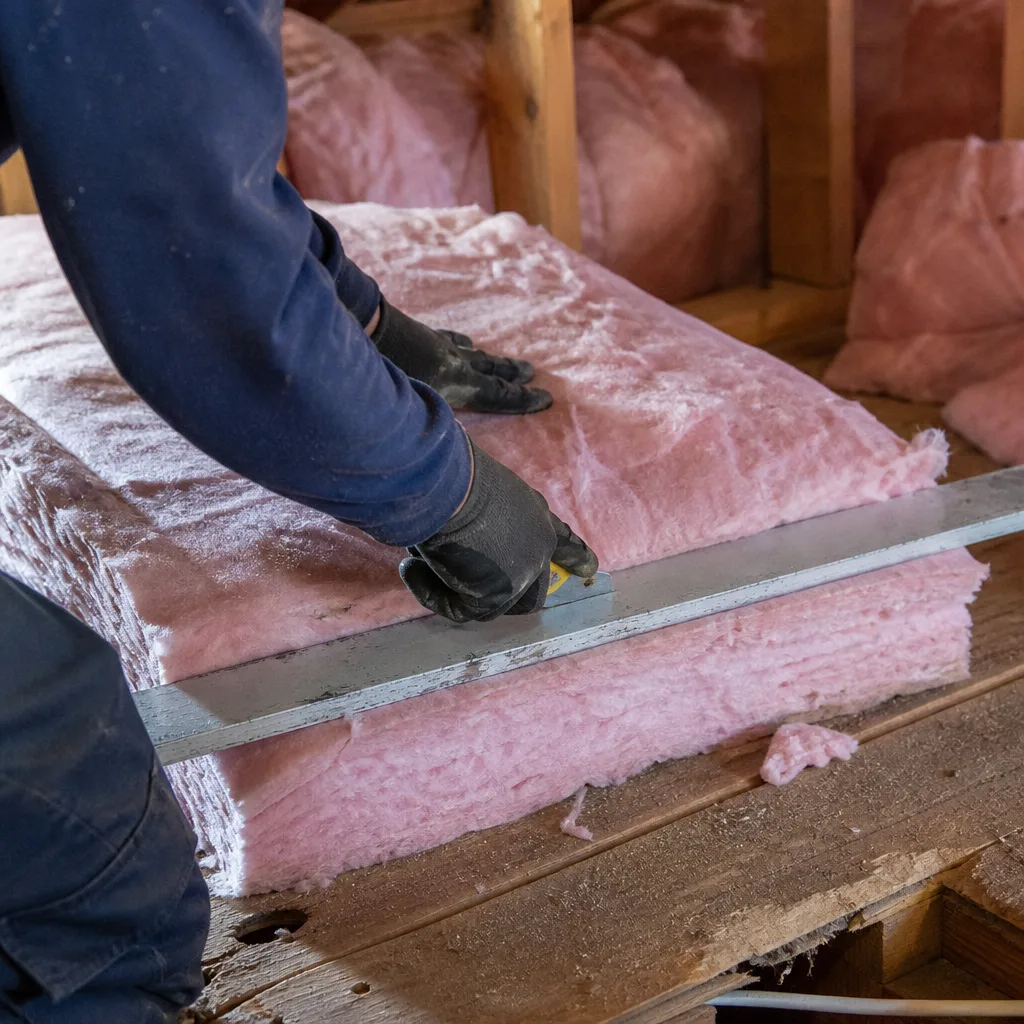
Attic Insulation Replacement
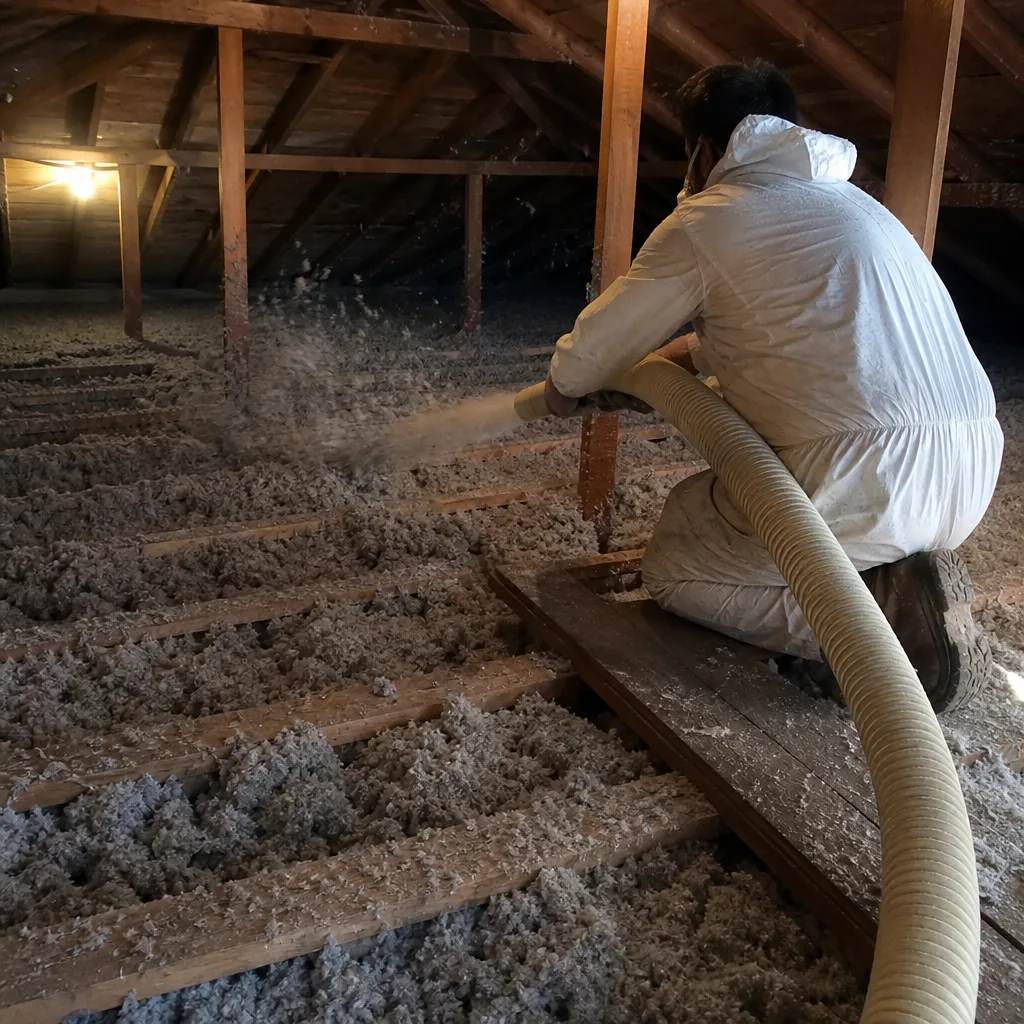
This is the most common call we get in Lomita. The 1945-1965 tract homes here - the ones between Lomita Boulevard and Pennsylvania Avenue, the ones with the original low-slope roofs - still carry R-11 batts that have compressed to R-4 or R-5 effective value. More importantly, they’re black with diesel particulate from decades of Port of Long Beach downwind exposure. We remove the old material, HEPA-vac the deck, air-seal all top plates and penetrations, then install new insulation to current code. On a 1950s tract house near Lomita Boulevard and Narbonne Avenue, our crew pulled out settled R-11 batts that were gray with diesel particulate and found the top plates had never been sealed - we air-sealed all penetrations, added baffles to keep the soffit vents clear, and blew in GreenFiber loose-fill to R-38. The homeowner noticed both a cooler attic and less dusty air inside within the first week.
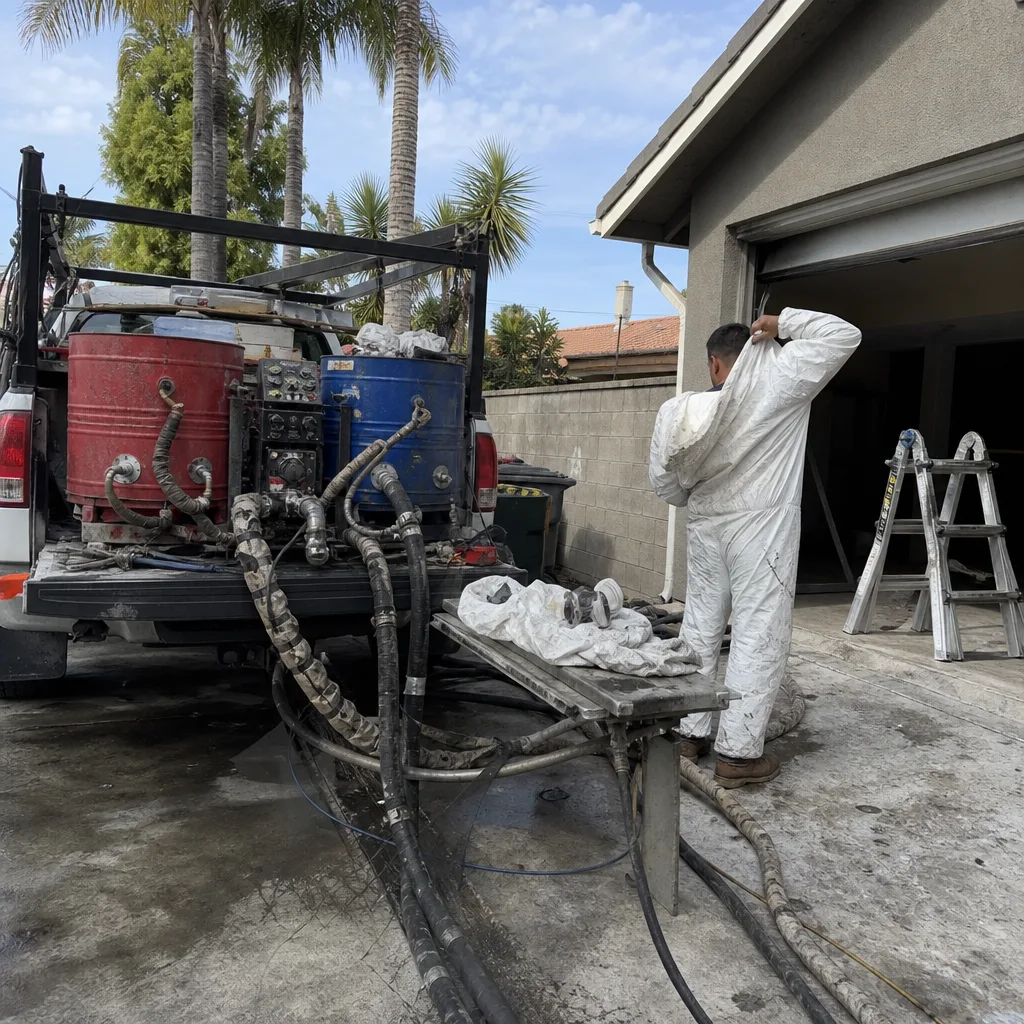
Blown-In Attic Insulation
For Lomita homes with open attics and accessible hatches, blown-in loose-fill is the fastest path to R-38 or R-49. We use Owens Corning AttiCat or Johns Manville Climate Pro, depending on the joist spacing and your ventilation setup. Critical here: we install baffles first at every soffit vent to prevent the material from choking intake airflow. The South Bay marine layer means moisture management matters. Unvented pockets in a Lomita attic turn into condensation traps fast. Our crews map your ventilation before we blow a single bag.
Attic Batt Insulation
Some Lomita homeowners prefer batts for storage-floor attics or cathedral ceilings where loose-fill won’t stay put. We use Knauf EcoBatt or Rockwool Comfortbatt in those applications, cut to fit around your joists without compression gaps. In the smaller 900 sq ft homes near Eshelman Avenue, where headroom is tight and storage is essential, batts under a raised floor can make sense. We still air-seal first. Always.
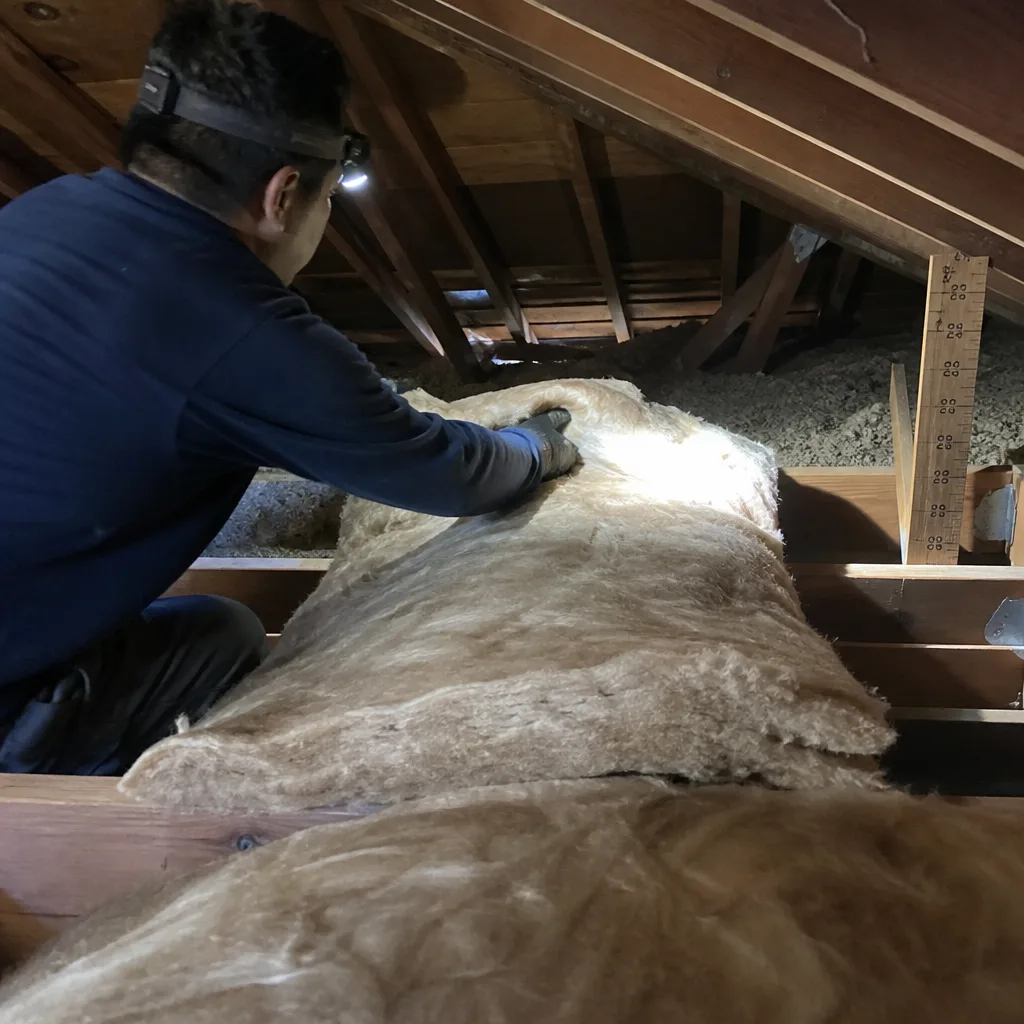
Attic Insulation Top-Up
If your existing insulation is in decent shape but thin, a top-up can work. In Lomita, we rarely recommend this. The diesel particulate staining we find on old batts means you’re trapping soot against your ceiling. We’ll show you the photos. If the existing material is clean and the attic is already sealed, we’ll add blown-in to reach target R-value. More often, we recommend removal and replacement.
Attic Baffles & Ventilation Prep
This is not optional in Lomita. The marine-layer humidity cycles mean an attic without proper soffit-to-ridge airflow will accumulate moisture, mold, and compressed insulation. We install prop-vent or foam baffles at every rafter bay, verify ridge vent continuity, and check that your bathroom fans actually terminate outside, not into the attic. On homes near the 110 freeway corridor, where summer heat meets coastal humidity, this step prevents the callbacks we see from contractors who skipped it.
What happens when you call
- 1
A real person answersNo phone trees - you reach a local pro.
- 2
You get an upfront price rangeHonest numbers before anyone is dispatched.
- 3
A background-checked tech heads outLicensed & insured, dispatched right away.
- 4
You approve before work beginsNothing starts until you say go.
Trusted Brands We Service in Lomita
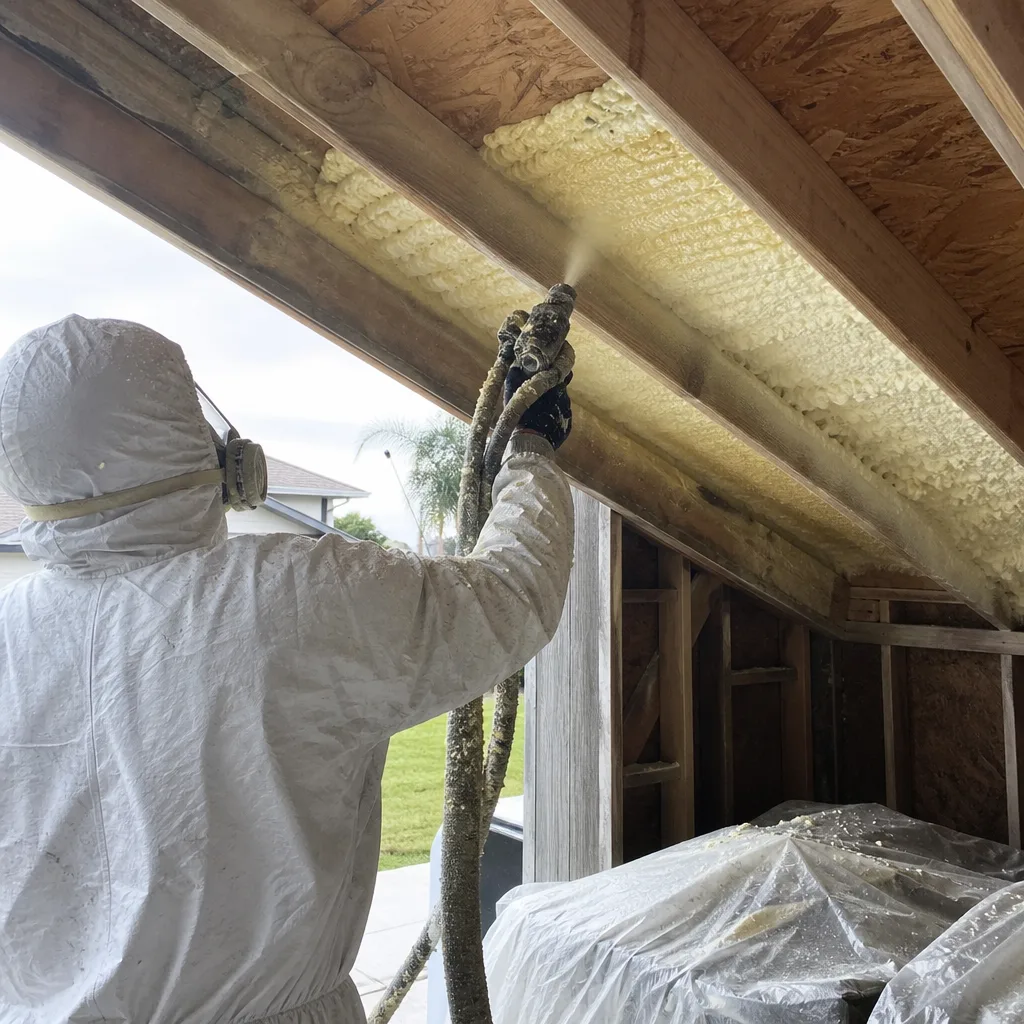
We source from Owens Corning, Johns Manville, Knauf, and Rockwool - no proprietary lock-in, no house brand with a markup. For Lomita’s moisture-sensitive attics, we select materials based on the specific assembly: open-cell spray foam for unvented cathedral ceilings where vapor permeability matters, dense-packed cellulose for vented attics where we want the particulate-filtering density, mineral wool where fire resistance and rodent deterrence are priorities. We stock common R-values and baffle sizes locally, so most Lomita jobs don’t wait on material delivery.
Common Attic Insulation Problems We See in Lomita Homes
- Original R-11 batts in 1945-1965 Lomita tract homes are compressed and diesel-stained, delivering R-4 to R-6 effective value while doing nothing to block port-corridor particulate infiltration. We find this on nearly every pre-1970 home we inspect between Lomita Boulevard and Walnut Street. The black carbon staining is not mold - it’s settled diesel soot from decades of downwind Port of Los Angeles/Long Beach traffic.
- Marine-layer moisture enters through unsealed top plates and recessed can gaps, matting the bottom of blown-in insulation and creating condensation-prone pockets that breed mold. The morning fog that rolls through Lomita’s neighborhoods doesn’t stay outside. It finds every electrical penetration, every unsealed chase, every can light that was never gasketed.
- Soffit vents get buried by careless blown-in installs, choking attic ventilation and turning the space into a heat and moisture trap during South Bay humidity cycles. We’ve pulled back insulation in Lomita attics to find baffles missing entirely, or installed upside-down, or crushed by bags of material dumped from the hatch. Your attic needs to breathe. We make sure it does.
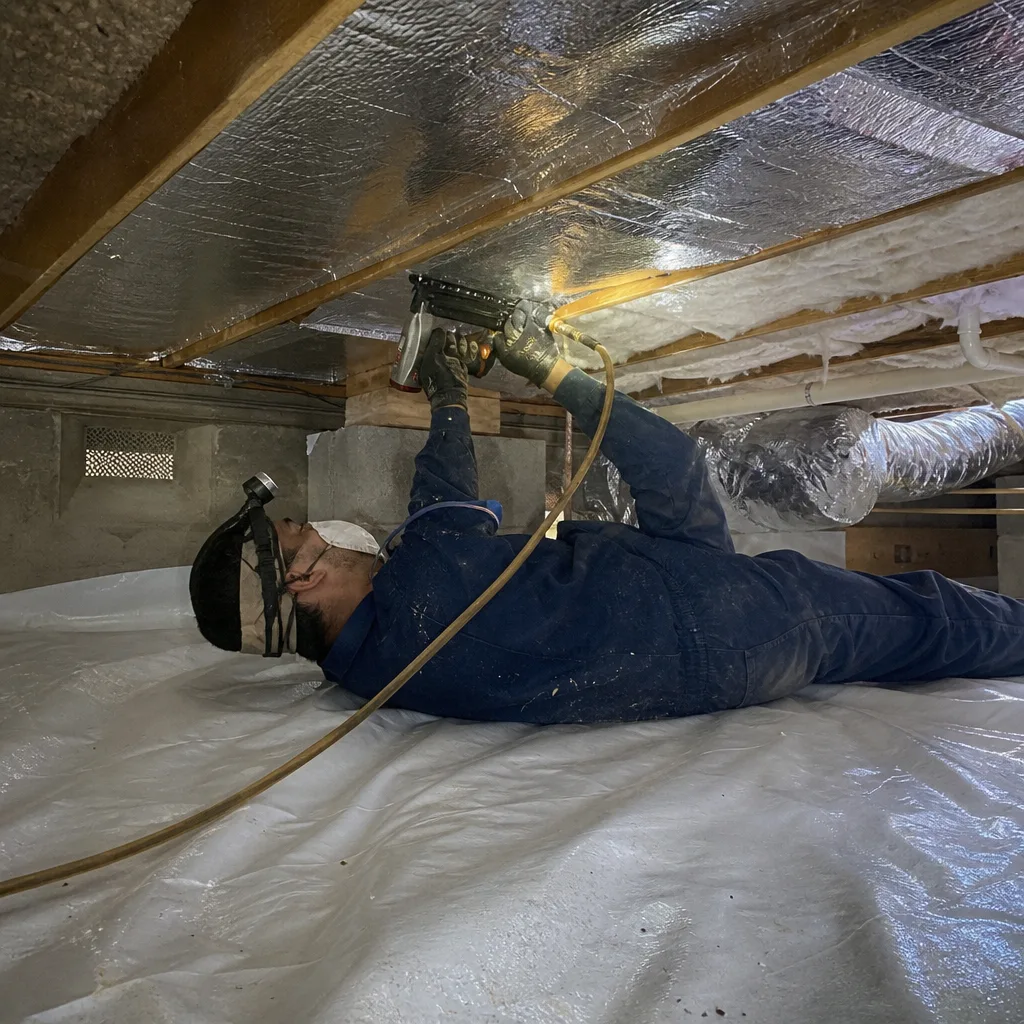
- Floor insulation is almost universally missing in raised crawl spaces, and ground moisture plus marine-layer humidity causes batt insulation to sag and mold if the crawl space isn’t sealed first. This isn’t technically an attic problem, but it’s a Lomita problem. The same postwar building patterns that left attics under-insulated left crawl spaces wide open. We address the full envelope when it makes sense.
Pricing for Attic Insulation in Lomita, CA
A typical Lomita attic insulation replacement on a 1,000 sq ft home runs $3,200-$5,400, including removal of old material, HEPA cleanup, air sealing of top plates and penetrations, baffle installation, and blown-in insulation to R-38. Attic insulation top-ups, when the existing material is clean and the attic is already sealed, run $1,800-$2,800. Attic batt insulation in a storage-floor application runs $2,500-$4,200. Attic baffles and ventilation prep alone, as part of a larger job, add $400-$700.
What moves the price: attic square footage, accessibility (steep roof pitch or limited hatch size), existing material condition, and whether we find unsealed can lights or open chases that need fire-rated sealing. Every Lomita job gets a written price before any work starts - Haven Standard Clause 1 - and we offer a Free Second Opinion on any written estimate you’ve already received. Call (424) 704-9866 to schedule.
We Also Serve Cities Near Lomita
Our Attic Insulation in Lomita crews also work in Torrance, Carson, Rancho Palos Verdes, and Redondo Beach. The coastal conditions differ - Palos Verdes sees more salt air, Carson more inland heat - but the core issues of postwar housing stock and marine-layer moisture remain. If you’re in one of these cities and found this page, the same pricing structure and documentation standards apply.
Serving Lomita, CA - Our Local Coverage Area
We’re based in the Lomita area and know this community well. Use the map below to see our service coverage - if you’re nearby, we can almost certainly help.
FAQs - Attic Insulation in Lomita
It’s diesel particulate from the Port of Los Angeles/Long Beach corridor, which Lomita sits directly downwind of - the black carbon staining is settled soot, not mold, and it means your attic is not effectively sealed against outside air infiltration. We see this on nearly every pre-1970 home we inspect between Lomita Boulevard and Walnut Street. The only fix is removing the stained material, air-sealing all penetrations and top plates, and installing new insulation with proper filtration at the building envelope. Call (424) 704-9866 and we’ll show you exactly what we found on the photo record.
Most Lomita attics are vented and don’t need spray foam at all - blown-in cellulose or fiberglass to R-38 is the standard fix. If you have a cathedral ceiling or conditioned attic, open-cell spray foam is usually the right choice for our climate because it allows vapor permeability, which matters with the marine-layer humidity cycles here; closed-cell is denser and more moisture-resistant but traps vapor, which can be problematic in the South Bay’s moisture-variable environment. We’ll inspect your roof assembly and recommend based on what you actually have, not what we prefer to sell. Written price before any work starts - always.
California Title 24 calls for R-38 minimum in climate zone 6, which covers Lomita, and we typically install to that standard on replacement jobs - that’s about 10-12 inches of blown-in fiberglass or 11-13 inches of cellulose, depending on the product density. A 1,000 sq ft Lomita attic with standard 2×6 or 2×8 joists and proper air sealing will use roughly 30-40 bags of loose-fill material. We measure precisely during inspection and note the bag count on your written scope. Call (424) 704-9866 for an exact count on your home - estimates are free.
Sometimes, but in Lomita we rarely recommend it because the diesel particulate staining on old batts means you’re layering new material over soot that will continue to filter into your living space - we prefer to remove, HEPA-vac, air-seal, and start fresh. If your existing insulation is clean, dry, uncompressed, and the attic is already well-sealed, a top-up is possible and runs $1,800-$2,800. We’ll show you the photos and let you decide. No pressure, just documentation.
Yes, but only if air sealing is done first - insulation alone doesn’t stop air movement, and the diesel particulate that blackens Lomita attics enters through gaps in the building envelope, not through the insulation material itself. Our Attic Insulation protocol seals top plates, can lights, pipe penetrations, and chase openings before any new material goes in. The homeowner on that 1950s tract house near Lomita Boulevard and Narbonne noticed less dusty air inside within the first week. The blower-door test proved why: 4,200 CFM50 before sealing, 2,100 after. Call (424) 704-9866 and we’ll test yours.
Ready to see what’s actually in your Lomita attic? Call (424) 704-9866 for a free inspection and written price. We’ll bring the camera, the blower door, and the documentation. You bring the questions.
Written by Wes Okafor, Owner at Envelope Insulation Co., serving Lomita under The Haven Standard since 2016.