
Attic Baffles & Ventilation Prep in Torrance, CA
Attic baffles – also called rafter vents or vent chutes – are channeled inserts that hold a clear airflow path from your soffit vents to your ridge or gable vents, so that blown-in or batt insulation can’t block the intake air your roof assembly depends on. In Torrance, where marine layer humidity rolls in off the Pacific most mornings from October through June and attic temperatures swing hard in the afternoon, blocked soffit vents don’t just reduce energy performance – they accelerate moisture accumulation in the roof deck and can shorten shingle life measurably. Ventilation prep is the work we do before insulation goes in: installing or replacing baffles, confirming net free area at the soffits, and verifying that ridge and gable exhaust openings are clear and correctly sized. None of it is optional at Envelope Insulation Co., and none of it is an upsell.
If you’ve already read our Attic Insulation in Torrance page, you know that Topside Attic Insulation Torrance treats air sealing as a hard prerequisite – top plates sealed, can lights capped, penetrations closed – before a pound of insulation goes in. Baffle installation and ventilation prep are the same category of work: it has to happen first, or the insulation doesn’t perform correctly. Call us at (424) 704-9866 and we’ll walk through what your attic’s ventilation looks like before we price anything.
When You Need Attic Baffles & Ventilation Prep
- Your soffit vents are buried under existing insulation. This is the most common scenario we see in older Torrance homes, particularly in the post-war tract housing in Walteria and Old Torrance where original soffit vents were shallow to begin with. Blown-in insulation from a previous contractor drifted outward toward the eaves and sealed the intake – without baffles in place, there was nothing to stop it.
- You’re seeing moisture staining or mold on the underside of the roof deck near the eaves. In the South Bay’s coastal climate, an attic that can’t exhaust warm, humid air traps it. When that humid air hits the cooler roof deck near the soffits – especially in the morning after a heavy marine layer – condensation forms. Staining near the eaves is often the first visible sign that ventilation has been compromised.
- Your energy bills are higher in summer than comparable homes on the block. Restricted soffit airflow means heat that built up overnight can’t flush out before the next afternoon. Attic temperatures in Torrance can reach 140-160 degrees Fahrenheit during a July heat event; a properly ventilated attic running continuous soffit-to-ridge airflow stays meaningfully cooler, which reduces the load on your air conditioning.
- A contractor is about to add blown-in insulation and hasn’t mentioned baffles. If someone is preparing to blow cellulose or fiberglass into your attic without first confirming baffle coverage at every rafter bay, that’s a problem. The insulation will drift to the eave, block intake airflow, and create exactly the moisture and heat conditions it was supposed to help prevent.
- You have an older home with gable vents only – no ridge vent and no soffits. Several mid-century homes in Harbor City and the eastern Torrance corridor near Del Amo were built with gable-only ventilation. If you’re adding insulation depth, a ventilation assessment will confirm whether the existing exhaust capacity is adequate for the new insulation depth or whether supplemental ridge ventilation is needed.
- Your attic has been converted from blown-in to spray foam, or vice versa. Switching insulation types changes the ventilation strategy. A vented attic with blown-in insulation requires baffles and clear soffit intake; an unvented conditioned attic using closed-cell spray foam at the roof deck does not. Transitioning between these systems without adjusting the ventilation preparation is a common source of callbacks.
Our Attic Baffles & Ventilation Prep Process
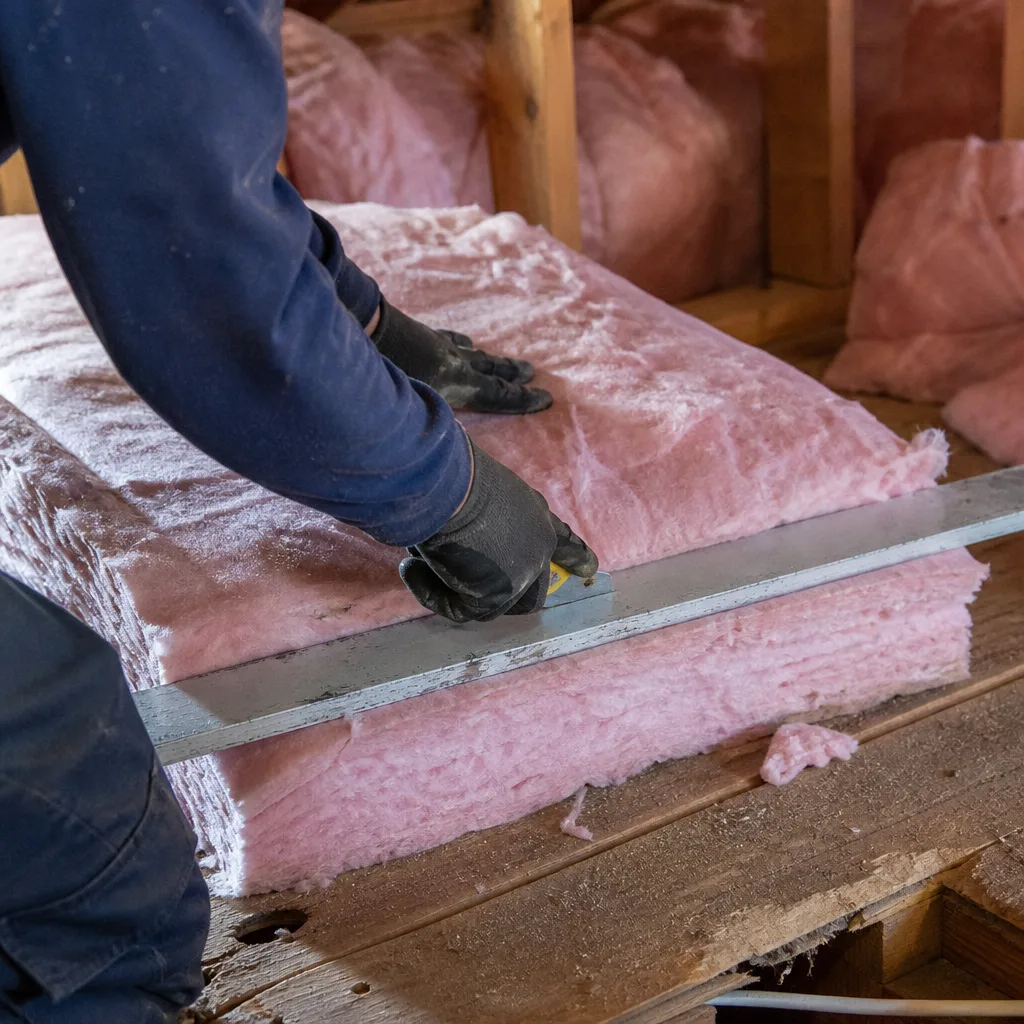
- Written price before anything else. Under Haven Standard Clause 1, you receive a flat written price and a written scope of work before a technician picks up a tool. For ventilation prep, that scope names the number of rafter bays, the baffle material, any supplemental vent work, and whether air sealing is being completed in the same visit. No verbal estimates, no ranges-at-the-door.
- Attic inspection and documentation. Wes Okafor’s crew photographs the existing condition at every soffit bay and at the ridge or gable exhaust – before anything is moved or installed. We’re looking at the depth of any existing insulation at the eaves, the net free area of the soffit vents (the actual open space air can travel through, not just the vent size), and whether the ridge vent is clean or blocked by debris. In Torrance homes near the coast, we frequently find salt-crusted or paint-sealed soffit vents that appear open from outside but pass essentially no air. Those photos become part of your Documented Photo Record.
- Soffit vent clearing and net free area verification. Any blocked or partially sealed soffit vent gets cleared. Where vent holes in the soffit deck are undersized for the insulation depth being added – a common finding in Torrance homes built before 1980 – we’ll note it in the scope. The target is 1 square foot of net free ventilation area for every 150 square feet of attic floor space (or 1:300 when a vapor control layer is present), per California Building Code Section R806.
- Baffle installation at every rafter bay. We install baffles – typically 1-inch airspace polystyrene or cardboard chutes, depending on the roof pitch and the insulation system going in – at each rafter bay along the eave line. Each baffle is stapled to the roof deck, running from the soffit vent intake to a point above the top plate, so blown-in insulation can be installed at full depth without compressing or blocking the channel. In low-pitch areas of Torrance homes where rafter depth is limited, we use a lower-profile baffle and note the constraint on the written scope.
- Air sealing at top plates and penetrations – before insulation. Baffle work and air sealing happen in the same attic visit. Top plates – the framing members at the top of interior walls – are sealed with fire-rated caulk or two-component spray foam, as are any electrical or plumbing penetrations. Can lights, where present, are capped with rated covers before insulation goes over them. This sequence – seal, then baffle, then insulate – is non-negotiable at Topside Attic Insulation Torrance. It’s the same standard described on our home page: sealed first, then insulated, every time.
- Blower-door test and close-out documentation. On applicable jobs where air sealing is part of the scope, we run a blower-door test – a pressurization reading that shows, in one number, how much air the building envelope is exchanging per minute at a standard pressure differential. We record the CFM50 reading before and after sealing, and both numbers go into your close-out package alongside the photo record, the written warranty, and the scope of work as completed. You know what changed and by how much.
Attic Baffles & Ventilation Prep Pricing in Torrance
Baffle installation and ventilation prep in Torrance typically runs between $350 and $900 as a standalone scope when no insulation is being added at the same time. When baffles are installed as part of a full Attic Insulation services job – which is the more common scenario – the baffle and ventilation prep work is priced within the overall job, and the combined total for an average 1,200-to-1,800-square-foot Torrance home generally falls between $2,100 and $4,800, depending on the variables below.
| Scope | Typical Torrance Price Range |
|---|---|
| Baffle install only (existing insulation staying, no new insulation) | $350 – $650 |
| Baffle install + soffit vent clearing | $500 – $900 |
| Ventilation prep + air sealing (top plates, can lights, penetrations) | $800 – $1,600 |
| Full attic package: ventilation prep + air sealing + blown-in insulation | $2,100 – $4,800 |
What moves the number up or down in Torrance specifically:
- Number of rafter bays. A wider eave line means more baffle runs. A 1,600-square-foot home with a hip roof – common in the El Nido and Seaside neighborhoods – will have more linear feet of eave than a similar-sized gable-roof home and will generally cost more to baffle fully.
- Existing insulation depth at the eaves. If we need to pull back or redistribute blown-in insulation to reach the soffit bays before installing baffles, that adds labor. We include a note in the written scope when this is the case so there are no price surprises.
- Soffit vent condition. Paint-sealed or corroded vents in older Torrance homes near the coast sometimes require replacement rather than just cleaning. Vent replacement is priced per unit and listed separately in the scope.
- Access difficulty. Low-clearance attics – anything under 24 inches at the knee wall – slow baffle installation and are priced accordingly. We note access conditions during the inspection.
- Supplemental ridge or gable vent work. If the exhaust side is undersized relative to the soffit intake we’re clearing, we’ll include that in the scope. Torrance homes with original ridge vent foam inserts that have degraded are a recurring finding; replacement is straightforward but adds to the total.
Every price is flat and written before work starts – Haven Standard Clause 1. If you have a written estimate from another contractor, bring it to us. We offer a free second opinion on any written estimate: we’ll read it with you and tell you what it does and doesn’t include.
FAQs – Attic Baffles & Ventilation Prep
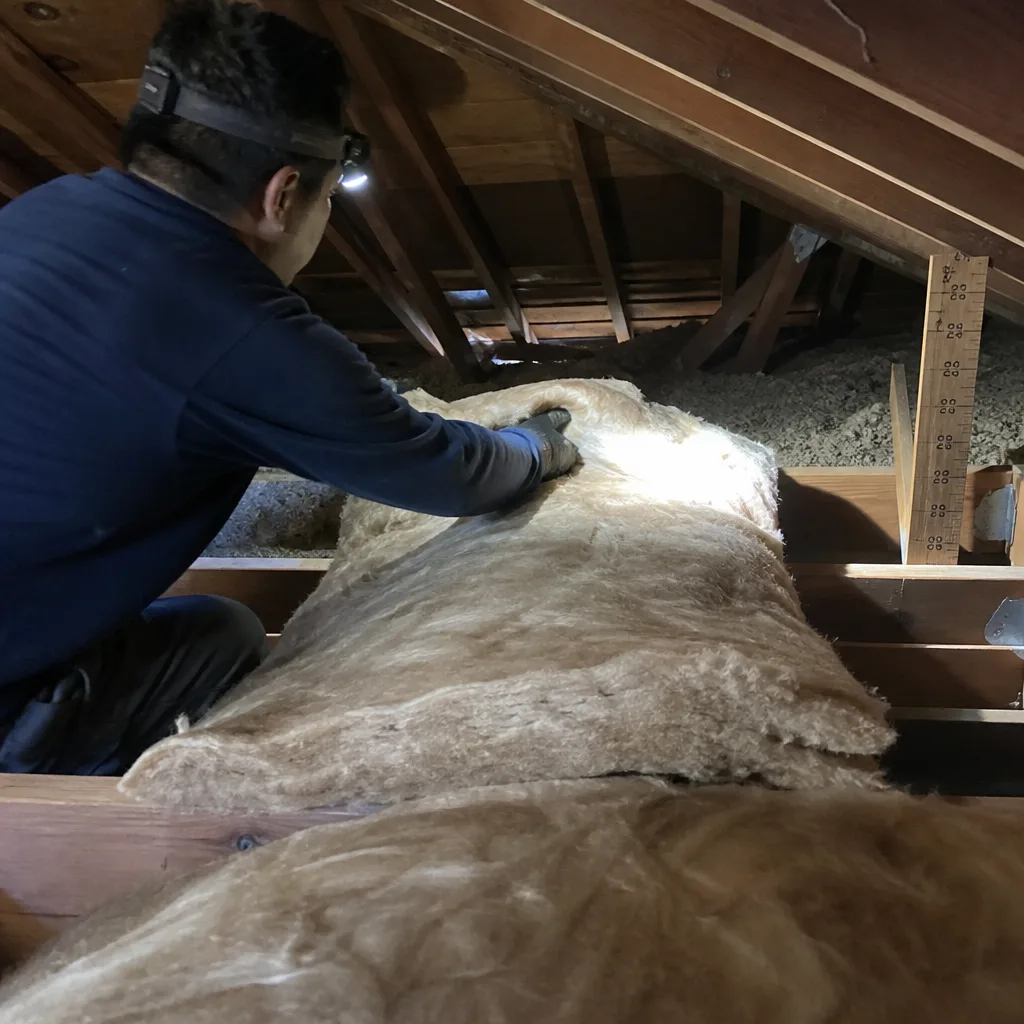
What exactly is an attic baffle, and why does Torrance’s climate make it more important?
An attic baffle is a rigid or semi-rigid insert – usually polystyrene or heavy cardboard – that runs from a soffit vent up along the underside of the roof deck to a point above the attic floor’s insulation layer, keeping a clear air channel open regardless of how deep the insulation below it is. In Torrance, the combination of coastal humidity in the morning and dry heat in the afternoon creates a harder thermal swing than inland communities face. An attic that can’t move air continuously accumulates moisture during cool, damp mornings and then bakes it into the roof deck during afternoon heat – conditions that shorten sheathing life and promote mold at the eave line. A properly baffled attic with clear soffit intake and adequate ridge exhaust keeps that air cycling throughout the day. For an exact look at what your attic’s ventilation currently looks like, call (424) 704-9866 for a written assessment.
Can insulation be added to my Torrance attic without installing baffles first?
Physically, yes – a crew can blow insulation without baffles in place. We don’t. Blowing insulation over unprotected soffit vents is the single most common cause of the failed ventilation we find when we inspect homes in Torrance’s older neighborhoods. The insulation migrates outward over time and fills the intake, which negates most of the energy and moisture-control benefit of the insulation itself. Under our operating standard at Topside Attic Insulation Torrance, ventilation prep and air sealing are completed before any insulation is installed – not as an option, but as a fixed sequence. If you’ve received a quote that doesn’t include baffle work, bring it to us for a free second opinion and we’ll walk through what’s included and what isn’t.
How many baffles does a typical Torrance home need, and how long does installation take?
Most single-story Torrance homes with a gable or hip roof and a perimeter of 140 to 180 linear feet need between 28 and 45 baffles, one per rafter bay, installed at the eave line. A two-person crew can typically complete baffle installation on a home that size in three to five hours, with additional time if soffit vents need clearing or if insulation at the eave must be redistributed first. We photograph the count and placement of every baffle installed – those images go into the Documented Photo Record you receive when we close out the job, so you’re not taking our word for what was done.
Will adding baffles and improving ventilation actually lower my energy bills in Torrance?
Ventilation prep alone – baffles and soffit clearing without additional insulation – will reduce heat accumulation and moisture stress on the roof assembly, but the measurable energy savings come primarily from the insulation and air sealing that follow. When we complete a full attic package (ventilation prep, air sealing, and blown-in insulation), we run a blower-door test before and after the air sealing phase. That test gives you a CFM50 reading – a single number representing how much conditioned air the building envelope was exchanging per minute – before and after sealing. Homes in Torrance where we’ve sealed top plates, can lights, and attic floor penetrations typically see CFM50 readings drop by 30 to 55 percent from pre-work levels. Those numbers are in your close-out package, not our marketing materials. Call (424) 704-9866 and ask about what a before-and-after blower-door reading would look like for your home’s size and construction type.
Why Topside Attic Insulation Torrance for This Work
Wes Okafor started Topside Attic Insulation Torrance under The Haven Standard in 2016, and the standard hasn’t changed: written price before work starts, documented photo record when the crew leaves, and blower-door numbers published on every applicable job so you can see what actually changed. Since 2016, Envelope Insulation Co. has completed this sequence on more than 9,000 homes – every one with a flat written price before a tool was lifted and a documented record at close-out.
We source baffles and insulation materials from manufacturers including Owens Corning and Johns Manville, selected by performance specification rather than a preferred-vendor arrangement. The 365-Day Done Right Promise covers every job: if it isn’t right, we come back and make it right, in writing. Torrance homeowners can reach a live person at (424) 704-9866 at any hour – no voicemail, no callback window.
If you’re at the point of getting quotes on How Much Does Attic Insulation Cost? (2026 Price Guide) - Torrance, CA and want to understand exactly what the ventilation prep scope includes and costs before you decide anything, call (424) 704-9866. We’ll put a written price in front of you – flat, no conditions – and you’ll know what leaving looks like before we arrive.
Written by Wes Okafor, Owner at Topside Attic Insulation Torrance, serving Torrance.