
Rockwool Vapor Barrier Installation: The Torrance Owner’s Guide
Rockwool vapor barrier installation in Torrance typically runs $1,800-$3,400 for a complete attic system, and we stock Rockwool-compatible barriers and fasteners on every truck for same-day starts. Most Torrance homeowners discover the problem when they pull down attic stairs and find damp insulation, rusted fasteners, or a barrier that’s pulled loose from top plates near the coast.
We see this pattern constantly in Torrance homes built between 1965 and 1995, especially in the Del Amo and Southwood neighborhoods where original kraft-faced batts have degraded and the poly vapor barrier underneath has become brittle. The fix isn’t adding more insulation over the mess. It’s removing the failed barrier, sealing the air leaks it was hiding, and installing a continuous Rockwool-compatible vapor retarder system that actually holds its seal.
Which Rockwool Models This Applies To
Rockwool doesn’t sell a standalone “vapor barrier” under its own brand name. What we’re installing is a vapor retarder assembly designed for use with Rockwool Comfortbatt, Comfortboard, or AFB evo batts - the stone wool products you’ll find in Torrance homes that were reinsulated between 2010 and 2020. The compatibility issue is the facing: Rockwool batts are unfaced or come with a water-repellent coating, not a vapor retarder, so a separate poly sheet or smart membrane must be installed on the warm-in-winter side of the assembly.
To identify what you have, check the batt label for density. Comfortbatt runs 3.5-5.5 lbs/ft³ depending on the R-value; Comfortboard 80 is the rigid version at 8 lbs/ft³, common in Torrance cathedral ceilings. If your existing barrier is 6-mil poly stapled to joists with no air-sealing behind it, that’s the pre-2018 code approach and it’s almost certainly failing at the penetrations. We install a taped membrane system, not loose poly, because Rockwool’s rigidity demands a continuous plane - the batts don’t conform and seal the way fiberglass does.
Aftermarket vapor retarder membranes like CertainTeed MemBrain or ProClima Intello work with Rockwool and cost less than Rockwool’s own accessory line, which is limited in the U.S. market. We stock both and spec based on your existing batt density and whether the attic has active ductwork.
Signs Your Rockwool Vapor Barrier Installation Is Failing
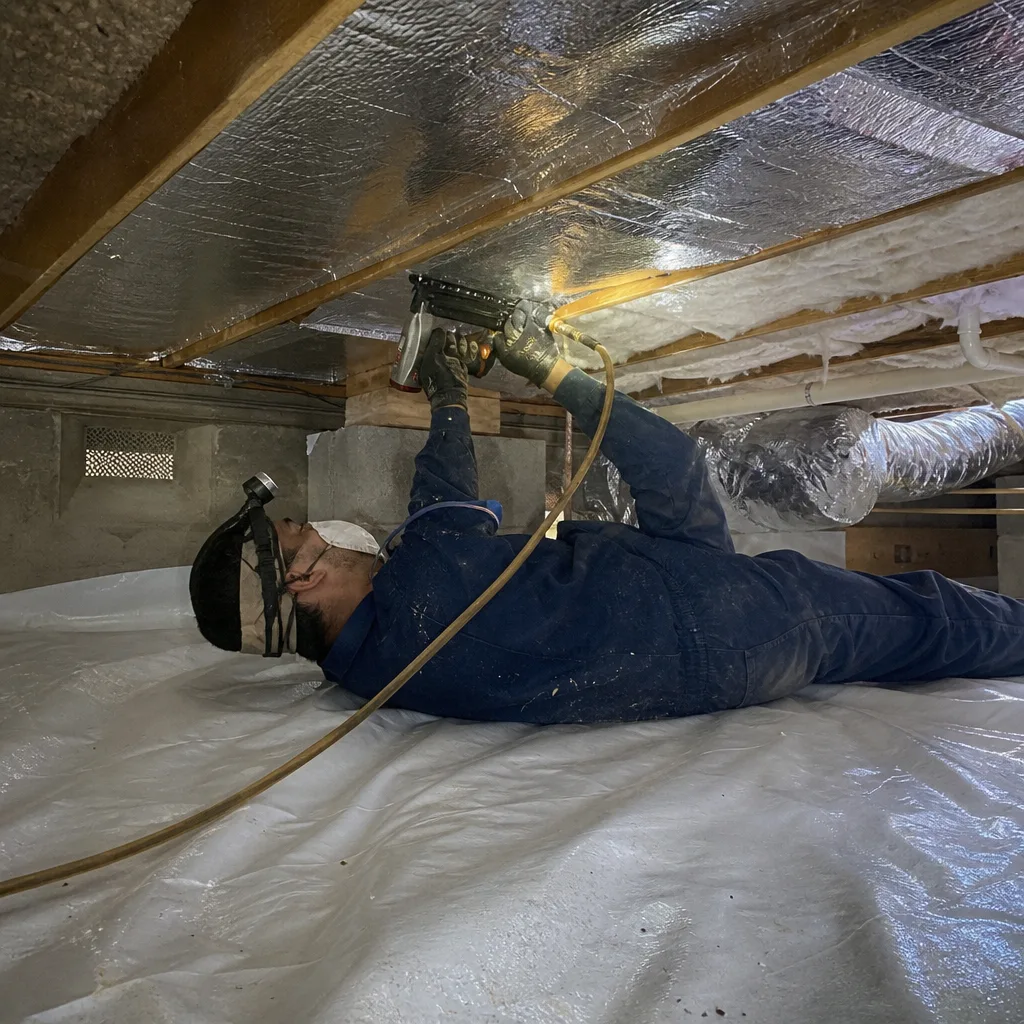
- Damp or discolored Rockwool batts near the eaves. The vapor barrier’s job is to stop warm, moist interior air from hitting cold surfaces. When the seal fails at the perimeter, typically where poly meets the top plate in Torrance’s older homes, condensation forms on the batt face. The stone wool itself won’t mold, but it holds water weight and compresses, dropping your effective R-value by 30% or more.
- Rust on drywall screws or nail plates visible from below. This means moisture is migrating through the ceiling assembly, not being stopped at the barrier plane. In Torrance’s marine climate, where winter humidity sits at 65-75% even when temperatures are mild, a failed barrier lets enough vapor through to corrode metal over two to three heating seasons.
- Loose poly sheeting flapping at attic access points or around can lights. The original installer likely used a staple gun without acoustic sealant or tape. Rockwool’s weight and the thermal cycling in a Torrance attic - 140°F summer peaks to 45°F winter lows - pulls staples through poly within five to seven years.
- Musty smell at the attic hatch that worsens after rain. This usually traces to a barrier that’s discontinuous at the chimney chase or plumbing vent stack. Rockwool systems are particularly vulnerable here because the batts don’t fill irregular cavities; the barrier has to do all the air-blocking work, and when it gaps, you get odor and latent moisture.
- Energy bills climbing without HVAC changes. A failed vapor barrier often means the attic floor isn’t air-sealed underneath it. We see this in Torrance’s 1970s tract homes in the Walteria area, where the barrier was installed over unsealed top plates and wire penetrations. The conditioned air escapes around the barrier, not through it, and your heating load rises even if the insulation looks intact.
Replacement Cost & What’s Included
| Component | Typical Range in Torrance |
|---|---|
| Remove failed barrier and dispose | $380-$620 |
| Air seal top plates, penetrations, can lights | $540-$890 |
| Install continuous vapor retarder membrane | $680-$1,120 |
| Reinstall or replace Rockwool batts | $420-$780 |
| Complete system total | $1,800-$3,400 |
What drives the range: attic square footage, whether the existing Rockwool can be salvaged (Comfortboard almost always can; Comfortbatt often compresses and needs replacement), and how many penetrations need sealing. A 1,200 sq ft attic with one HVAC unit and standard recessed lights sits near the low end. A 2,400 sq ft home with a furnace swap-out, multiple bath fans, and a chimney chase runs higher.
Every job includes our Documented Photo Record - before, during, and after shots of every sealed penetration - plus a written scope and warranty delivered before anyone starts. On jobs with attic access, we run a blower-door depressurization test before and after, so you see the CFM50 change in writing. Under Haven Standard Clause 1, your price is flat and written; no open-ended hourly rates.
DIY or Call Us?
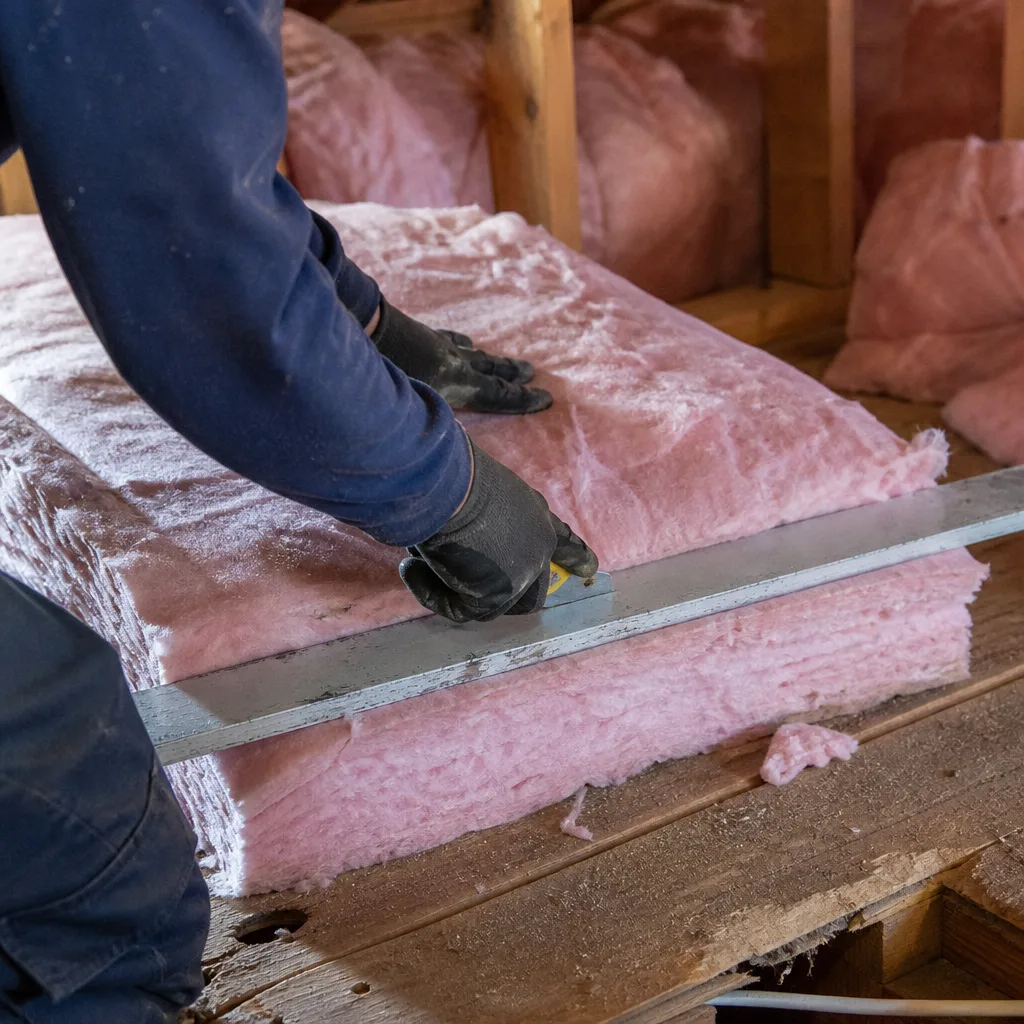
Here’s what you can safely check yourself: look at the attic hatch for loose poly, feel for damp batts near the eaves, and note any rust patterns on ceiling fixtures. Use a flashlight, not your hands - old staple points are sharp and Torrance attics often have exposed Romex or low-voltage wiring.
Where DIY goes wrong: installing a new vapor barrier over unsealed leaks traps moisture in the assembly, which is worse than no barrier at all. Rockwool’s hydrophobic coating masks the problem for months while the sheathing behind it saturates. The membrane must be taped at seams and sealed to a solid substrate at perimeters; a staple gun and a roll of poly from the hardware store won’t achieve that. We also find homeowners misidentify the warm-side placement in Torrance’s mild climate - the barrier goes toward the living space, not the roof deck, and getting that wrong accelerates decay.
Seal the leaks first. The insulation’s just holding the work in place. If you’re seeing the symptoms above, call (424) 704-9866 and we’ll read your situation with you - free second opinion on any written estimate you’ve already received.
FAQs
A properly installed membrane system with taped seams and air-sealed perimeters lasts 20-25 years in Torrance’s climate. The original 6-mil poly stapled to joists in the 1980s and 1990s typically fails in 7-12 years due to thermal cycling and UV degradation at gable vents. Call (424) 704-9866 for an exact quote on replacement - estimates are free.
Patching works only for isolated mechanical damage - a torn section near the attic hatch, for instance. If the failure is systemic (loose at top plates, unsealed at penetrations, brittle throughout), partial repair leaves you with a discontinuous plane that traps moisture. We assess this on every visit and tell you straight if repair is viable. Call (424) 704-9866 to schedule.
Most Torrance homes finish in one to two days: half a day for removal and air sealing, half a day for membrane installation and batt replacement. Larger attics or those with active HVAC equipment in the space may run into a third day. We give you a written schedule with your written price before work starts.
We stock vapor retarder membranes, acoustic sealant, and specialized tapes compatible with Rockwool batts and boards on every truck, along with Reflectix and other major brands. Rockwool itself does not manufacture a proprietary vapor barrier for residential use in the U.S., so we source tested third-party membranes - CertainTeed MemBrain, ProClima Intello, or comparable - based on your existing batt spec. Same-day starts are available for most Torrance locations.
Topside Attic Insulation Torrance is an independent service provider and is not affiliated with Rockwool. We source materials from multiple manufacturers including Rockwool, Owens Corning, Johns Manville, Knauf, CertainTeed, Icynene, Demilec, and GreenFiber.
Written by Wes Okafor, Owner & Lead Insulation Technician, Topside Attic Insulation Torrance at Topside Attic Insulation Torrance, serving Torrance and nearby areas.