
Rockwool Crawl Space Encapsulation: The Torrance Owner’s Guide
Rockwool crawl space encapsulation in Torrance typically runs $3,800-$6,200 installed for a standard 1,200-square-foot crawl space, and we stock Rockwool Comfortboard 80 and Comfortboard 110 rigid mineral wool boards on every truck for same-day replacement. Most Torrance homeowners discover the system has failed when their spring energy bills spike 20-30% above the prior year, or when they notice musty odors migrating from the crawl space into the living space above. The marine layer that sits on the Palos Verdes Peninsula side of Torrance pushes constant moisture against foundation walls, and once the vapor barrier separates from the Rockwool or the board itself waterlogs, the R-value drops fast.
Which Rockwool Models This Applies To
We replace and install Rockwool Comfortboard 80, Comfortboard 110, and the older Roxul Cavityrock lines still found in pre-2018 Torrance homes, particularly in the original ranch builds around North Torrance and the Madrona area. The critical spec is density: Comfortboard 80 at 8 pounds per cubic foot is the standard for crawl space perimeter walls, while Comfortboard 110 at 11 pounds per cubic foot handles below-grade applications where groundwater pressure is higher. Check the foil-faced label on your existing board; if it’s degraded, measure thickness (2-inch or 3-inch are standard here) and look for the embossed “ROCKWOOL” stamp on the unfaced edge.
OEM Rockwool boards are what we recommend for crawl space encapsulation because the hydrophobic binder formulation, the phenolic resin that repels moisture while maintaining dimensional stability, is not matched by generic mineral wool substitutes. Aftermarket boards from Knauf or Johns Manville will insulate, but their moisture absorption rates run higher in Torrance’s salt-air environment, and we’ve pulled saturated generic boards from crawl spaces near Wilson Park that held water weight like a sponge. If your existing system was spec’d by a prior contractor, bring us a 6-inch sample; we can identify the series in about thirty seconds and match it to current Rockwool stock or explain why an upgrade to Comfortboard 110 makes sense for your grade conditions.
Signs Your Rockwool Crawl Space Encapsulation Is Failing
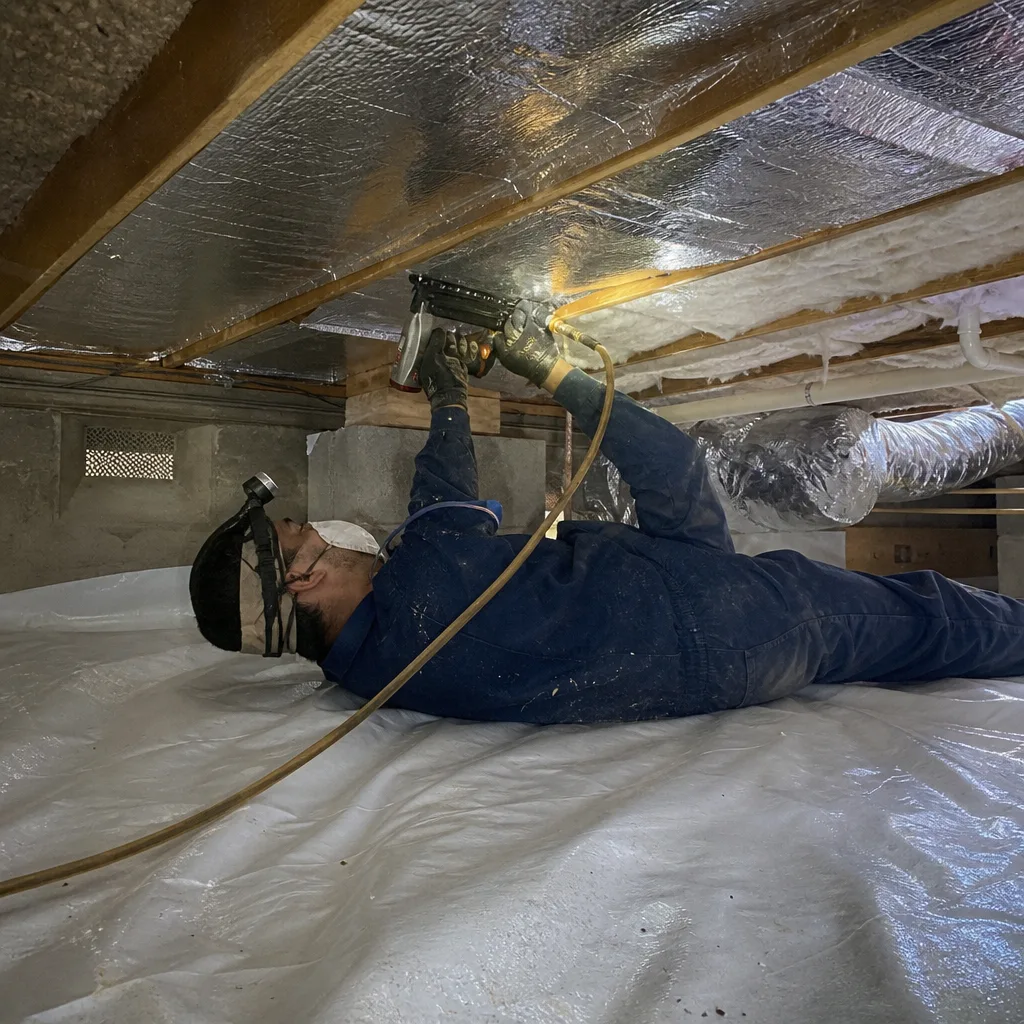
- Musty odors rising through floor registers. When the polyethylene vapor barrier tears at seams or pulls from the sill plate, marine-layer moisture penetrates the Rockwool’s open structure. The mineral wool itself won’t mold, but the organic dust and debris trapped inside will, and that smell travels through joist bays into your HVAC return path.
- Cold floors in January despite the heater running. Waterlogged Rockwool loses roughly 40-60% of its stated R-value; a 3-inch Comfortboard 80 rated at R-12 effectively performs like R-5 or worse. We see this most in Torrance homes built on the old bean fields west of Crenshaw Boulevard, where clay soils hold groundwater against the foundation.
- Visible droplets or staining on the vapor barrier’s underside. This indicates condensation at the dew point, usually because the barrier was installed without proper sealing at penetrations or because the Rockwool was compressed during installation, reducing the air gap that allows incidental moisture to dry.
- Pest activity in the crawl space. Gaps in encapsulation create habitat. Rockwool is mineral-based and unappealing to rodents as nesting material, unlike fiberglass, but if the vapor barrier is compromised, the protected environment underneath becomes attractive regardless of insulation type.
- Your energy bill climbed steadily over three billing cycles without weather explanation. This is the delayed-discovery pattern: the system degrades gradually until the thermal bypass reaches a tipping point. We pull blower-door readings on every crawl space encapsulation job in Torrance, and the homes with failed encapsulation consistently show elevated CFM50 at the floor plane.
Replacement Cost & What’s Included
| Component | Typical Range (Torrance) |
|---|---|
| Rockwool Comfortboard 80/110, material only | $1.40-$2.10 per board foot |
| 6-mil reinforced polyethylene vapor barrier | $0.45-$0.75 per square foot |
| Butyl tape, termination bars, mechanical fasteners | $280-$420 |
| Labor: removal, disposal, air sealing, install | $2,100-$3,800 |
| Typical total, 1,200 sq ft crawl space | $3,800-$6,200 |
What drives the range: accessibility (crawl spaces under 18 inches require different staging), extent of existing water damage to framing, and whether we find prior insulation that needs full removal versus selective replacement. Every job includes air sealing of sill plates, rim joists, and penetrations before the new Rockwool goes in; we don’t blow or board over leaks. Under Haven Standard Clause 1, you get a written price before any work starts, a written scope, and a written warranty. On applicable jobs, we run blower-door depressurization tests before and after to document the air-sealing result in CFM50. The 365-Day Done Right Promise covers all completed work, and you’ll receive a Documented Photo Record of every stage, not available on request - it’s delivered automatically.
DIY or Call Us?
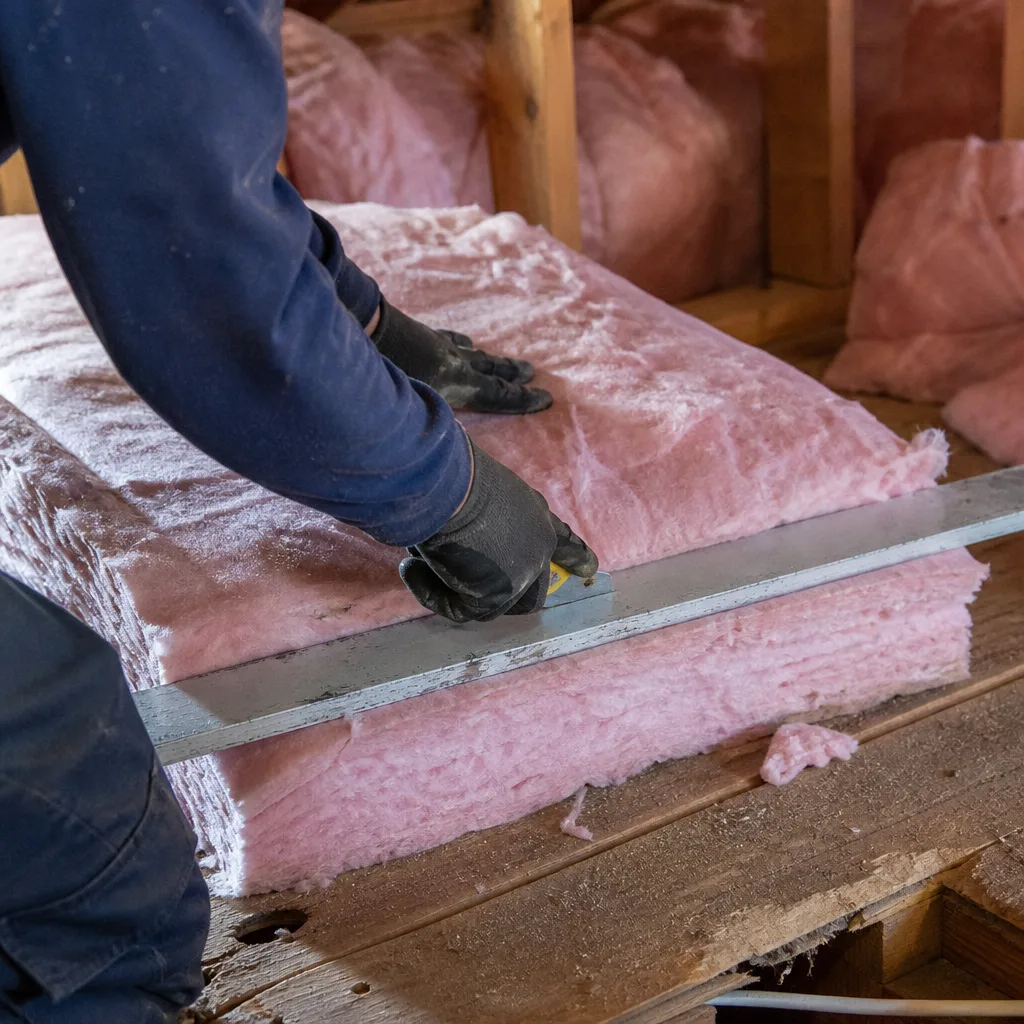
There’s no high-tension danger here like a garage door spring, but crawl space work has its own hazards: confined-space entry, disturbed rodent waste, and the real risk of installing a vapor barrier that traps moisture rather than managing it. A homeowner can safely check the vapor barrier for obvious tears and photograph the Rockwool label for identification. What goes wrong in DIY is the sequencing: we’ve been called to Torrance homes where the owner installed new Rockwool over an unsealed sill plate, or where the vapor barrier was taped to dirty concrete that the adhesive couldn’t bond to, creating a channel for groundwater to pool behind the board.
We stock Rockwool Comfortboard and full encapsulation hardware on every truck, and we carry Reflectix radiant barrier products as well for hybrid systems. If your crawl space is showing symptoms, call (424) 704-9866. We’ll read your situation with you, and if you have a competing written estimate, our Free Second Opinion applies.
FAQs
Properly installed Rockwool mineral wool itself is rated for the life of the building; the vulnerability is the vapor barrier and seam tape, which typically need inspection at 10-15 years in Torrance’s salt-air climate. The marine layer accelerates adhesive degradation compared to inland markets like Riverside. Call (424) 704-9866 for an inspection - estimates are free.
Localized repair is possible if the Rockwool is dry and the failure is limited to a torn vapor barrier section or pulled tape at a single seam. If the board has waterlogged or compressed, partial replacement creates thermal bridges at the joints. We assess this on every job and tell you straight which path costs less over ten years. Call (424) 704-9866 for an exact quote.
Most residential crawl spaces in Torrance take two to three days: one day for removal and air sealing, one day for Rockwool and vapor barrier installation, and a partial third day for detail work and blower-door verification. Tight-access jobs or those requiring full existing insulation removal add a day. Call (424) 704-9866 to schedule - we answer live, 24/7.
We stock Rockwool Comfortboard 80 and 110 in 2-inch and 3-inch thicknesses, plus reinforced poly vapor barrier, butyl tape, and termination bars on every truck. We are an independent service provider, not affiliated with Rockwool, and we also stock Reflectix radiant barrier products. For specialty thicknesses or large commercial quantities, next-day delivery from the Carson distribution center is standard. Call (424) 704-9866 - if we don’t have it on the truck, we’ll tell you exactly when we will.
Written by Wes Okafor, Owner & Lead Insulation Technician, Topside Attic Insulation Torrance at Topside Attic Insulation Torrance, serving Torrance and nearby areas.