
Owens Corning Attic Insulation: The Torrance Owner’s Guide
We stock and install Owens Corning-compatible blown-in fiberglass, batts, and ProCat loose-fill systems in Torrance, with most attic insulation jobs running between $2,400 and $5,800 depending on square footage and whether the attic floor needs air sealing first. Same-day installation is available when we have your material on the truck, which we usually do for the Owens Corning PINK Next Gen Fiberglas and AttiCat Expanding Blown-In systems. Most Torrance homeowners realize their insulation is failing when upstairs rooms won’t cool below 78°F even after the AC runs all afternoon, or when they spot the original R-19 batts compressed to half their labeled thickness in a 1980s Del Amo ranch.
Which Owens Corning Models This Applies To
Owens Corning makes several attic-specific product lines, and matching the right one matters for warranty coverage and fire-safety compliance with California Title 24. The PINK Next Gen Fiberglas batts come in R-30 through R-60 for 2×10 and 2×12 joist bays common in Torrance’s 1950s-1980s tract homes. The AttiCat Expanding Blown-In system, which we install with their proprietary blowing machine, achieves R-38 to R-60 in open attic floors and is what most homeowners mean when they say “Owens Corning attic insulation.” The ProCat Professional Loose Fill is the commercial-grade variant with higher density and slightly different bag sizing, not interchangeable with AttiCat on the same blower settings.
To identify what you have, check the paper facing on batts for the printed R-value and manufacturing date, or look for the Owens Corning logo stamped on the paper vapor barrier. Blown-in fiberglass won’t have labels visible from the attic hatch, but if the material is pink, coarse, and holds its shape when disturbed, it’s almost certainly Owens Corning. We do not install proprietary systems that lock you into one brand; we source from Owens Corning, Johns Manville, Knauf, and others so the specification drives the material choice, not the other way around. Topside Attic Insulation Torrance is an independent service provider with no affiliation to Owens Corning.
Signs Your Owens Corning Attic Insulation Is Failing
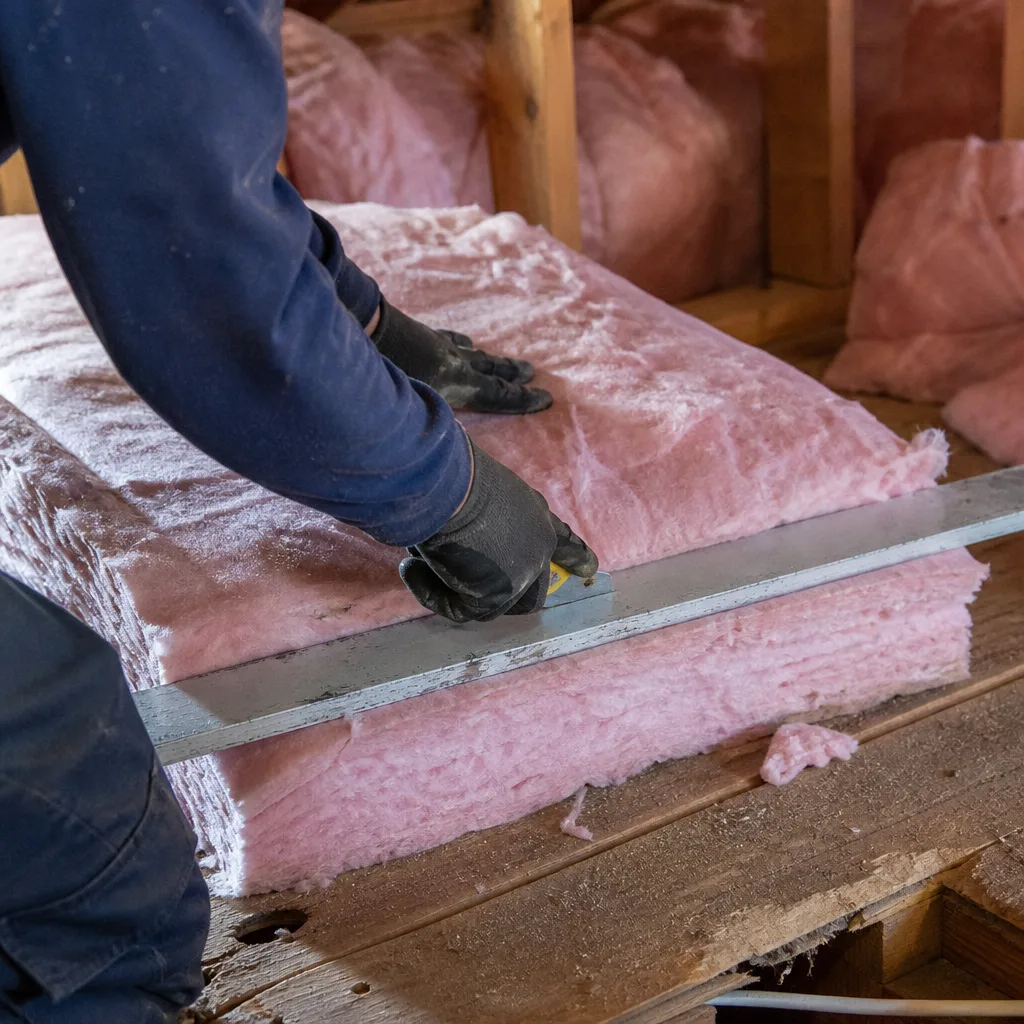
- Uneven temperatures room-to-room. In Torrance’s inland microclimate, where summer afternoons hit 85°F and marine layer mornings drop to 64°F, failed insulation shows up as a bedroom that swings 10 degrees from the hallway. The fiberglass has settled or been disturbed, creating thermal bypasses that your thermostat can’t correct.
- Compressed or displaced batts. Owens Corning batts lose R-value when compressed below their labeled thickness. We regularly find original R-30 batts squashed to R-15 effective under plywood storage platforms in Old Torrance attics, where homeowners walked on the insulation for years without realizing they were destroying it.
- Visible gaps at the eaves or around penetrations. Light streaming through the attic floor around can lights, top plates, or chimney chases means conditioned air is escaping. The insulation itself may be intact but rendered useless by air movement, a problem no amount of additional fiberglass will fix without sealing first.
- Moisture staining on the ceiling below. In Torrance’s humid spring mornings, warm moist air hits cool drywall and condenses where insulation is missing or thin. Pink fiberglass that looks gray or matted has absorbed moisture and lost its loft; it needs removal, not topping off.
- Energy bills climbing year-over-year with no rate change. When a homeowner in the Southwood Riviera neighborhood tells us their summer SCE bill jumped 30% despite identical thermostat settings, we find attic insulation that settled 20% or more below its original depth, common in blown-in systems after 10-15 years.
Replacement Cost & What’s Included
Most Owens Corning attic insulation replacements in Torrance run $2,400 to $5,800 for a typical 1,200-2,200 square foot home. The low end covers removal of degraded batts and installation of new PINK Next Gen R-38 batts in accessible joist bays with basic air sealing of top plates and electrical penetrations. The high end includes full removal of contaminated or moisture-damaged insulation, comprehensive air sealing of can lights and duct chases, and blown-in AttiCat to R-60 with baffles at every eave to maintain vented attic airflow.
What drives the range: attic square footage, current insulation condition (removal adds $1.20-$1.80 per square foot), accessibility (cape cod knee walls or 4-foot clearances slow the crew), and whether we find rodent contamination requiring sanitization before new material goes in. Every job gets a Written Price Before Any Work Starts under Haven Standard Clause 1, flat and complete. The 365-Day Done Right Promise covers all completed work, and you’ll receive a Documented Photo Record plus before-and-after blower-door readings on air-sealing jobs so you can verify the CFM50 reduction yourself. Call (424) 704-9866 for a written estimate, estimates are free.
DIY or Call Us?
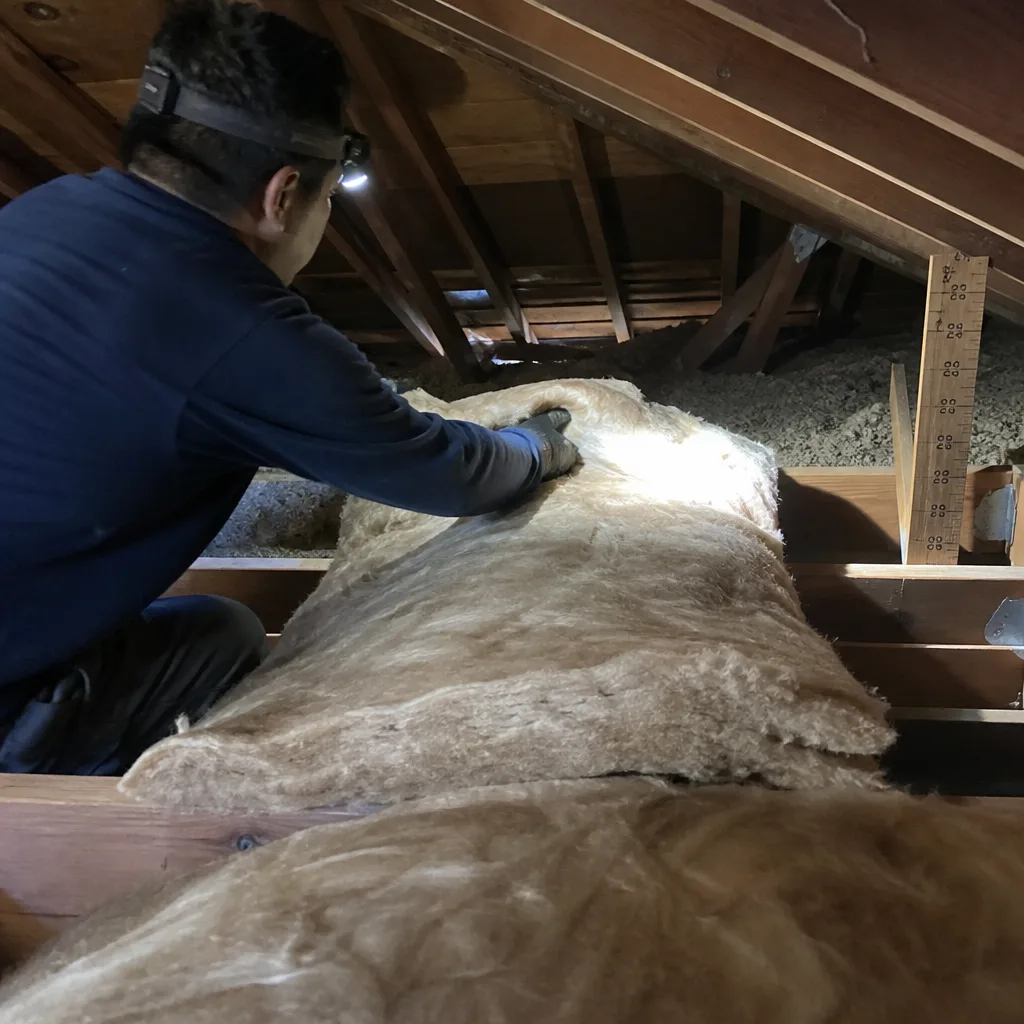
There’s no high-tension danger in attic insulation work, but there are genuine hazards homeowners underestimate. Blown fiberglass irritates skin and lungs severely; without a P100 respirator and full coverage, you’ll be miserable for days. More critically, most DIYers blow new insulation over unsealed air leaks, which is like putting a sweater on over a screen door. Wes Okafor’s rule, learned over two decades: seal the leaks first. The insulation’s just holding the work in place. The blower-door depressurization test, a diagnostic that measures how much conditioned air your house leaks per hour, determines the sequence. Without it, you’re guessing.
What you can safely check: lift the attic hatch on a cool morning and look for gaps where light shows through, measure existing batt thickness against the labeled R-value, and note any gray or matted areas. What goes wrong fast: disturbing vermiculite that might contain asbestos, stepping through drywall between trusses, or blocking soffit vents with new material and trapping moisture. For the test and the sequencing, call (424) 704-9866. We answer live, 24/7.
FAQs
Properly installed and undisturbed Owens Corning fiberglass batts last 80-100 years, but in practice Torrance attics see 10-20 years of effective performance before settling, moisture, or rodent activity degrades the material. The marine layer humidity and Santa Ana wind cycles accelerate compression in vented attics with inadequate baffles. If your insulation is 15+ years old, it’s worth an inspection, estimates are free, call (424) 704-9866.
Spot repairs work only for localized damage, a single rodent nest or a small water stain from a one-time roof leak. Widespread settling, compression, or moisture saturation requires full removal; adding new material on top traps problems and voids most manufacturer warranties. We assess this during our initial inspection and document it with photos you’ll see before any work is priced. Call (424) 704-9866 to schedule.
A typical Torrance home takes one to two days: half day for removal and air sealing, half day for installation and cleanup. Jobs requiring full sanitization or extensive deck repair for access add a day. We stage material the morning of or day before, and you’ll have your written scope, warranty, and photo record before the crew leaves. Call (424) 704-9866 to check current scheduling.
We stock PINK Next Gen batts in R-30 through R-60 and maintain AttiCat blowing material on our trucks for same-day installation on most Torrance jobs. ProCat and specialized vapor-barrier faced products typically require a 24-48 hour order. If your job is urgent, a live person can confirm current truck stock when you call (424) 704-9866.
Written by Wes Okafor, Owner & Lead Insulation Technician, Topside Attic Insulation Torrance at Topside Attic Insulation Torrance, serving Torrance and nearby areas.