
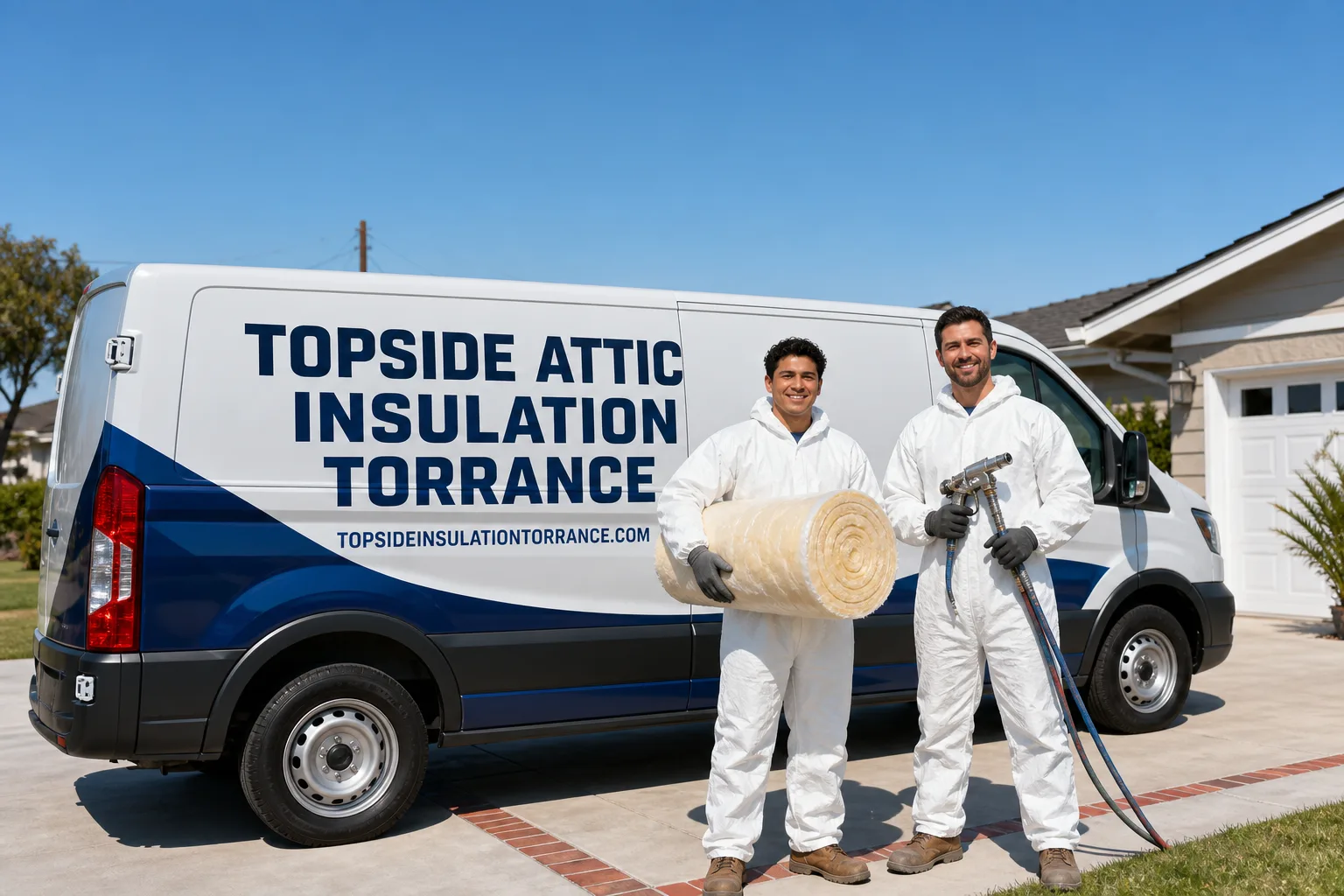
How Much Does Blown-In Insulation Cost in Torrance?
Blown-in insulation in Torrance, CA typically costs between $1,400 and $3,800 for a standard attic, with most single-family homes landing between $1,800 and $2,800 depending on square footage, current insulation depth, and whether air sealing is completed first. Jobs that include attic air sealing before the blow – which is the correct sequence – run $300 to $700 more than insulation alone, but they also deliver measurably lower energy bills because insulation over unsealed penetrations is insulation doing about half its job.
Blown-In Insulation Cost Breakdown (2026)
The numbers below reflect actual project ranges in the Torrance market as of 2026. Torrance sits in IECC Climate Zone 3B, where the California Energy Code calls for attic insulation at R-38 minimum in existing homes – though R-49 to R-60 is what we see specified on most permitted work here. Square footage of conditioned floor area is the primary cost driver, not the attic footprint, because insulation is priced per the area being thermally protected.
| Scope of Work | Typical Torrance Price Range (2026) | Notes |
|---|---|---|
| Blown-in attic insulation only – up to 1,000 sq ft floor area | $1,400 – $1,900 | Smaller bungalows and post-war cottages common in Old Torrance |
| Blown-in attic insulation only – 1,000 to 1,800 sq ft | $1,800 – $2,600 | Covers most 1960s-1980s tract homes in the Walteria and Southwood areas |
| Blown-in attic insulation only – 1,800 to 2,800 sq ft | $2,400 – $3,400 | Larger homes near the Riviera and Del Amo neighborhoods |
| Attic air sealing + blown-in insulation – up to 1,000 sq ft | $1,900 – $2,600 | Air sealing includes top plates, can lights, and duct penetrations |
| Attic air sealing + blown-in insulation – 1,000 to 1,800 sq ft | $2,400 – $3,400 | Most common scope on Torrance jobs; blower-door readings provided before and after |
| Attic air sealing + blown-in insulation – 1,800 to 2,800 sq ft | $3,200 – $4,600 | Larger attics with complex framing, knee walls, or HVAC equipment in the attic |
| Old insulation removal before new blow | $600 – $1,400 added to base | Required when existing material is contaminated, compressed below R-11, or rodent-damaged |
| Blown-in wall insulation (injection foam or dense-pack cellulose) | $1.80 – $3.50 per sq ft of wall cavity | Priced per wall square footage; scope varies widely |
| Blown-in insulation + radiant barrier added | $400 – $900 added to attic scope | Radiant barriers make more difference in west- and south-facing Torrance attics |
A few things push a Torrance job toward the higher end of those ranges. Attics with shallow pitches – common in the mid-century flat-to-low-slope homes along Anza Avenue and parts of the Seaside neighborhood – restrict hose movement and slow the blow, adding labor time. Attics that also house HVAC equipment require the crew to work around ducts and air handlers, which adds complexity. And jobs where the existing insulation reads below R-11 on the blower probe often need partial removal before new material can go in, because blowing over badly compressed, moisture-affected, or pest-damaged insulation traps the problem rather than solving it.
Material choice matters less in price than most people expect. Fiberglass loose-fill (Owens Corning, Johns Manville) and blown cellulose (GreenFiber) land within about 10-15% of each other per installed R-value in the Torrance market. The bigger cost variable is almost always labor – specifically, how accessible the attic is and whether air sealing has to happen first.
What Affects Blown-In Insulation Pricing in Torrance
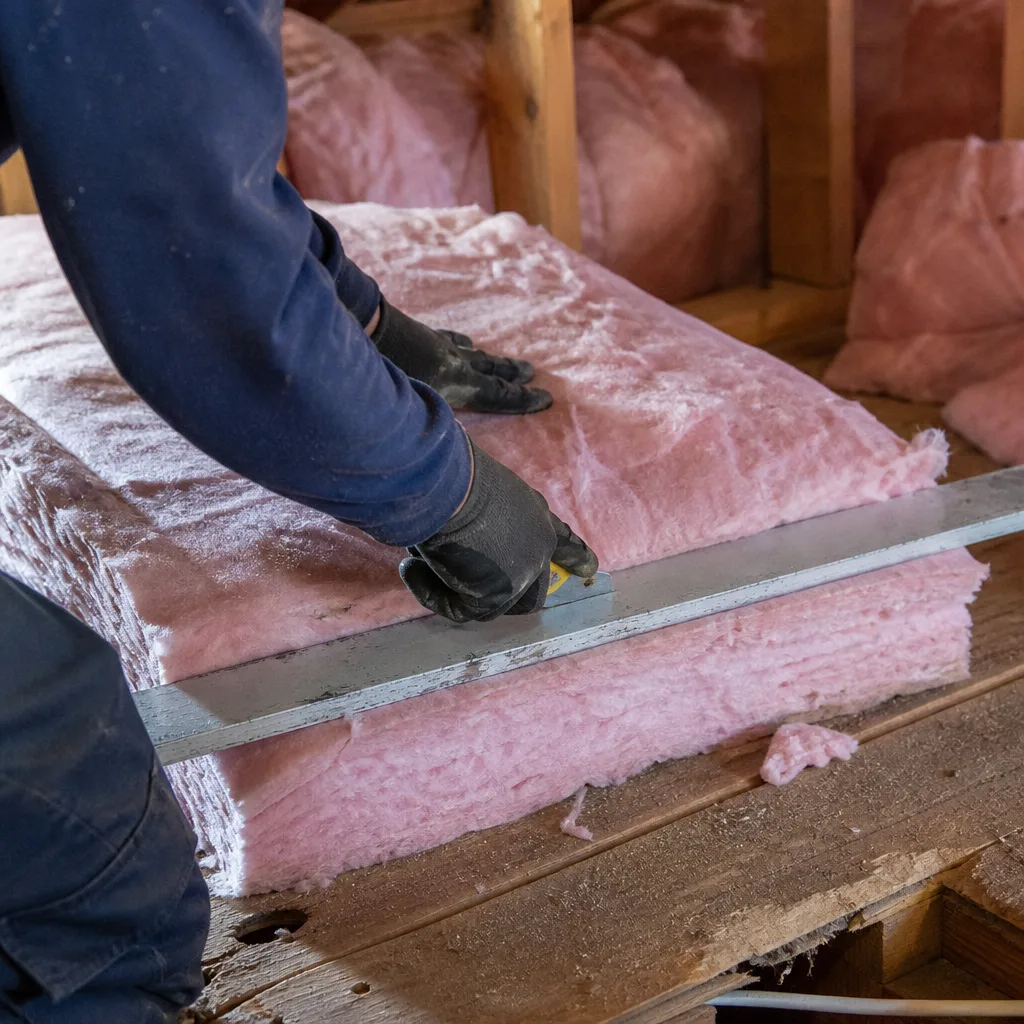
- Current insulation depth and condition. Torrance homes built before 1978 often have original fiberglass batts that have settled to an effective R-8 or lower. If the existing material is still dry and pest-free, new blown-in insulation goes on top and the job moves quickly. If it’s contaminated – and in the older neighborhoods east of Hawthorne Boulevard, rodent activity in attics is common enough that we account for it on most pre-1990 homes – removal adds both time and cost before a single bag of new material opens.
- Attic accessibility and configuration. A standard 24-inch by 30-inch scuttle hatch is workable. A hatch under 22 inches, or one located inside a closet with a shelf directly below it, slows every step of the job. Torrance also has a number of split-level homes in the Walteria hills area where the attic divides into multiple unconnected sections, each requiring its own hose run. That drives labor up in a way square footage alone doesn’t capture.
- Whether air sealing is in the scope. California Title 24 energy compliance requires air sealing when insulation is installed as part of a permitted project. Even on unpermitted jobs, skipping air sealing before blowing insulation is the single most common reason a homeowner calls back 18 months later wondering why their energy bills didn’t change. Sealing top plates, recessed can lights, and plumbing and electrical penetrations before the blow adds cost upfront and measurably reduces infiltration – the blower-door reading after the work is the number that shows whether it actually happened.
- R-value target. Going from R-11 to R-30 costs less than going from R-11 to R-49 or R-60, simply because of material volume. In Torrance’s climate – mild coastal temperatures year-round, with late spring and early fall being the periods when attic heat gain matters most – R-38 satisfies code minimums, but R-49 to R-60 is what Wes Okafor typically recommends on homes where the attic has any southern or western exposure.
- Permit requirements. The City of Torrance requires a building permit for insulation projects that are part of a larger renovation or that involve a significant scope of work. Permit fees in Torrance for residential energy work currently run $150 to $400 depending on valuation. Not every standalone blown-in job triggers a permit requirement, but jobs combined with HVAC work, additions, or roof replacements almost always do. Ask before the work starts – a written scope should specify whether a permit is being pulled.
- Torrance’s coastal climate microclimate. Torrance sits close enough to the Pacific that marine layer keeps temperatures moderate – highs in the mid-70s most of the year, with cooling loads that are lower than inland cities like Pasadena or Riverside. That means the payback period for insulation upgrades is longer here than in hotter climates, and it also means moisture management matters more than it does 20 miles inland. Cellulose performs well in this environment because it’s treated for mold and pest resistance, but any material choice should account for the fact that attic humidity in Torrance can run higher than homeowners expect.
How to Save on Blown-In Insulation in Torrance
Combine Work When Possible
The largest single cost in a blown-in job is mobilization – getting a crew and a blowing machine to the site. If your Torrance home needs both attic air sealing and new insulation, scheduling them together on the same visit is almost always cheaper than two separate jobs. The same logic applies if you’re also considering a radiant barrier: adding one during the same attic access saves you a return trip charge and reduces the total labor hours significantly.
Apply for the Southern California Edison Rebate
Southern California Edison – the utility serving most of Torrance – offers rebates for qualifying insulation upgrades under its residential programs. As of 2026, attic insulation rebates have ranged from $150 to $600 depending on square footage and R-value achieved, though program availability changes. You should confirm current offers directly with SCE before your project starts. Your contractor’s written scope should document the pre- and post-installation R-values you’ll need to submit a rebate application. At Envelope Insulation Co., the Documented Photo Record included on every job gives you exactly that paper trail.
Get a Second Opinion on Any Written Estimate
If you’ve already received a written quote from another contractor, bring it in. Under the Haven Standard, Envelope Insulation Co. offers a Free Second Opinion on any written estimate – Wes Okafor or a member of the team will go through it line by line with you and tell you what’s in it, what’s missing, and where the numbers land relative to current Torrance market rates. There’s no obligation and no sales pressure attached to that conversation.
Don’t Skip Air Sealing to Save Money Upfront
This one runs counter to the usual cost-cutting advice, but it’s worth saying plainly: insulation without air sealing in an older Torrance home often produces minimal energy savings. The mechanism is simple – blown-in insulation slows conductive heat transfer, but it does almost nothing to stop the conditioned air that’s escaping through gaps at top plates, recessed light fixtures, and duct penetrations. You can have R-49 of fiberglass overhead and still lose a third of your conditioned air through those gaps. The air sealing is what closes them. Spending $300 to $700 more upfront to do both is nearly always the more cost-effective path.
Check the Timing on Old Insulation Removal
If your current insulation is old fiberglass batting that’s compressed but not contaminated, you may not need removal before a new blow. A technician who looks at it in person – not just quotes based on the age of your home – can tell you whether blowing over it is appropriate or whether you’re just adding material on top of a problem. Getting that assessment in writing before any work starts is the only way to know for certain what you’re paying for. Call (424) 704-9866 to schedule a free estimate; the assessment happens at the visit, not over the phone.
Ask About Our Blown-In Insulation in Torrance Service Page
The full scope of what’s included – air sealing, materials used, blower-door testing, documentation – is covered in detail on our Blown-In Insulation services page. Reading it before the estimate visit helps you ask better questions and compare quotes on equal terms.
FAQs – Blown-In Insulation Cost in Torrance
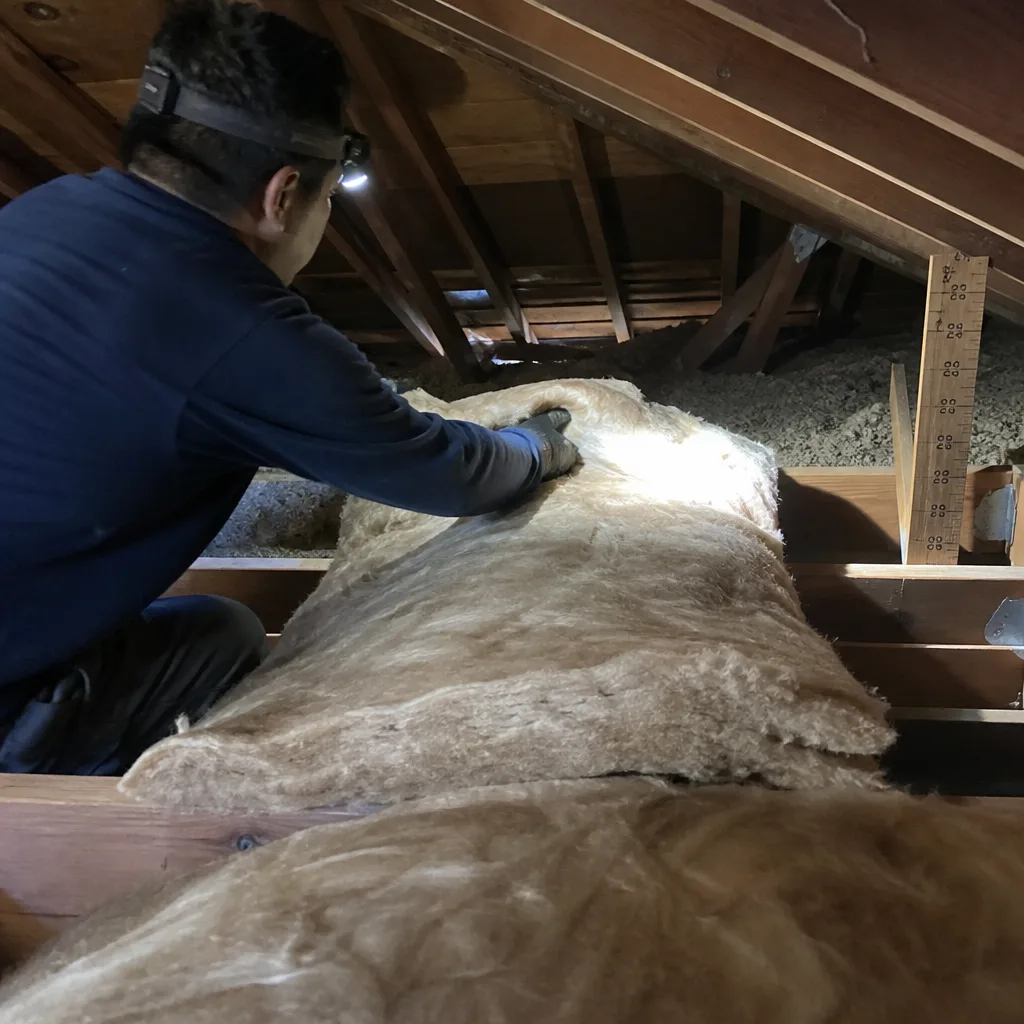
How much does blown-in attic insulation cost in Torrance, CA?
Most blown-in attic insulation jobs in Torrance run between $1,800 and $3,400 for homes in the 1,000 to 2,800 square foot range, with air sealing included. Insulation-only scopes (no air sealing) start around $1,400 for smaller homes. The specific number depends on your attic’s square footage, current insulation condition, R-value target, and whether old material needs to come out first. For a written price specific to your home, call (424) 704-9866 – the estimate is free and the written price comes before any work starts.
Is blown-in insulation worth it in Torrance’s mild climate?
Yes, though the payback period is longer here than in inland Southern California cities. Torrance’s marine-influenced climate keeps outdoor temperatures moderate, which reduces peak cooling and heating loads – but it doesn’t eliminate them. Attics in west- and south-facing Torrance homes regularly reach 130 to 150 degrees Fahrenheit in summer, and that heat radiates into living spaces regardless of outdoor temperatures. Upgrading from the R-11 or R-19 found in many pre-1990 Torrance homes to R-49 or R-60 measurably reduces that heat transfer. Most homeowners who combine air sealing with the blow see enough reduction in HVAC runtime to recoup the cost within five to eight years on a typical SCE bill – faster if they’re also capturing a utility rebate.
Does blown-in insulation require a permit in Torrance?
Standalone blown-in insulation jobs in Torrance do not always require a permit, but work that’s part of a larger project – a re-roof, an HVAC replacement, an addition – typically does. The City of Torrance’s Building and Safety Division handles residential energy permits, and fees generally run $150 to $400 depending on project valuation. Any contractor who tells you categorically that no permit is needed without reviewing your specific scope is giving you an incomplete answer. Your written scope from Envelope Insulation Co. will specify whether a permit is being pulled and who is responsible for obtaining it – that clarity is part of Haven Standard Clause 1.
How long does blown-in insulation last in Torrance?
Fiberglass loose-fill and blown cellulose both have manufacturer-stated lifespans of 20 to 30 years under normal conditions, and many installations last longer. In Torrance, the main factors that shorten insulation lifespan are moisture infiltration (from inadequate attic ventilation or a leaking roof) and pest activity – rats and mice in particular compress and contaminate blown materials in ways that reduce effective R-value well before the end of the product’s rated life. A technician doing a pre-installation assessment should check for both. The Documented Photo Record Envelope Insulation Co. provides at job close gives you a baseline – if you ever have a question about condition years later, there’s a record of what was there when the work was done.
What’s the difference in cost between fiberglass and cellulose blown-in insulation?
In the Torrance market, the installed cost difference between fiberglass loose-fill (materials sourced from Owens Corning or Johns Manville, among others) and blown cellulose (GreenFiber and similar) is typically $0.10 to $0.25 per square foot at the same R-value – close enough that material choice should come down to performance characteristics rather than price. Cellulose is denser, which gives it slightly better air resistance and acoustic performance; fiberglass is lighter and easier to inspect visually. In Torrance’s coastal humidity environment, both perform well when installed correctly over a properly sealed attic floor. The more meaningful cost variable is almost always the scope of air sealing and the accessibility of your specific attic.
Blown-In Insulation and Air Sealing: Why We Do It in That Order
Envelope Insulation Co. operates under one non-negotiable rule on attic work: air sealing happens before insulation goes in, every time, with no exceptions. This isn’t a preference – it’s a technical requirement that most homeowners don’t know to ask about, and it’s the reason we document it.
Here’s the mechanical reason. Blown-in insulation – fiberglass, cellulose, or mineral wool – is a porous material. It slows the movement of heat through conduction and convection within the material itself. What it does not do is block air from moving freely through gaps at top plates (the framing between your living space ceiling and the attic floor), around recessed can lights, and through plumbing and electrical penetrations. Those gaps can be small in linear dimension and still account for a significant percentage of conditioned-air loss. In a blower-door test – a pressurization reading that measures, in a single number expressed in CFM50, how much air the building envelope is losing – unsealed attic penetrations often show up as the single largest infiltration source in the building.
On a Torrance home we worked on in the Harbor Gateway area, the pre-sealing blower-door reading was 3,400 CFM50. After sealing top plates, 22 recessed can light boots, and three plumbing chases – before touching the insulation – the reading dropped to 2,100 CFM50. The blown-in insulation went in over a sealed floor. The homeowner received both numbers in writing as part of the job record. That’s the documentation that shows what they actually paid for.
Every applicable job at Envelope Insulation Co. produces before-and-after blower-door readings. They’re included in the Documented Photo Record, not provided on request as a separate deliverable. If a contractor’s quote doesn’t mention air sealing and doesn’t mention how they’ll verify results, ask why – and bring that quote to us for a Free Second Opinion.
Wes Okafor has led every project scope under The Haven Standard since Envelope Insulation Co. opened in 2016. The written price comes first. The documentation comes last. Everything in between is the actual work.
What the Job Looks Like From Quote to Close
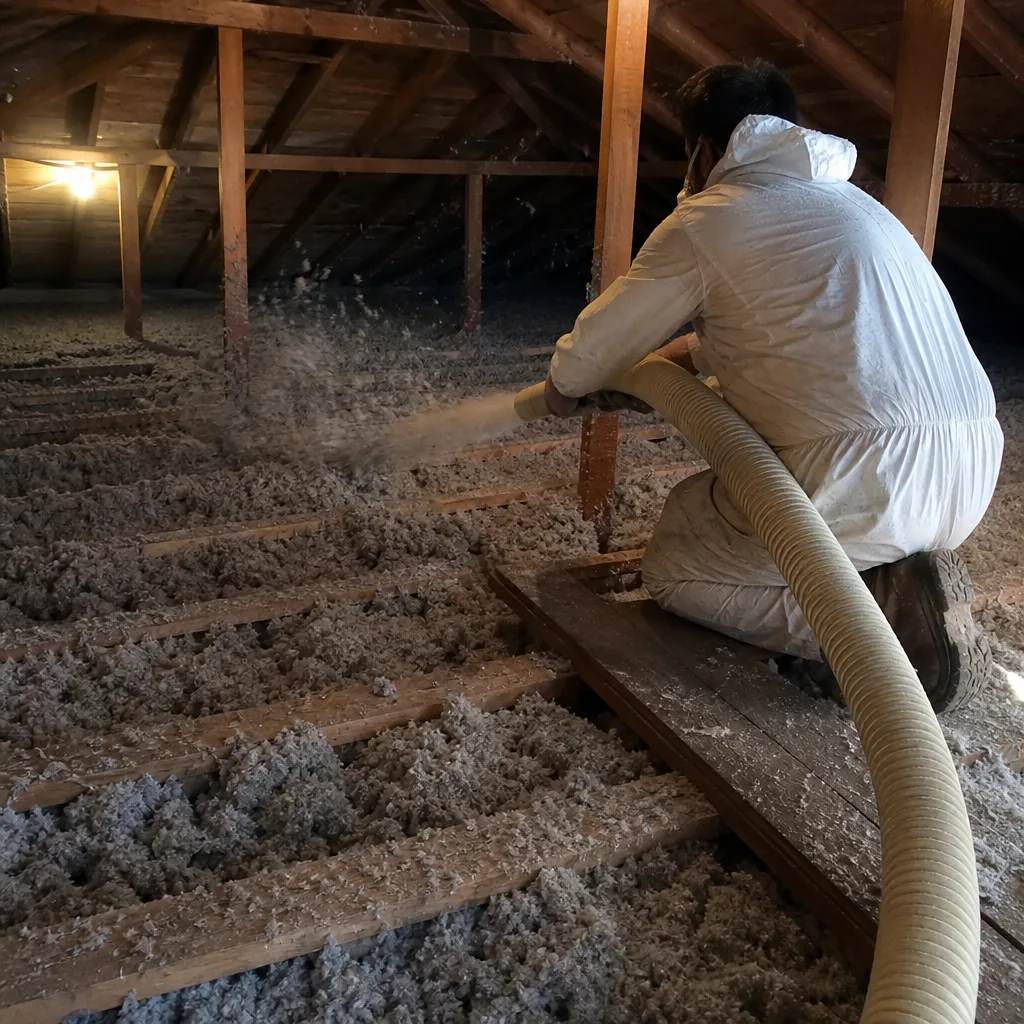
For a Torrance homeowner who’s never had blown-in insulation installed, here’s the sequence of a typical job under the Haven Standard:
- Free estimate visit. A background-checked, uniformed technician comes to your home and accesses the attic in person. No remote quotes based on square footage alone. The technician checks current insulation depth, identifies any moisture or pest issues, measures the attic, and notes access conditions. You get a written price before anyone leaves.
- Written scope, written price, written warranty – before work starts. Haven Standard Clause 1: flat price, written scope, written warranty before any tool is lifted. You know exactly what’s included – air sealing scope, R-value target, material type, whether removal is needed, and whether a permit is being pulled.
- Air sealing first. On the scheduled job day, the crew seals top plates, recessed light boots, plumbing penetrations, and electrical chases with an appropriate sealant (typically fire-rated foam or caulk depending on the penetration type). A blower-door test – a pressurization measurement that shows, in a single figure, how much air the home’s envelope is losing – is run before and after sealing on applicable jobs.
- Blown-in insulation installed to specified depth. Insulation goes in over the sealed floor to the depth required to reach the specified R-value. Depth markers are left visible in the attic so the R-value is verifiable by any inspector or subsequent technician.
- Documented Photo Record provided at job close. Photos of the before condition, the sealed penetrations, the finished insulation depth, and the blower-door readings (where applicable) are included with your job record. You don’t have to ask for them.
- 365-Day Done Right Promise applies from the close date. If something isn’t right within 365 days, we make it right – in writing, no negotiation required.
Torrance-Specific Notes on Blown-In Insulation
Torrance is a city of distinct neighborhoods with housing stock that spans almost a century – from the small craftsman bungalows in Old Torrance near Sartori Avenue to the larger 1970s and 1980s homes in Walteria and the South Bay Galleria corridor. Each era of construction has its own insulation profile, and what’s standard on a pre-war bungalow is completely different from what you’ll find in a 1990s Torrance tract home.
Pre-1960 homes in Old Torrance and parts of the Seaside neighborhood often have little to no attic insulation – or original blown rock wool that has compressed to an effective R-4 or R-5. These homes also tend to have open top plates where the wall framing meets the attic floor, which creates a direct air pathway from interior walls into the attic. Air sealing on these homes takes longer and costs more than on newer construction, but it also produces a larger measured improvement.
Homes from the 1960s through the 1980s – which make up a large portion of the housing stock in the Southwood, Walteria, and Jefferson neighborhoods – typically have fiberglass batts installed during original construction. Those batts are often still in place and have settled significantly. In Torrance’s climate, this generation of insulation rarely has moisture damage unless there’s been a roof leak, but pest activity – particularly in homes with mature landscaping and dense shrubbery near the roofline – is common enough that we assess for it on every pre-1990 job.
Newer homes in the Riviera Village area and the developments east of Hawthorne Boulevard built after 2000 usually have insulation in better condition but may still be below current R-value minimums if they haven’t been upgraded since original construction. California’s energy codes have changed substantially since 2006, and a home permitted in 2002 at R-30 is now below the Title 24 minimum of R-38 for this climate zone.
If your Torrance home was built before 2010 and hasn’t had insulation work since original construction, it’s likely due for an assessment – not because the material necessarily needs replacement, but because the depth should be verified in person rather than assumed.
Key Takeaways
- Blown-in attic insulation in Torrance costs $1,400 to $3,800+ for most single-family homes, with the most common scope (air sealing + insulation, 1,000 to 1,800 sq ft) landing between $2,400 and $3,400.
- Air sealing before insulation is not optional if you want measurable results – and blower-door readings before and after are the only way to verify it happened.
- SCE rebates can offset $150 to $600 of the project cost; your written job record and photo documentation support the rebate application.
- Material choice (fiberglass vs. cellulose) is a smaller cost variable than attic access, existing insulation condition, and air sealing scope.
- Torrance’s coastal climate extends the payback period compared to inland cities, but attic temperatures still reach 130 to 150 degrees in summer – the thermal transfer is real regardless of ambient outdoor temperatures.
- Every job at Envelope Insulation Co. starts with a written price and closes with a Documented Photo Record – and the home page covers the full scope of services available across the building envelope.
Get a Written Price for Your Torrance Home
If you want to know what blown-in insulation will actually cost for your specific attic – not a range off a calculator, but a flat written number based on a real in-person assessment – call Envelope Insulation Co. at (424) 704-9866. The estimate visit is free. The written price comes before any work starts. Wes Okafor and the team have been doing this across Torrance and the South Bay since 2016, and the written scope, blower-door documentation, and 365-Day Done Right Promise come standard on every job – not as add-ons you have to negotiate for.
If you’ve already received a quote from another contractor, bring it. The Free Second Opinion offer means someone will go through it with you line by line – no pressure, no obligation, just a plain read of what you’re being offered and whether the numbers make sense for the Torrance market.
Written by Wes Okafor, Owner at Envelope Insulation Co. (operating as Topside Attic Insulation Torrance), serving Torrance, CA since 2016.
Pricing reflects the Torrance market as of 2026. Topside Attic Insulation Torrance offers free estimates – call (424) 704-9866.
What Our Customers Say
"Crawl space encapsulation done properly. Photographs of the vapour barrier at every seam, and the damp smell in the hallway is gone."
- Ainsley P."They photographed rodent damage in the old insulation that we had no idea about, and priced the exclusion work separately so we could decide."
- Harriet N."They air-sealed the attic floor before insulating and showed me the blower-door number before and after. The upstairs is finally the same temperature as downstairs."
- Marisol D.