
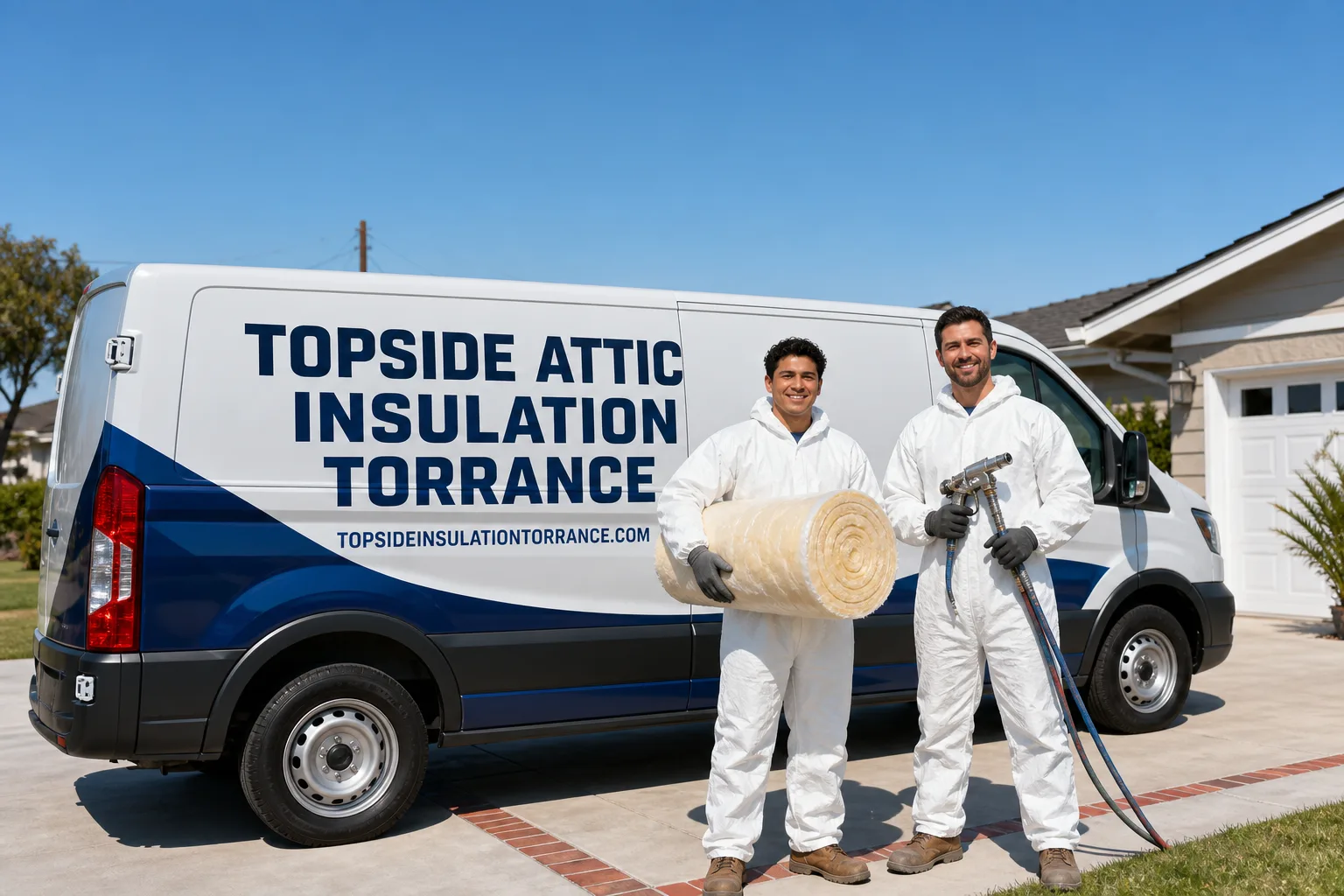
Fast, Reliable Spray Foam Insulation Across Los Angeles
Spray foam insulation in Los Angeles runs $2.80-$7.50 per board foot depending on cell type and application, with most whole-attic jobs landing between $3,200 and $8,500. We’re Envelope Insulation Co., and our Los Angeles office dispatches crews across the basin daily. Call (424) 704-9866 for a written price before any work starts.
Los Angeles presents a problem no other U.S. market replicates at this scale. The same metro contains Very High Fire Hazard Severity Zone ridgelines where wildland-urban interface codes restrict which foam products can touch an attic, and San Fernando Valley neighborhoods where unconditioned attics bake to 150-160°F on August afternoons. A spec that works in Canoga Park can be non-compliant in Altadena. That’s why our Spray Foam Insulation team calibrates every recommendation to micro-zone conditions, not citywide rules of thumb.
Why Topside Attic Insulation Torrance Is Los Angeles’s Preferred Spray Foam Insulation Company
We’ve sealed and insulated 9,000+ homes since 2016, every one with a written price before work started and a documented record when the crew left. In Los Angeles specifically, that documentation includes before-and-after blower-door numbers on applicable jobs, so homeowners see the pressurization change they paid for in a single figure.
Our Los Angeles customers tend to be thorough researchers. They read three-star reviews with the same attention they give five-star ones, and they want evidence, not assurances. We deliver that. Every job closes with a Documented Photo Record, and on air-sealing work we publish blower-door test results, the pressurization reading that shows, in one number, how much conditioned air your building envelope was losing before and after.
Calls route to a live person 24/7, no voicemail loops. Our Los Angeles office coordinates dispatch and scheduling locally, which means we’re not estimating drive times from another county. Crews arrive with enough material to complete the job in one trip because partial fills across this basin’s long service distances leave uninsulated bands that thermal imaging catches immediately.
Our Spray Foam Insulation Services in Los Angeles
Open-Cell Spray Foam
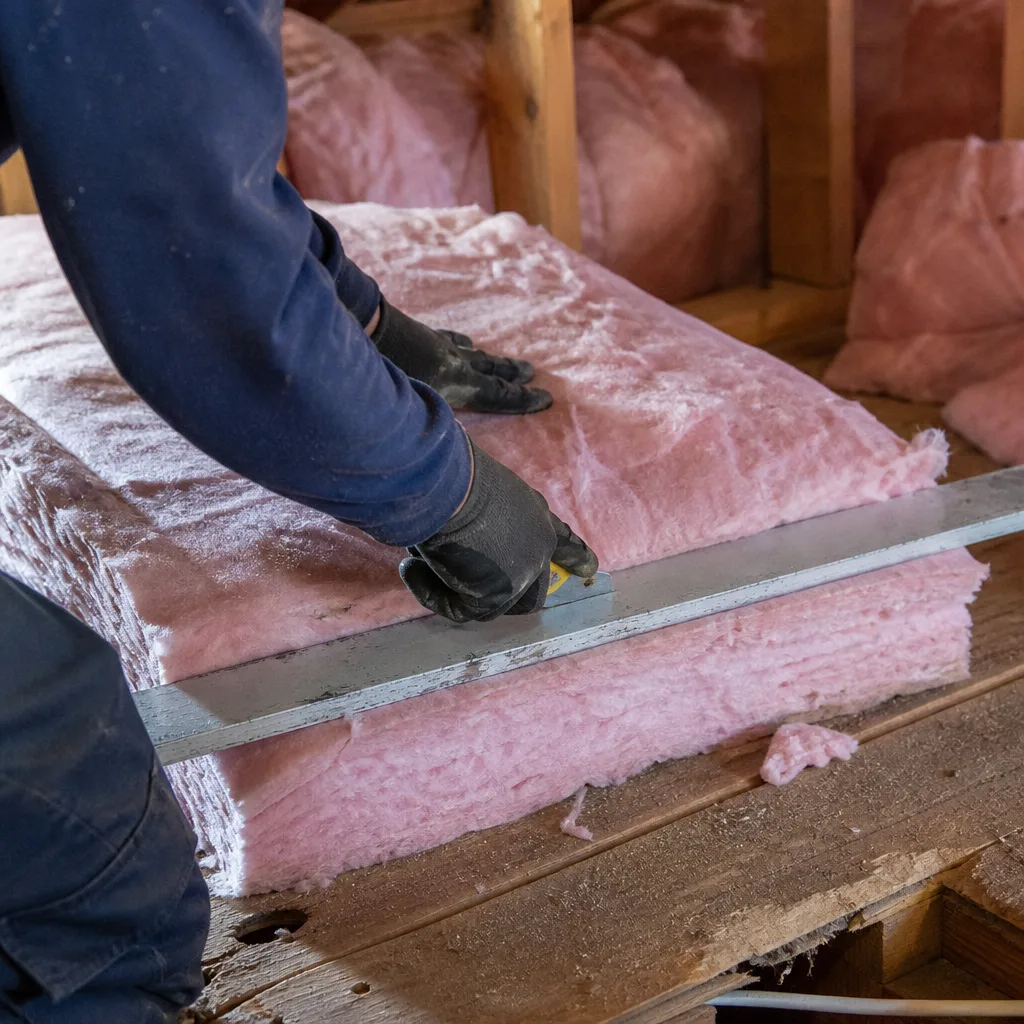
Open-cell spray foam in Los Angeles typically costs $2.80-$4.20 per board foot. We specify it for interior applications where vapor permeability matters, attic floors in non-VHFHSZ neighborhoods, and sound-dampening between units in multifamily buildings common to Koreatown and Mid-Wilshire. The foam expands to roughly 100 times its liquid volume, filling irregular cavities in 1920s Craftsman framing that predates modern dimensional lumber. In Highland Park and Silver Lake, we regularly drill injection ports through hard-coat stucco and pump open-cell foam into empty stud bays, preserving original facades that exterior demolition would destroy.
Closed-Cell Spray Foam
Closed-cell spray foam runs $4.50-$7.50 per board foot in the Los Angeles market, reflecting higher material density and R-value per inch. We use it for roof deck applications in San Fernando Valley homes where attic temperatures hit 150-160°F, for rim joists in crawl spaces with moisture exposure, and for any VHFHSZ-compliant assembly where ignition resistance is mandated. The higher compressive strength also suits garage ceiling applications where storage loads or HVAC equipment will sit atop the insulation layer. Surface prep and substrate-temperature checks are non-negotiable on Valley jobs. Closed-cell foam applied too thin over degraded 1950s batts, without proper deck preparation, delaminates within a few summers under thermal cycling that coastal conditions never produce.
Spray Foam Roof Deck
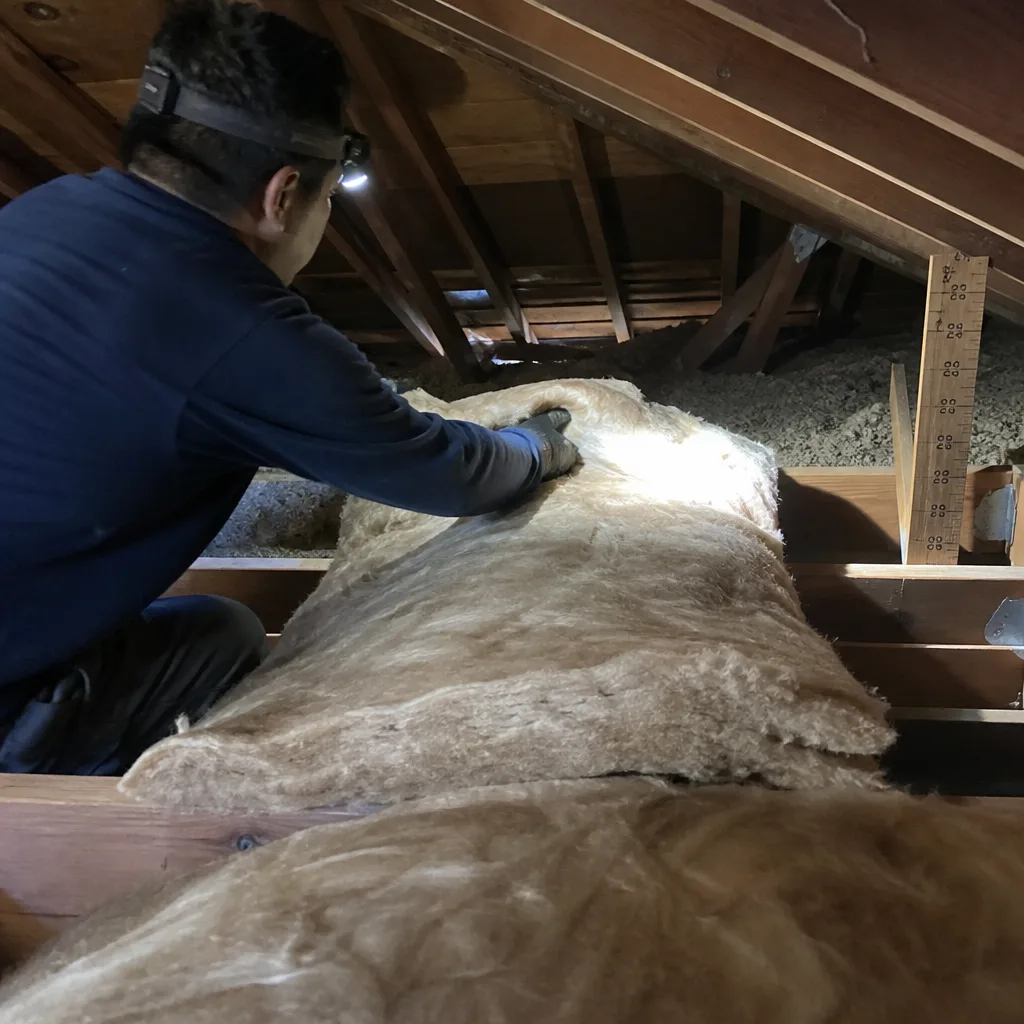
Spray foam applied directly to roof deck undersides transforms vented attics into conditioned spaces, a strategy we deploy heavily in Los Angeles’s 1950s-1970s ranch tracts across the San Fernando Valley. These homes were built assuming mild weather eliminated the need for meaningful insulation, leaving original flex ductwork to degrade in 155°F attic air. By foaming the deck and bringing ducts inside the thermal envelope, we eliminate the attic as a heat source entirely. The approach demands careful product selection in VHFHSZ-designated areas, where California’s WUI codes restrict certain foam applications. We verify compliance before specifying, not after installation.
Rim Joist Spray Foam
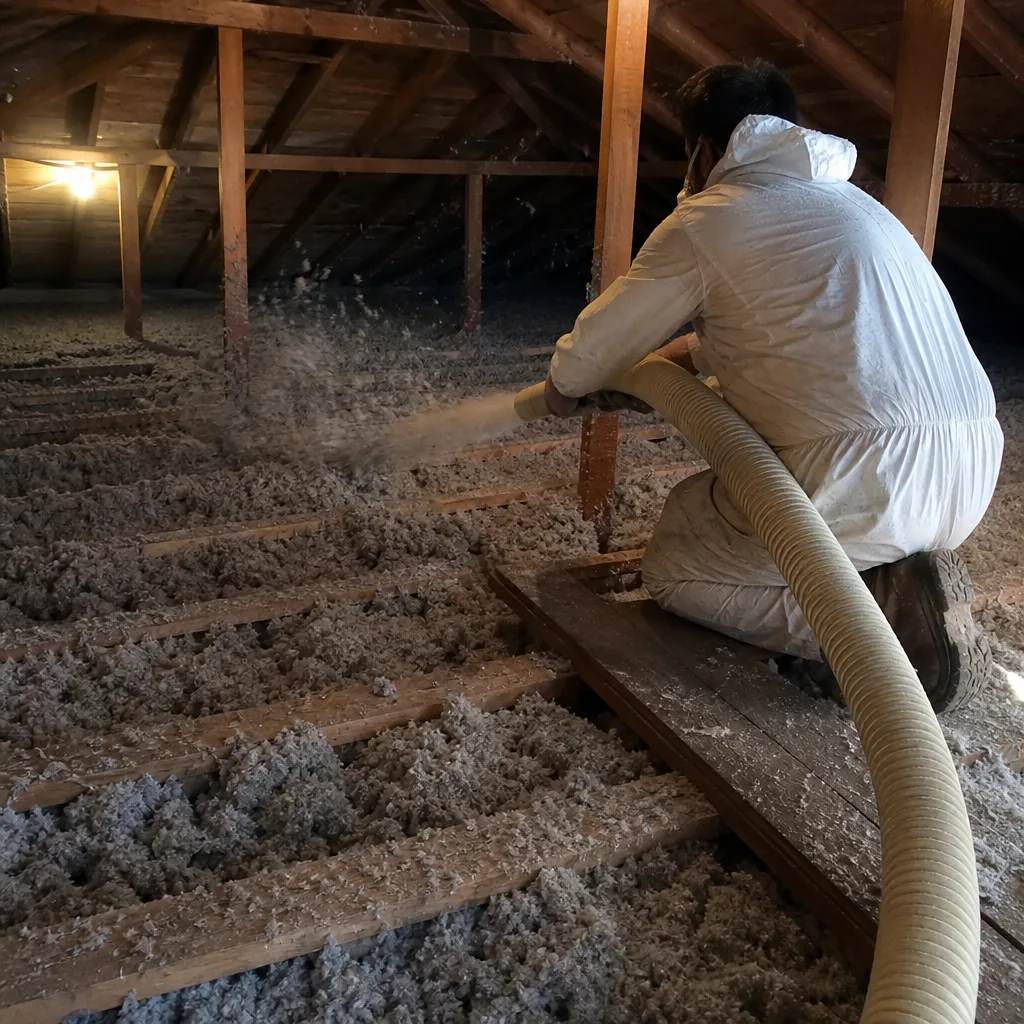
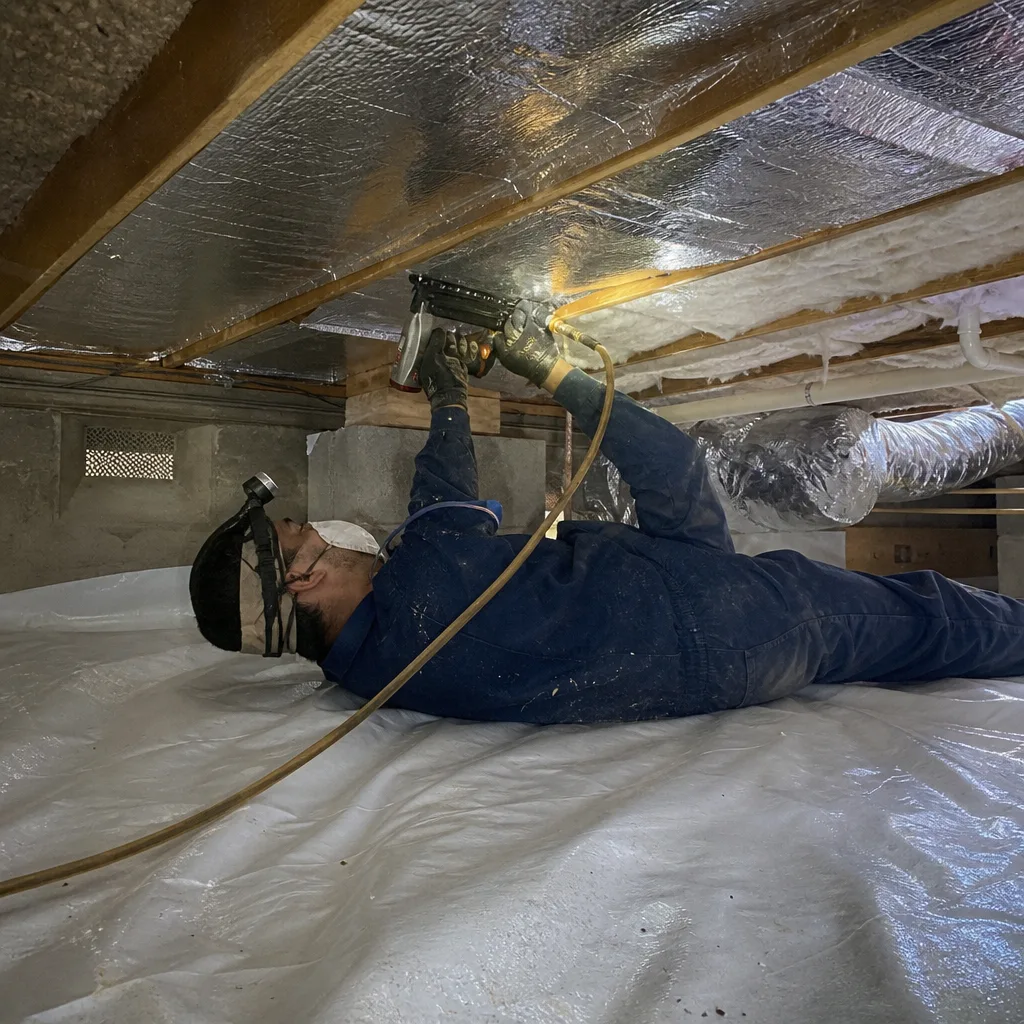
Rim joists, the band where foundation walls meet floor framing, are the leakiest square footage in most Los Angeles homes per square inch. In raised foundation bungalows from West Adams to Eagle Rock, unsealed rim joists pull conditioned air directly into crawl spaces year-round. Closed-cell foam at $5.00-$7.00 per board foot seals and insulates in one pass, with vapor-impermeable properties that matter in older crawl spaces with soil moisture.
Garage Ceiling Spray Foam
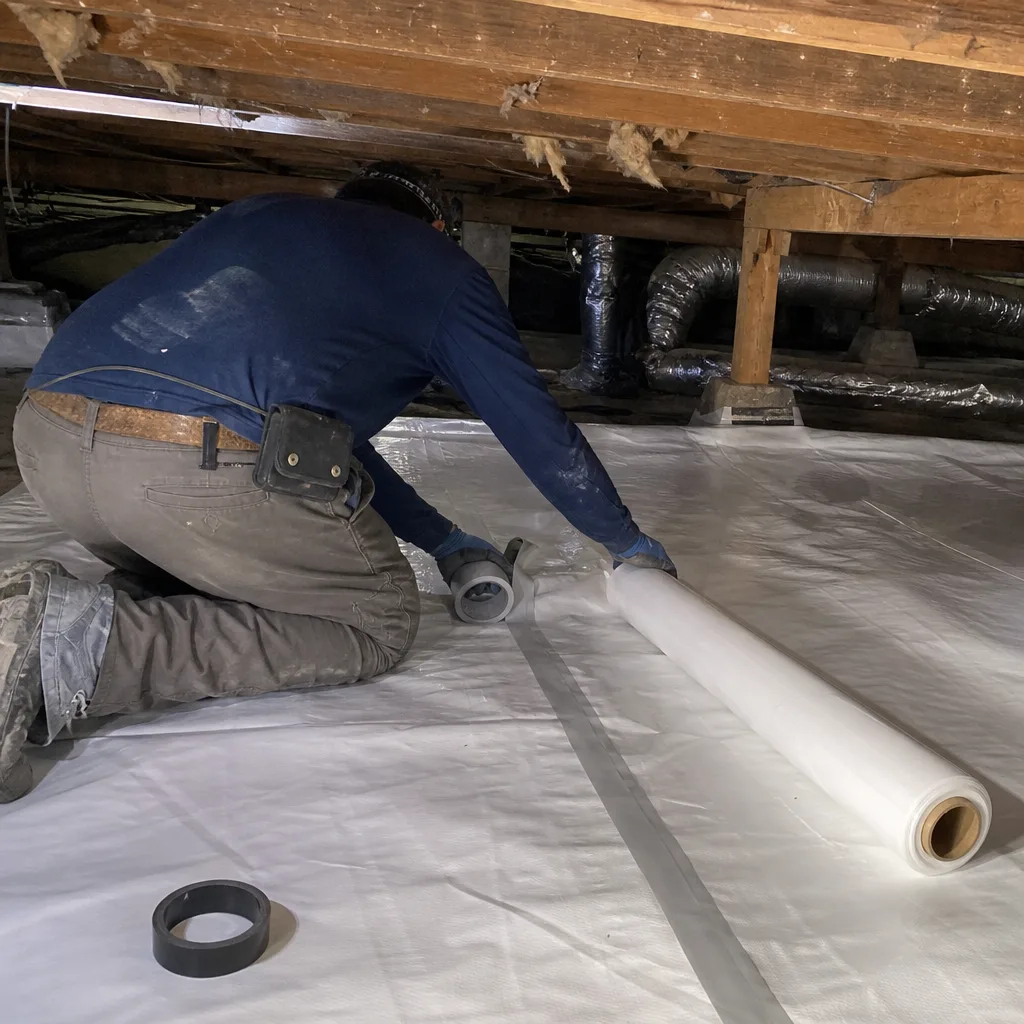
Garage ceiling applications in Los Angeles often involve bonus rooms above or HVAC ducts running through the garage attic. We see this frequently in hillside homes from Echo Park to Mount Washington, where garages are tucked under living space. Closed-cell foam provides the compressive strength and fire-rated assembly compatibility these jobs require, typically $4.80-$6.50 per board foot depending on access constraints.
What happens when you call
- 1
A real person answersNo phone trees - you reach a local pro.
- 2
You get an upfront price rangeHonest numbers before anyone is dispatched.
- 3
A background-checked tech heads outLicensed & insured, dispatched right away.
- 4
You approve before work beginsNothing starts until you say go.
Trusted Brands We Service in Los Angeles
We source materials from Owens Corning, Johns Manville, Knauf, Rockwool, CertainTeed, Icynene, Demilec, and GreenFiber. No proprietary lock-in means we match the product to your home’s conditions rather than forcing a one-size-fits-all spec. For Los Angeles’s split climate, that flexibility matters. A coastal Santa Monica job might call for Knauf’s open-cell formulation where vapor drive is mild and cooling loads are moderate. A Reseda roof deck in 160°F attic air gets a closed-cell system selected for thermal cycling resistance, not whatever happens to be in the warehouse. We stock common formulations locally for same-day availability on standard jobs, and we order specialized products with documented lead times when the application demands it.
Common Spray Foam Insulation Problems We See in Los Angeles Homes
- VHFHSZ code violations from mismatched products. In foothill and canyon neighborhoods from Topanga to Sylmar, crews install standard open-cell foam in attic spaces without confirming ignition-resistant assembly compliance. The homeowner discovers the violation at resale, or worse, when an insurance adjuster flags it after a fire event. We verify zone designation before specifying any product.
- Closed-cell delamination in superheated Valley attics. Contractors who skip surface prep and substrate-temperature checks apply foam that separates from the roof deck within two or three summers of 150-160°F cycling. The failure is invisible from below until thermal imaging reveals the gap. We prep decks and check temperatures; we don’t assume coastal protocols transfer inland.
- Stucco fracture from uncontrolled injection pressure. In 1920s-1940s bungalows from West Adams to Silver Lake, open-cell foam pumped behind hard-coat stucco without controlling rise pressure cracks the plaster from the inside. The ports get patched, the damage reveals itself weeks later, and the repair requires matching historic texture. We control pressure and monitor rise in real time.
- Partial fills from under-ordered material. Los Angeles’s basin geography means a crew that shorts foam for a Valley ranch job can’t make a quick supply run without burning an hour each direction. The resulting uninsulated bands create thermal bridges that read as failed installation on infrared. We calculate material needs with site-specific waste factors and bring surplus.
Pricing for Spray Foam Insulation in Los Angeles, CA
| Application | Price Range (per board foot) | Typical Total Job Range |
|---|---|---|
| Open-cell spray foam | $2.80-$4.20 | $2,800-$5,500 (attic floor, 1,200 sq ft) |
| Closed-cell spray foam | $4.50-$7.50 | $4,500-$9,200 (roof deck, 1,200 sq ft) |
| Rim joist (closed-cell) | $5.00-$7.00 | $1,800-$3,400 (typical raised foundation) |
| Garage ceiling (closed-cell) | $4.80-$6.50 | $2,200-$4,800 |
| Wall injection (open-cell) | $3.20-$4.80 | $3,500-$7,500 (whole-house retrofit) |
What moves the needle: access difficulty (steep-pitched vintage attics versus modern trusses), existing insulation removal, VHFHSZ compliance work requiring specialized products, and whether air sealing of top plates, can lights, and penetrations is needed before foam application. We don’t blow insulation over an unsealed attic floor. Ever. Air sealing is prerequisite, not upsell.
Every job begins with a written price under Haven Standard Clause 1, flat scope, flat warranty, delivered before anyone lifts a tool. Bring us a competing written estimate and we’ll read it with you, no charge. Call (424) 704-9866 to schedule.
We Also Serve Cities Near Los Angeles
Our crews work throughout the metro, including Los Angeles proper and neighboring Huntington Park, South Gate, Lynwood, and Gardena. Same written-price standard, same documented closeout, same live-answer dispatch.
Serving Los Angeles, CA - Our Local Coverage Area
We’re based in the Los Angeles area and know this community well. Use the map below to see our service coverage - if you’re nearby, we can almost certainly help.
FAQs - Spray Foam Insulation in Los Angeles
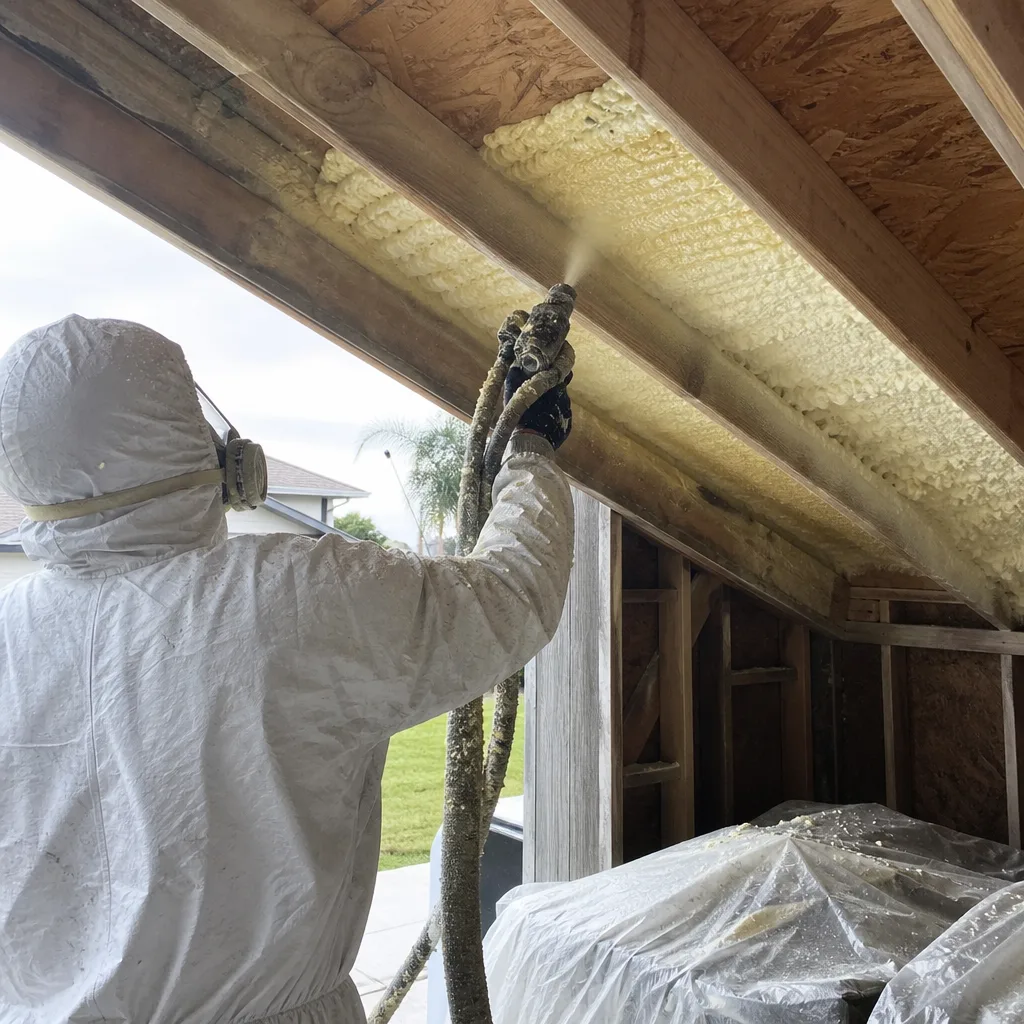
Yes, with product restrictions. California’s wildland-urban interface codes mandate ignition-resistant assemblies in VHFHSZ-designated areas, which limits the foam types and application methods permitted in attic spaces. We verify your property’s zone designation through local fire authority records before specifying any product, and we document compliance in your written scope. Call (424) 704-9866 and we’ll check your address against the current VHFHSZ map.
Yes. We drill discrete injection ports through the stucco, pump open-cell foam into the empty stud bays, and patch the ports with color-matched material. The original facade stays intact. A Highland Park homeowner on a 1927 Craftsman bungalow had exactly this situation, our crew drilled injection ports through the stucco and pumped Icynene open-cell foam into the empty stud bays, then moved to the attic where original 1960s flex ductwork was sitting in 155°F air with R-8 wrap that had baked apart. We sealed and re-wrapped the ducts and laid a radiant barrier before touching the attic floor insulation, and the homeowner’s afternoon AC runtime dropped noticeably the same week. Call (424) 704-9866 for a written price on your specific wall construction.
Because Valley attics hit 150-160°F on summer afternoons, and insulating the floor while ignoring the ductwork above it is like putting a blanket over a leaking oven. Original 1960s flex duct in neighborhoods like Reseda, Canoga Park, and North Hollywood degrades at those temperatures, even R-8 wrap separates and falls away. We seal and re-wrap ducts, install radiant barrier to drop radiant heat transfer, then address the attic floor. The pitch order would make little sense in San Francisco or San Diego, but in Los Angeles’s inland basin it’s the only sequence that produces measurable results. Call (424) 704-9866 and we’ll show you the thermal imaging.
Sometimes less than you’d think. The marine-influenced Westside sees dramatically lower cooling loads than the inland Valley, so insulation ROI is slower and the risk of over-selling is real. We run load calculations and blower-door tests before recommending foam in coastal zones. Air sealing often delivers more performance per dollar than additional insulation where temperature differentials are modest. If a contractor pitches the same R-value spec to Santa Monica and Sylmar, they’re not calibrating to micro-zone conditions. Call (424) 704-9866 for a free second opinion on any written estimate.
Yes. We calculate material needs with basin-specific waste factors and bring verified surplus. Partial fills are not an option when a supply run means an hour each direction through Los Angeles traffic. The crew arrives with enough material to complete the job, and the written scope defines complete. Under Haven Standard: Arrive on schedule, you get a named technician and a text when they are on the way. Call (424) 704-9866 to book.
Written by Wes Okafor, Owner at Envelope Insulation Co., operating under The Haven Standard since 2016.