
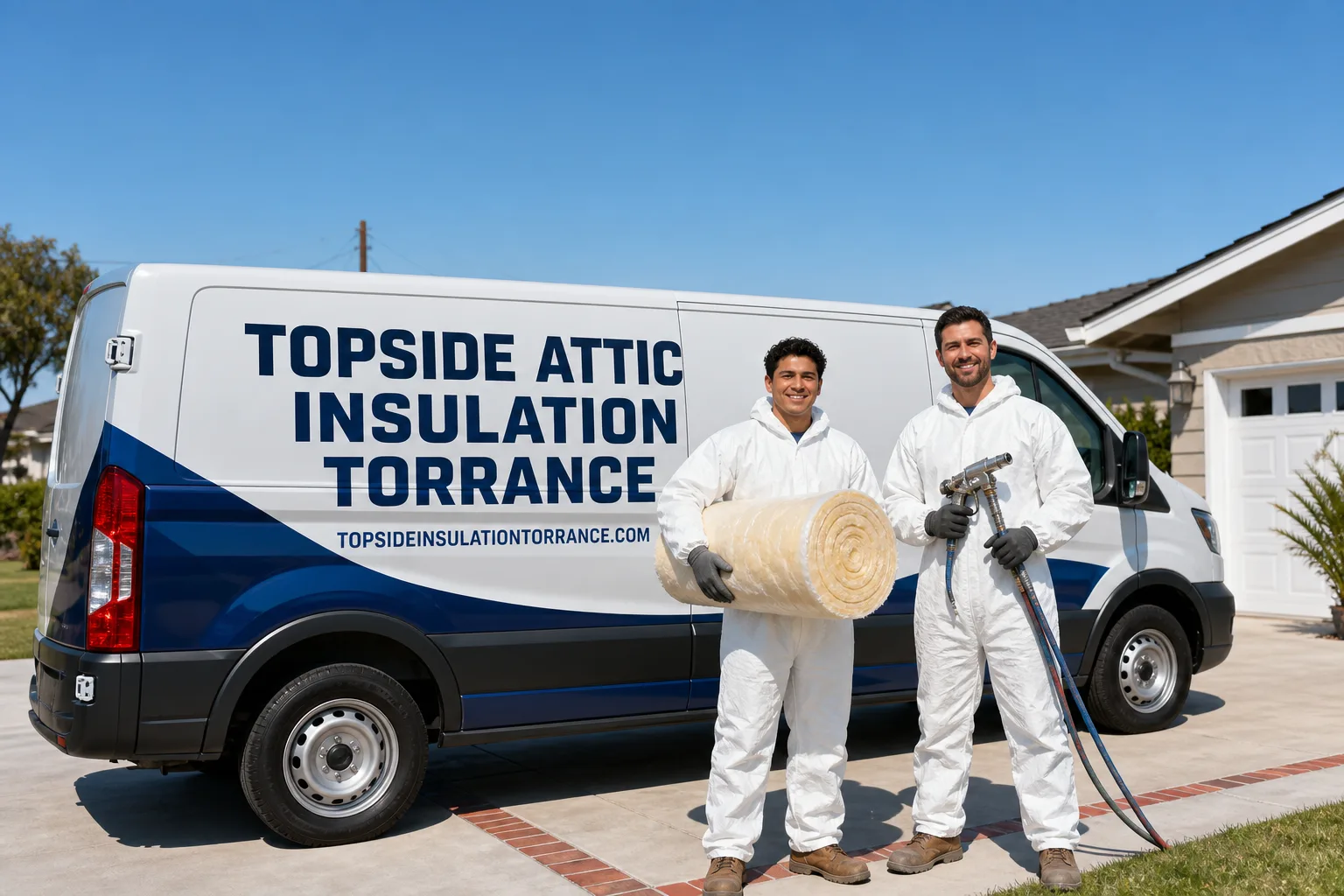
Fast, Reliable Spray Foam Insulation Across Compton
Spray foam insulation in Compton typically runs $1,800-$4,500 for most residential retrofits, with open-cell attic work on a 1,000-square-foot home starting around $1.80 per board foot and closed-cell garage or rim-joist applications running $2.50-$3.20 per board foot. Our crews serve Compton directly from our Los Angeles office, and we’re usually on-site in Compton neighborhoods like Richland Farms, Sunny Cove, or the Alondra corridor within 24 hours of your call. You can reach us at (424) 704-9866 - a live person answers, even at 11 p.m. on a Sunday.
We’ve been sealing and insulating homes under The Haven Standard since 2016, and Compton’s housing stock presents a specific challenge that generic insulation contractors often miss. The city’s dense concentration of 1940s-1960s post-WWII working-class tract homes - wood-frame stucco boxes, most under 1,200 square feet - were built to near-zero insulation standards and have since transitioned heavily into long-term rental stock where landlords have deferred energy upgrades for decades. This means our Spray Foam Insulation team is almost always retrofitting completely uninsulated or severely degraded attic and wall cavities in occupied homes, a fundamentally different job profile than new-construction or owner-occupied upgrade markets in surrounding cities.
Why Topside Attic Insulation Torrance Is Compton’s Preferred Spray Foam Insulation Company
We’ve sealed and insulated over 9,000 homes since 2016, and a growing share of that work has been in Compton’s post-war neighborhoods where the original building records show wall cavities left completely empty. Our Compton customers leave reviews that specifically mention the written price they received before anyone lifted a tool, and the blower-door readings they walked away with after. We don’t ask you to “call for a quote” - Haven Standard Clause 1 requires a flat price, written scope, and written warranty before any work starts.
Response time to Compton is same-day or next-day for standard calls, and our dispatch coordinates from the Los Angeles office so we’re not guessing about traffic patterns on the 91 or surface streets through Willowbrook. We know which Compton blocks still have overhead power lines that affect ladder placement, and which neighborhoods have the shallow attic cavities that trap 130°F summer heat. Our technicians are background-checked and uniformed, and you’ll get a text when yours is on the way - Haven Standard: Arrive on schedule, named technician, no mystery arrivals.
We also publish a Free Second Opinion on any written estimate. Bring us a competing quote for spray foam in Compton and we’ll read it with you, line by line, to show what’s actually being proposed.
Our Spray Foam Insulation Services in Compton
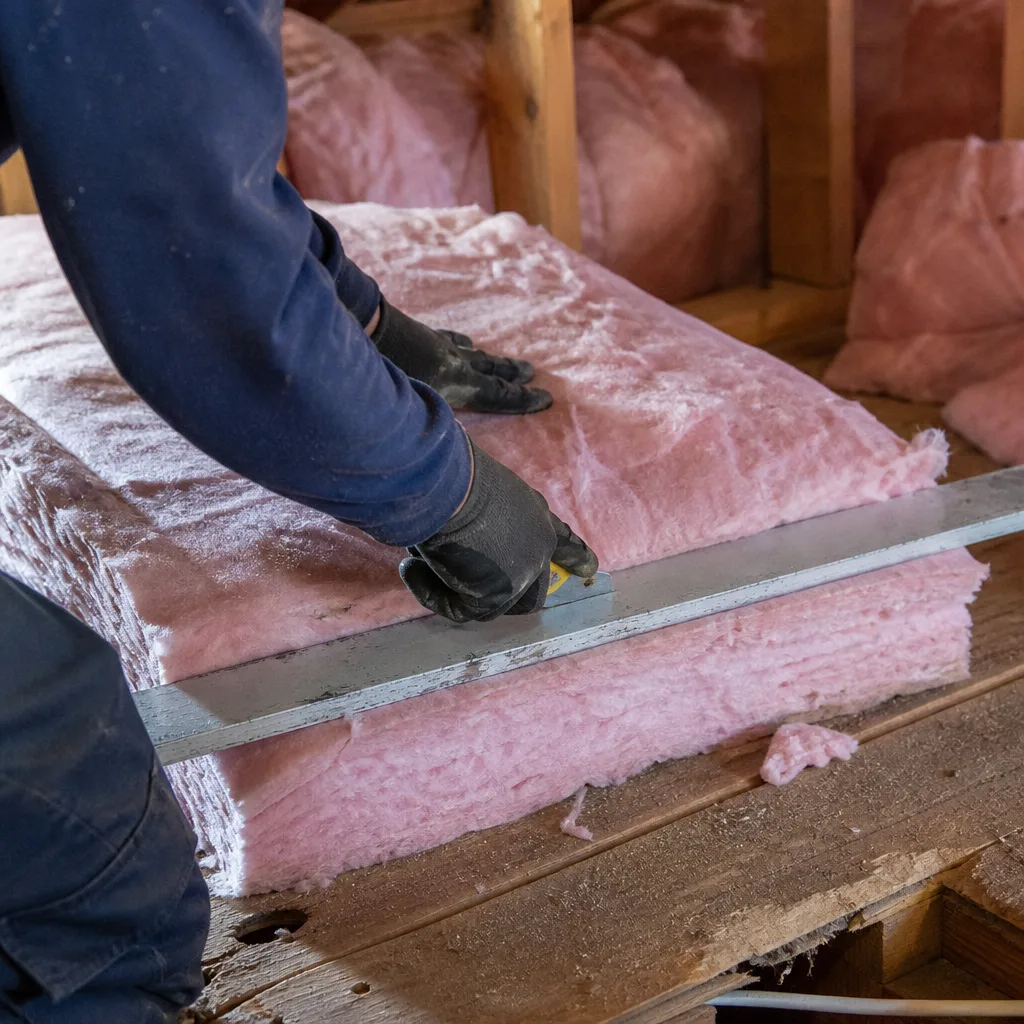
Open-Cell Spray Foam in Compton
Open-cell spray foam is our most common recommendation for Compton attic retrofits. At roughly 3.5 per inch R-value, it fills the shallow, irregular cavities in low-pitch 1940s-1960s tract roofs without the weight stress of denser products. In Compton’s climate, where attic temperatures exceed 130°F in summer, open-cell’s vapor-permeability allows roof sheathing to dry inward - critical in homes where original construction included no ventilation baffles. Most open-cell jobs in Compton run $1.80-$2.40 per board foot installed, with a typical 1,000-square-foot attic at R-38 landing between $2,200 and $3,400.
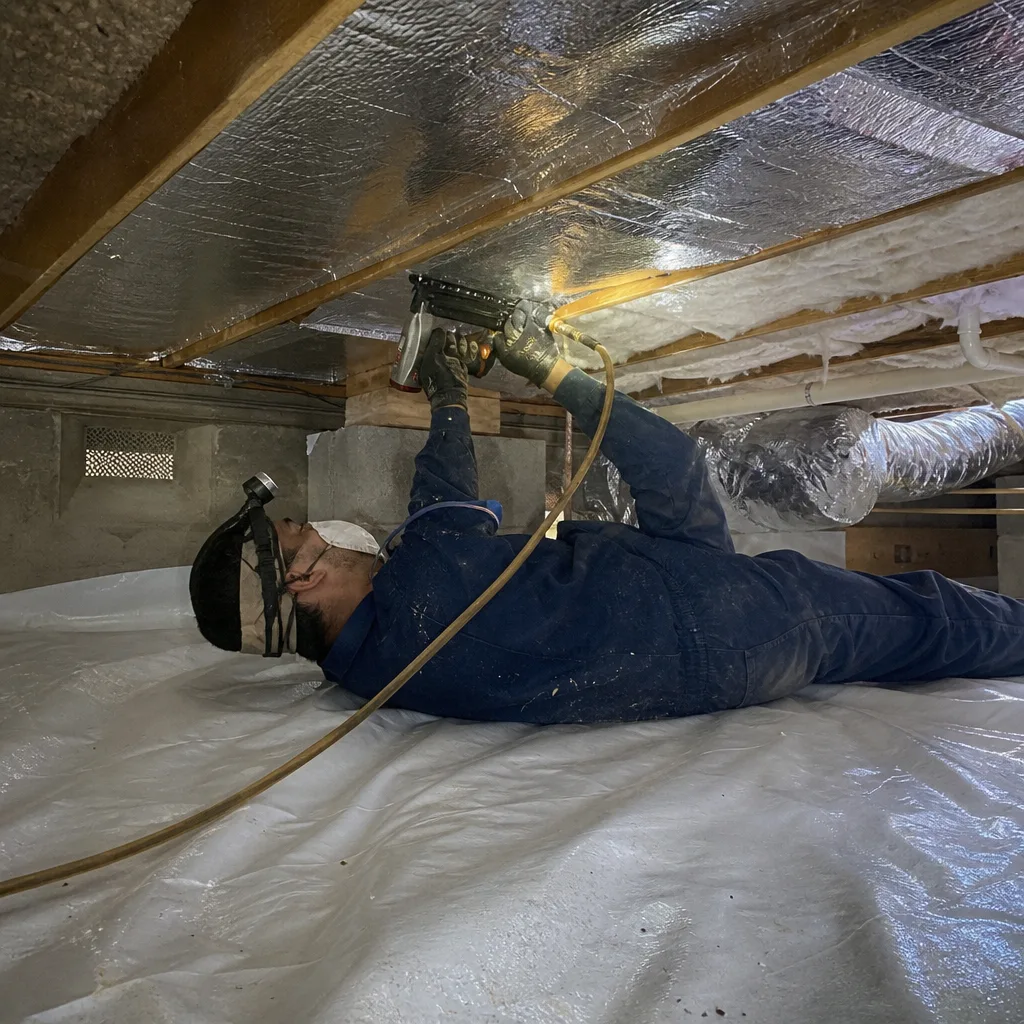
Closed-Cell Spray Foam in Compton
Closed-cell spray foam, at 6.0-7.0 per inch R-value, is what we use for Compton garage ceilings, rim joists, and any application where moisture control is primary. The 2.0-2.5 lb density acts as its own vapor barrier, which matters in Compton’s older stucco homes where the original paper-backed lath has degraded. Closed-cell runs $2.50-$3.50 per board foot in the Compton market, and we specify it for garage ceiling work where the attic above may still contain original loose-fill material that needs testing first.
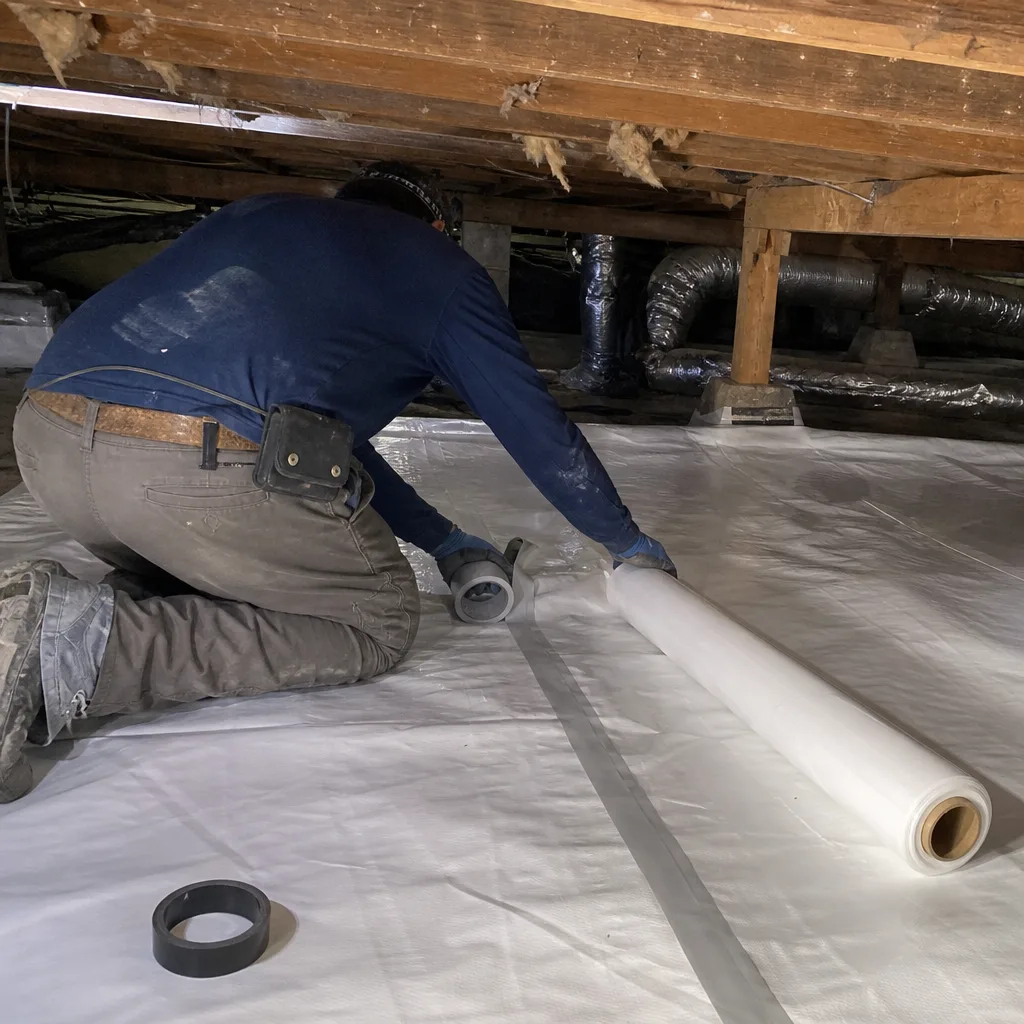
Rim Joist Spray Foam in Compton
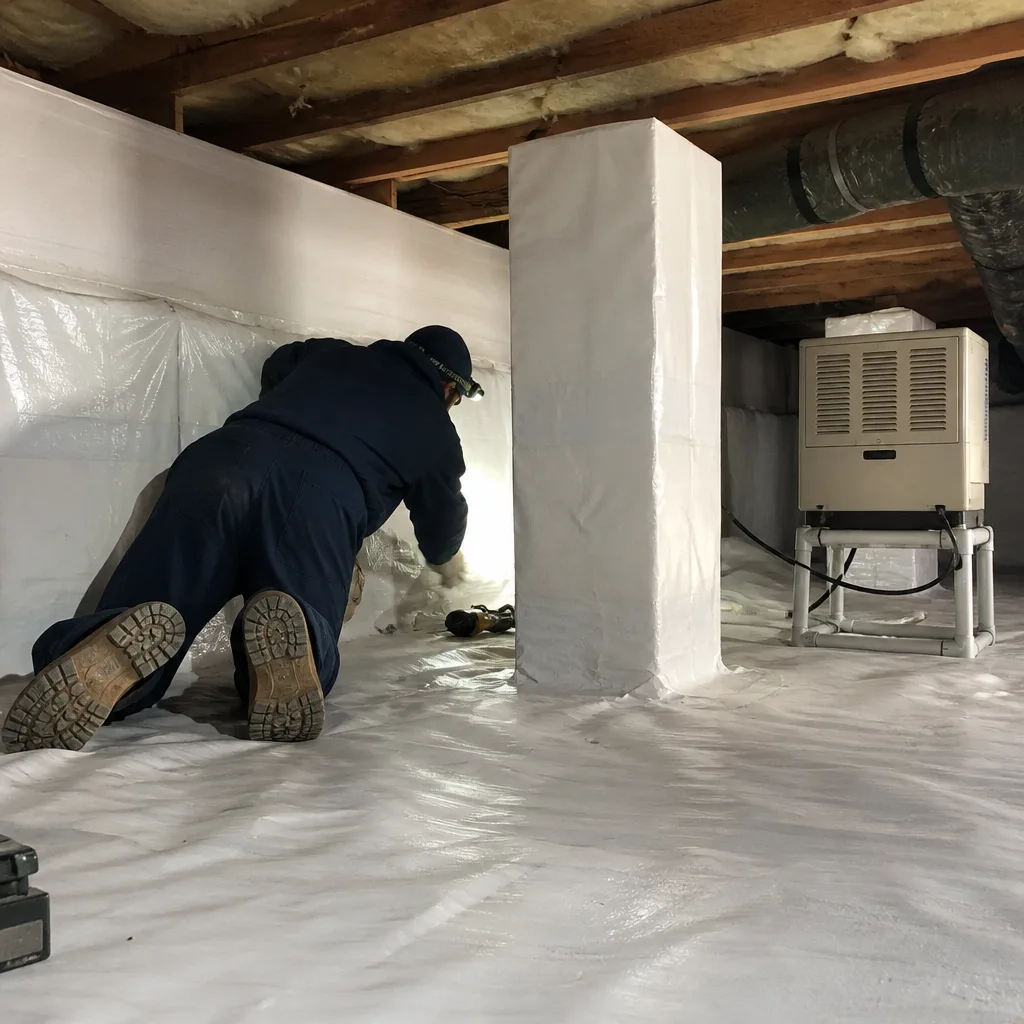
Rim joists - the perimeter band where your foundation meets the first floor - are the single leakiest assembly in most Compton homes, and almost never addressed in original construction. In a 1950s tract home on Compton’s east side, we regularly measure blower-door contributions of 800-1,200 CFM50 from rim joists alone. We seal these with closed-cell spray foam after verifying that sill plates aren’t compromised by decades of soil moisture wicking. This is precision work in tight spaces; we use slow-rise formulation and thermal imaging to confirm complete coverage.
Garage Ceiling Spray Foam in Compton
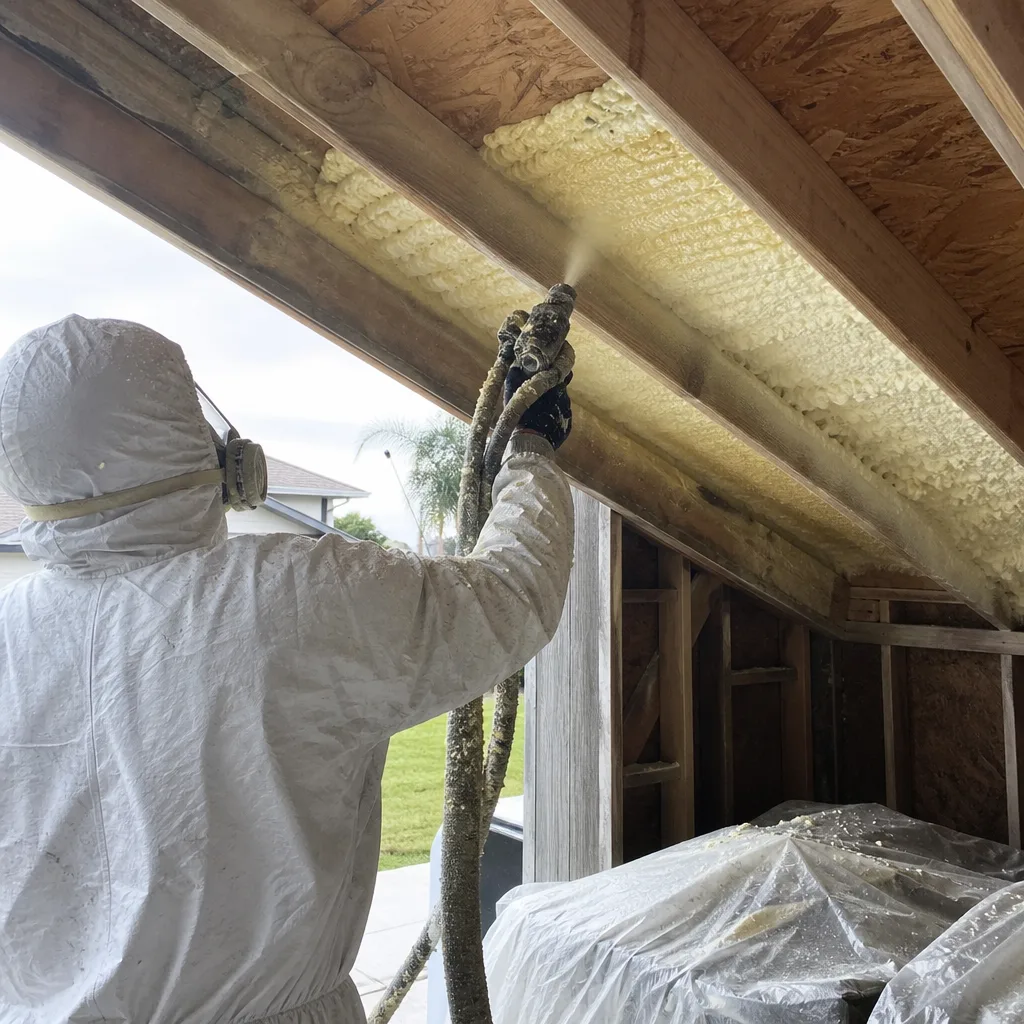
Garage ceiling spray foam in Compton requires a specific pre-inspection that many contractors skip. Salt-air corrosion from Compton’s inland position - 12-15 miles from the coast, far enough to lose the marine layer’s cooling but close enough for airborne salt to attack metal - degrades garage-door springs, opener chains, and fasteners years before the foam itself would fail. We pre-treat or replace corroded hardware with galvanized springs and stainless fasteners before foaming, because a failed spring dropping a door onto a freshly foamed ceiling destroys both. Our crew was called to a 1952 stucco rental on Alondra Boulevard in Compton where the landlord had deferred upgrades for decades and the attic contained original loose-fill material. We tested and found trace asbestos in the old wool, handled abatement per California rules, then applied open-cell spray foam to the garage ceiling and rim joists using Owens Corning formulation to seal the empty wall cavities and stop the 130°F attic heat from bleeding into the living space.
What happens when you call
- 1
A real person answersNo phone trees - you reach a local pro.
- 2
You get an upfront price rangeHonest numbers before anyone is dispatched.
- 3
A background-checked tech heads outLicensed & insured, dispatched right away.
- 4
You approve before work beginsNothing starts until you say go.
Trusted Brands We Service in Compton
We source spray foam materials from Johns Manville, Knauf, and CertainTeed - no proprietary lock-in that limits your options or our recommendations. For Compton’s specific conditions, we often specify Johns Manville open-cell formulations for attic work in shallow cavities, and Knauf closed-cell products for rim-joist and garage ceiling applications where higher density matters. We stock common volumes locally so Compton jobs aren’t waiting on cross-country freight. Every product carries manufacturer warranty, and our 365-Day Done Right Promise sits on top of that - if it’s not done right, we make it right, documented in writing before anyone starts.
Common Spray Foam Insulation Problems We See in Compton Homes
- Empty wall cavities in original stucco-over-wood-frame homes. Compton’s post-WWII tract homes were built with 2×4 stud bays left completely empty - verified by many long-term landlords’ building records - so spray foam retrofits must first address this void, requiring slower injection techniques and asbestos testing before any drilling. Foam expanding into an empty cavity can crack plaster if not controlled.
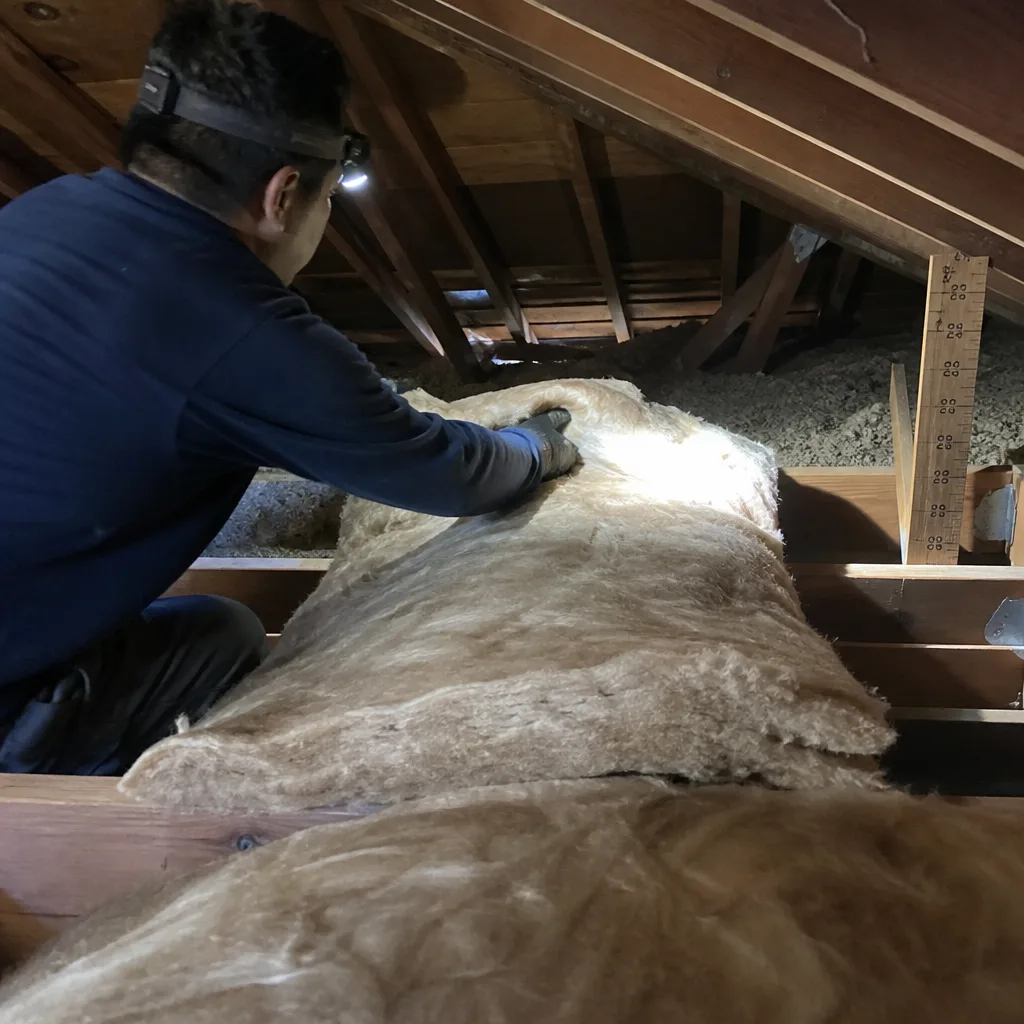
- Asbestos-containing original insulation in pre-1978 homes. A significant number of Compton’s tract homes still contain original loose-fill or batt materials that may be asbestos-containing. An experienced local contractor tests before disturbing attic material, since abatement requirements add cost and time that must be disclosed upfront, especially on investor-owned properties where owners manage remotely and are unfamiliar with California asbestos rules.
- Shallow attic cavities trapping heat against roof decks. The low-pitched roofs common from Richland Farms to Sunny Cove create attic spaces barely 18 inches deep at the ridge. Without proper ventilation retrofits, spray foam applied to the roof deck can blister or lose adhesion when surface temperatures exceed 150°F. We install baffles and specify vapor-open assemblies.
- Salt-air corrosion of garage hardware preceding foam failure. Compton’s position inland from the coast means airborne salt attacks garage-door springs, hinges, and opener chains first. We replace corroded hardware with galvanized or stainless components before foaming garage ceilings, because hardware failure destroys foam work from below.
Pricing for Spray Foam Insulation in Compton, CA
Here’s what spray foam insulation costs in Compton’s market, based on jobs we’ve completed in neighborhoods from the Alondra corridor to the west side near Gardena:
| Application | Price Range | Typical Home Size / Notes |
|---|---|---|
| Open-cell attic (R-38) | $2,200 - $3,400 | 1,000 sq ft ceiling; shallow cavity retrofits |
| Closed-cell garage ceiling | $1,800 - $2,800 | 2-car garage; includes hardware inspection |
| Rim joist (perimeter band) | $1,200 - $2,200 | 1,200 sq ft home; crawl space or basement |
| Closed-cell wall cavities (empty 2×4) | $3.00 - $4.50 / bd ft | Requires asbestos testing first; slower injection |
| Asbestos abatement (when needed) | $800 - $2,500 | Pre-1978 homes with original loose-fill; state-certified |
What moves you within these ranges: cavity depth and accessibility, whether original material must be tested and removed, ventilation retrofit requirements, and whether garage hardware needs replacement before foaming. We provide a Written Price Before Any Work Starts - flat, itemized, no escalation clauses. Call (424) 704-9866 for your specific quote; estimates are free and include a Documented Photo Record of existing conditions.
We Also Serve Cities Near Compton
Our crews work throughout the South Bay and Gateway Cities. If you’re in Gardena, Carson, Lynwood, or Paramount, the same response standards and pricing structure apply. Spray Foam Insulation in Compton remains our focus on this page, but we regularly coordinate multi-property jobs for investors who own across these adjacent markets.
Serving Compton, CA - Our Local Coverage Area
We’re based in the Compton area and know this community well. Use the map below to see our service coverage - if you’re nearby, we can almost certainly help.
FAQs - Spray Foam Insulation in Compton
No - we remove and test original loose-fill before applying any spray foam product. In Compton’s pre-1978 housing stock, original materials may contain asbestos, and California regulations require testing before disturbance. We handle abatement when needed, then foam the cleaned cavity. Call (424) 704-9866 and we’ll inspect your attic; the estimate includes photo documentation of existing conditions.
Compton’s summer highs in the low-to-mid 90s°F drive garage ceiling surface temperatures above 140°F, which can degrade foam adhesion if the substrate wasn’t properly prepared. We specify closed-cell products rated for higher service temperatures, and we always inspect and replace corroded garage-door hardware first - salt-air weakened springs fail under thermal stress and destroy foam from below. Our 365-Day Done Right Promise covers both the foam and the prep work.
Compton sits 12-15 miles inland, close enough for airborne salt to attack ferrous metal but far enough to lose the marine layer’s rinsing effect. Torrance’s direct coastal exposure actually sees less cumulative salt buildup because morning fog deposits and redeposits, while Compton’s drier inland air lets salt crystals accumulate and concentrate. We see spring corrosion failures in Compton garages 3-5 years earlier than in Torrance, which is why we pre-replace with galvanized springs before any garage ceiling foam work.
Yes - and this is where Compton’s housing stock differs critically from nearby markets. Compton’s post-WWII stucco tract homes were built with wall cavities left completely empty, a detail verified by many long-term landlords’ building records. Spray foam retrofits here must address empty 2×4 stud bays, which requires drilling access holes through interior drywall or exterior stucco, slower injection techniques to prevent plaster cracking, and mandatory asbestos testing before any disturbance. We disclose this sequence and cost upfront, especially for remotely managed investor properties where owners may be unfamiliar with California asbestos rules.
We typically specify Johns Manville open-cell formulations for Compton’s shallow attic cavities - the lower density and vapor-permeability suit restricted spaces where roof sheathing needs to dry inward. For empty wall cavities and rim joists, we often use Knauf closed-cell products that provide higher R-value per inch and structural rigidity in 2×4 bays that have been uninsulated for 60-70 years. We don’t lock you into a single brand; our recommendation depends on what your specific assembly needs, documented in the written scope before work starts.
Written by Wes Okafor, Owner at Topside Attic Insulation Torrance, serving Compton since 2016 under The Haven Standard. Call (424) 704-9866 for a free estimate - a live person answers, 24/7.